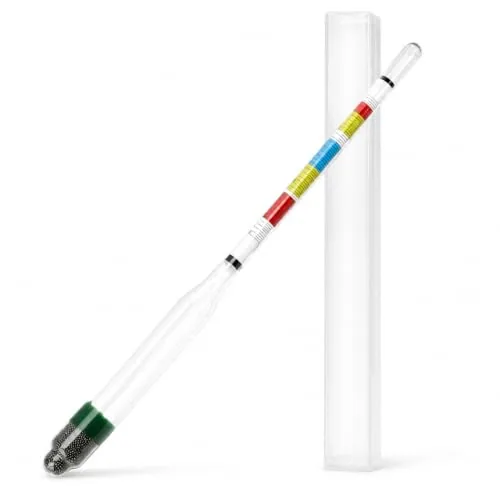
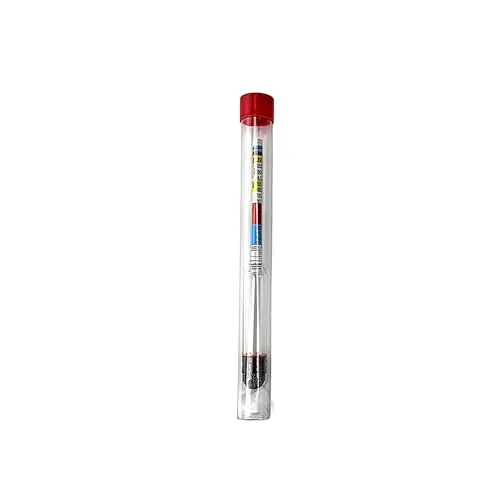
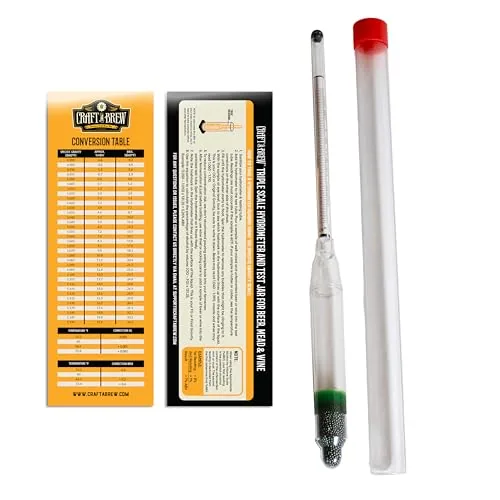
- Hydrometer: measures density directly. Reads original and final gravity with no formula, but needs a test jar full of sample and a temperature correction (most are calibrated at 60°F or 68°F).
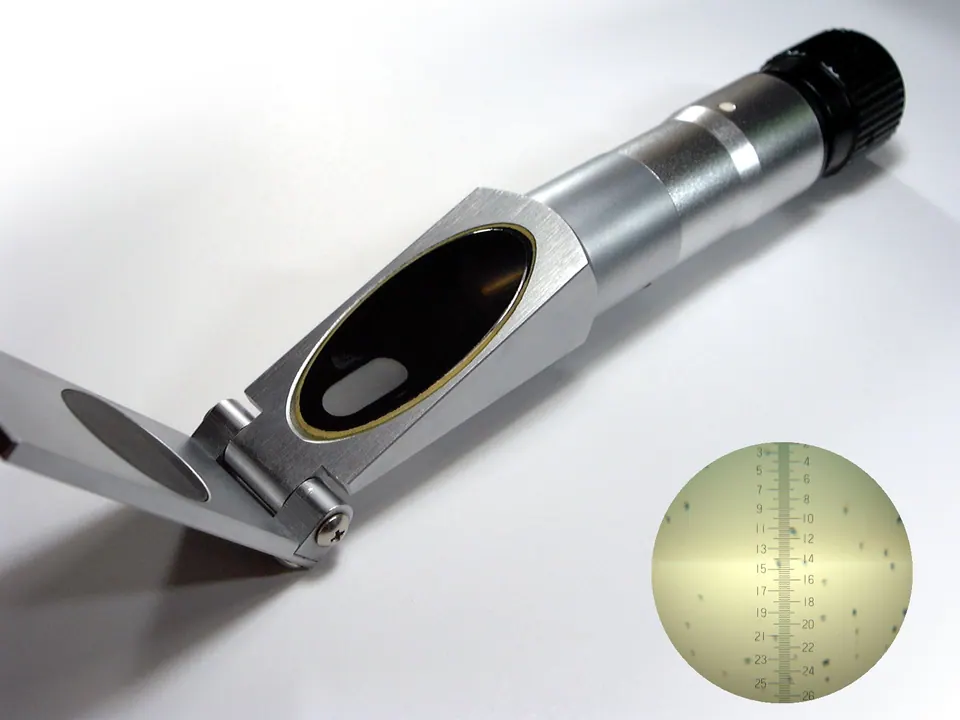
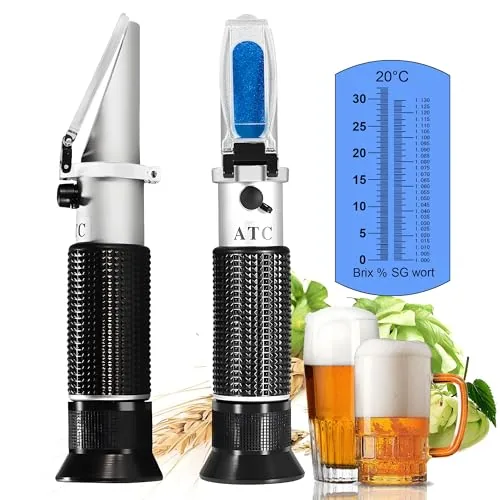
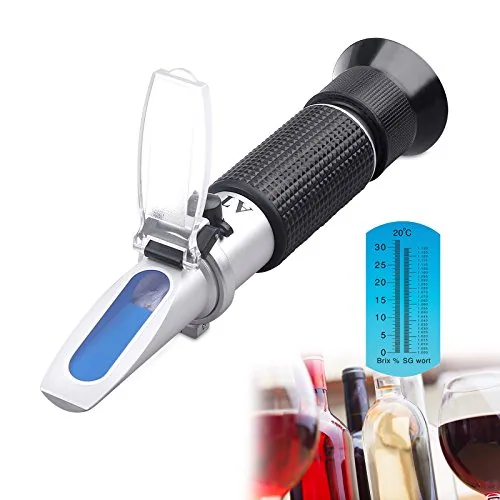
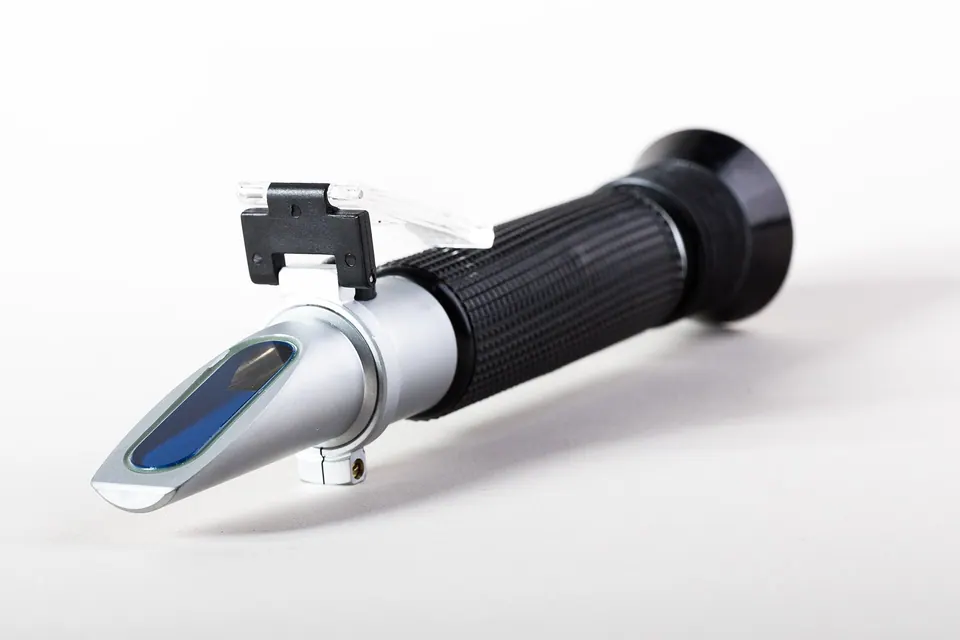
- Refractometer: measures how a few drops bend light, shown in Brix. Perfect for wort on brew day; after fermentation starts, alcohol skews the reading, so use a correction formula.
- Common dual-scale refractometers list Brix 0–32% and SG 1.000–1.130 with ATC between 10–30°C; triple-scale hydrometers list SG 0.990–1.170.
- Most brewers own both: a refractometer for brew-day checks, a hydrometer to confirm final gravity before bottling.
Hydrometer vs refractometer is a question about when you measure. A hydrometer floats higher in denser liquid, so it reads specific gravity (SG) directly at any stage, including finished beer, wine, cider and mead. A refractometer reads the refractive index of a few drops, calibrated to sugar in water (Brix), which is ideal for unfermented wort but misleading once alcohol is present.
This page compares the two on range, accuracy, sample size, temperature handling and the post-fermentation problem, with picks from FastRack, SOLIGT, Brewing America, North Mountain Supply, Craft A Brew, V-Resourcing, Tiaoyeer, Milwaukee, Atago and Anton Paar. See every meter in the hydrometers and meters hub.
Picks from each side
Hydrometer
FastRack Triple Scale Hydrometer
- Scale
- Triple (SG, Balling, potential alcohol)
Best for Replacing a broken hydrometer
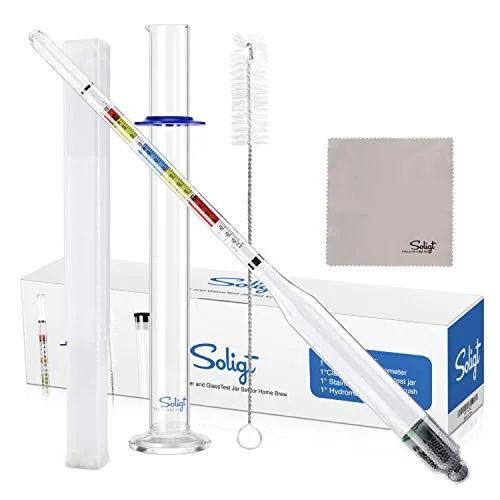
SOLIGT Triple Scale Hydrometer & Glass Test Jar Kit
- Range
- SG 0.990–1.170, Brix 0–35, potential ABV 0–20%
- Scale
- Triple (SG, Brix, potential alcohol)
Best for A complete first hydrometer kit
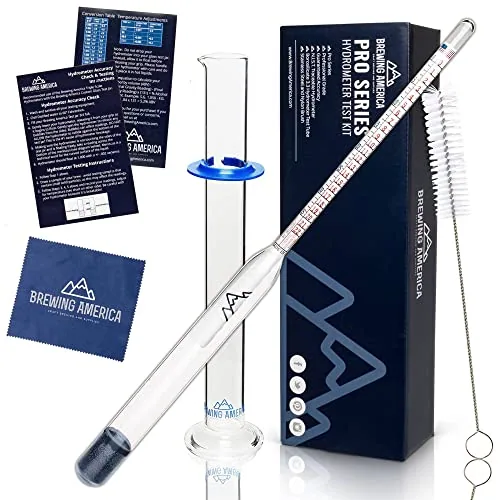
Brewing America Triple Scale Hydrometer & Test Jar (USA-Made)
- Range
- SG 0.990–1.170 (listing)
- Accuracy
- NIST-traceable (per maker)
- Scale
- Triple scale
Best for Brewers who want a US-made glass hydrometer
North Mountain Supply 8" Italian Glass Triple Scale Hydrometer
- Range
- SG 0.99–1.16, potential alcohol 0–20%, Brix 0–35
- Scale
- Triple
- Material
- Lead- and mercury-free glass
Best for Small test jars and short samples
Craft A Brew Polycarbonate Triple Scale Hydrometer
- Scale
- Triple (SG, potential ABV, Brix)
- Material
- Polycarbonate
Best for Brewers who keep breaking glass hydrometers
Refractometer
V-Resourcing Beer Wort Refractometer (Brix/SG)
- Range
- Brix 0–32%, SG 1.000–1.130
- Accuracy
- ±0.2% Brix, ±0.001 SG
- Scale
- Dual (Brix, wort SG)
Best for Pre-boil and post-boil gravity checks
Tiaoyeer Brix/SG Refractometer with ATC
- Range
- Brix 0–32%, SG 1.000–1.130
- Accuracy
- ±0.2% Brix
- Scale
- Dual (Brix, SG)
Best for Quick wort gravity checks on brew day
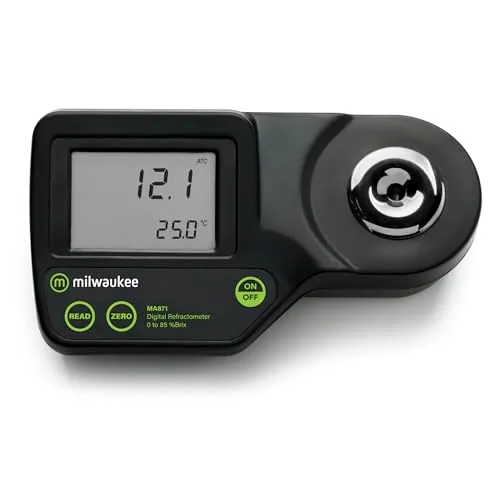
Milwaukee MA871 Digital Brix Refractometer
- Range
- 0–85% Brix
- Accuracy
- ±0.2% Brix
- Scale
- Brix
Best for Must and wort sugar readings
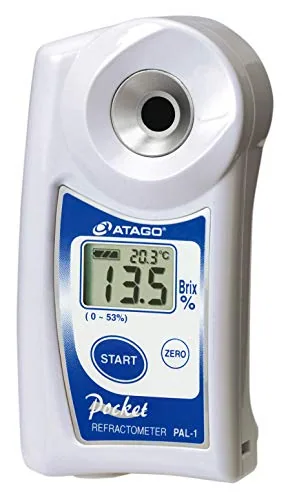
Atago PAL-1 Digital Pocket Refractometer
- Range
- 0.0–53.0% Brix
- Scale
- Brix
- ATC
- Not listed
Best for Winemakers and brewers who want a digital Brix reading
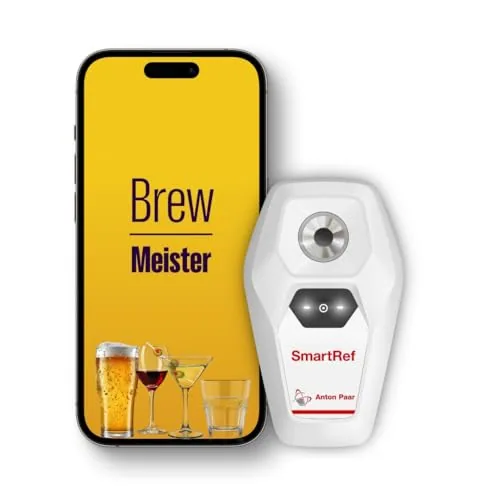
Anton Paar SmartRef Digital Refractometer
- Accuracy
- ±0.04 °Brix (per maker)
- ATC
- Yes
- Connectivity
- Bluetooth app
Best for Data-minded brewers and winemakers
Hydrometer vs refractometer side by side
| Hydrometer | Refractometer | |
|---|---|---|
| What it measures | Density (specific gravity) | Refractive index, shown as Brix (some add an SG scale) |
| Sample | Enough to float it in a test jar | 2–3 drops (listing) |
| Typical listed range | SG 0.990–1.170 (triple scale) | Brix 0–32%, SG 1.000–1.130 |
| Reads finished beer or wine directly | ✓ | ✗ Needs an alcohol correction |
| Temperature handling | ~ Correct to the calibration temp (60°F or 68°F) | ✓ ATC on most models, 10–30°C |
| Reads hot wort quickly | ✗ Cool the sample first | ✓ Drops cool in seconds |
| Breakage | ~ Glass (polycarbonate options exist) | ✓ Sturdy body |
| Wort correction factor | Not needed | ~ About 1.04 (adjustable) |
Source: Listings for the meters shown; Sean Terrill refractometer notes; Brewer's Friend ABV calculator
Ranges and resolution compared
Top of the listed scale
Brix for refractometers (SG ~1.130 ≈ 31 Brix; wine and mead musts often need more)
For beer, a 0–32 Brix analog refractometer covers every normal wort. For big wines, meads and dessert musts above about 1.130, a hydrometer reaching 1.170 or a digital refractometer with a wider Brix range is the safer choice. Hydrometer accuracy is rarely listed; Brewing America describes its hydrometer as NIST-traceable per the maker.
Hydrometers differ mostly in build and extras. The SOLIGT and Brewing America sets include a test jar, which you need anyway; the North Mountain Supply model is Italian glass and lead- and mercury-free per its listing; and the Craft A Brew polycarbonate hydrometer trades a little readability for not shattering on a tile floor. Refractometers split into analog dual-scale models, which you hold up to the light and read through an eyepiece, and digital models (Atago, Milwaukee, Anton Paar) that show a number on a screen and remove the guesswork of reading a blurry line. The Anton Paar SmartRef also logs readings to an app over Bluetooth.
Why refractometers read wrong after fermentation
Alcohol bends light more than water does, while it makes the liquid less dense. So once fermentation starts, a refractometer reads a Brix value that's too high, and converting it straight to SG overstates the final gravity. The fix is a correction formula that uses the original Brix and the current Brix together. Sean Terrill's cubic formula is the one most calculators use, and the refractometer mode in our ABV calculator applies it (marked as an approximation).
- Calibrate
Put 2–3 drops of deionized water on the prism and set zero, at room temperature.
- Read original gravity
Take a wort sample before pitching; divide Brix by the wort correction factor (about 1.04) or let the calculator do it.
- Read during or after fermentation
Enter both the original and the current Brix in the corrected formula. Don't convert the second reading on its own.
- Confirm with a hydrometer
Before bottling, a hydrometer check removes any doubt about final gravity.
Temperature: correction vs ATC
Hydrometers are calibrated at one temperature, usually 60°F (15.6°C) or 68°F (20°C), printed on the instrument. A sample at 80°F reads low; the ABV calculator's hydrometer correction adjusts it. Refractometers listing ATC compensate automatically within their range (10–30°C, about 50–86°F, on the listed dual-scale models), and the tiny sample cools in seconds, which is why they're handy at the kettle.
When each one is the right tool
- Pre-boil gravity on brew day: refractometer. Two drops, ATC, no waiting; fix volume or gravity with the dilution and boil-off calculator.
- Original gravity after chilling: either. Many brewers use both to check the wort correction factor.
- Is fermentation finished? hydrometer, or a refractometer with the corrected formula. Bottle only after 2–3 equal readings over 2–3 days.
- Wine, cider and mead: hydrometer, since must gravities and finished dry wines (below 1.000) are outside many refractometer scales.
- Continuous logging: a floating digital hydrometer; see Tilt vs RAPT Pill vs iSpindel.
Write every reading in the brew-day log so the ABV summary has numbers to work with.
Who should choose which
| You… | Hydrometer | Refractometer |
|---|---|---|
| Are buying your first gravity meter | ✓ | ~ |
| Brew all-grain and check pre-boil gravity | ~ | ✓ |
| Make wine, cider or mead | ✓ | ~ |
| Want to waste less beer per reading | ✗ | ✓ |
| Want one reading with no formula at the end | ✓ | ✗ |
| Have a strong must above 1.130 | ✓ | ~ Digital models only |
Buy a hydrometer first (with a test jar) if you brew extract kits, wine, cider or mead: it reads every stage directly. Add a refractometer when you go all-grain and want quick pre-boil and OG readings. If you only ever buy one, the hydrometer is the one that can't mislead you at bottling time. Our first brew day page lists it with the rest of the essentials.
Mistakes to avoid
- Converting a post-fermentation refractometer reading to SG directly. It reads high; use the corrected formula.
- Reading a hot sample with a hydrometer. Cool it or correct for temperature.
- Skipping refractometer calibration. Zero it with deionized water at room temperature each session.
- Reading a hydrometer with bubbles clinging to it. Spin it and wait a moment.
- Bottling on one low reading. Wait for 2–3 identical readings over 2–3 days to avoid bottle bombs.
A hydrometer is the essential first meter: it reads gravity directly from wort to finished wine with only a temperature correction. A refractometer is the brew-day upgrade for fast, two-drop readings of unfermented wort, and it needs a corrected formula once alcohol is present. Most all-grain brewers end up owning both.
We compared the listed ranges, scales, accuracy and ATC ranges of the meters shown, plus published correction methods (Sean Terrill; Brewer's Friend). We did not calibrate or test these instruments.