Free tool

Priming sugar calculator

Pick your batch size, the warmest temperature the beer reached and a target carbonation. The calculator subtracts the CO2 already in the beer and gives grams and ounces for each sugar, based on the BYO priming chart.

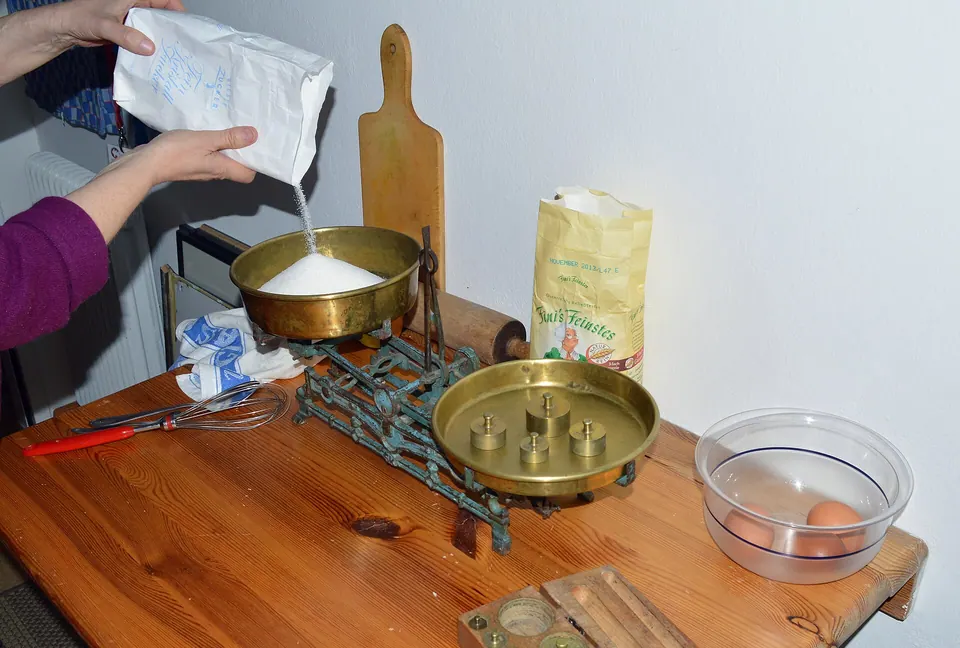
Pouring sugar onto a brass kitchen balance to weigh it
Photo: Wald1siedel, CC BY-SA 3.0, via Wikimedia Commons
Units
The highest temperature the beer reached, not today’s.
Priming sugar—
Residual CO2 already in the beer—
Volumes to add—
SugarAmount
Runs in your browser; nothing is sent anywhere.
Avoid bottle bombsBottle only after the gravity reads the same 2–3 days in a row, measure priming sugar with a calculator, use standard bottles only to about 3 volumes, store them in a closed box at room temperature and refrigerate once carbonated.Source: BYO carbonation priming chart

How it’s calculated

  1. Residual CO2: Vres = 3.0378 − 0.050062·T + 0.00026555·T² (T = highest °F after fermentation)
  2. Sugar (g) = (Vtarget − Vres) × gallons × k
  3. k (g per gal per volume): corn sugar 16.7, anhydrous dextrose 15.3, table sugar 14.5, DME ≈ 22.2 (estimate)

Assumptions

  • k comes from the BYO chart: 0.34 vol per oz of corn sugar, 0.37 anhydrous dextrose, 0.39 sucrose in 5 gal.
  • Bottle only once gravity is stable for 2–3 days; standard bottles are not for more than about 3.0 volumes.

Worked example: 5 gal at 2.5 vol, warmest 68°F → residual 0.86 vol → (2.5 − 0.86) × 5 × 16.7 ≈ 137 g (4.8 oz) of corn sugar.

Sources: BYO: Carbonation priming chart; John Palmer, How to Brew (priming)

For guidance only: verify with your own readings, your equipment’s manual and the product labels.

Why the warmest temperature matters

Beer holds more dissolved CO2 when it is cold. After fermentation it keeps the CO2 that matches the warmest temperature it reached, so a beer that sat at 68°F holds about 0.85 volumes (BYO table) before any priming sugar. Using today's cooler temperature would overestimate the CO2 already there and under-prime.

Carbonation by style

CO2 volumes by style family (bottle or keg)

Style familyVolumes of CO2Bottle-safe?
British ales1.5–2.2✓ standard bottles
American ales2.2–3✓ standard bottles
European lagers2.4–2.6✓ standard bottles
American lagers2.5–2.8✓ standard bottles
Belgian ales2–4.5~ standard bottles only to about 3 vol
German weizen2.8–5.1~ standard bottles only to about 3 vol

Style ranges: BYO: Carbonation priming chart. Standard 12 oz pry-off bottles are not meant for more than about 3.0 volumes. Bottle only after the gravity reads the same 2–3 days in a row.

Questions

How much priming sugar for 5 gallons?
For 2.5 volumes in 5 gallons that peaked at 68°F, about 137 g (4.8 oz) of corn sugar. Change the style or temperature and the number changes.
Can I use table sugar instead of corn sugar?
Yes. Sucrose carbonates slightly more per gram, so you need a little less; the calculator lists both.
How do I avoid bottle bombs?
Bottle only after the gravity is stable for 2–3 days, measure sugar with a calculator, stay under about 3 volumes in standard bottles, and store bottles in a closed box at room temperature.

Sources

  1. BYO: Carbonation priming chart