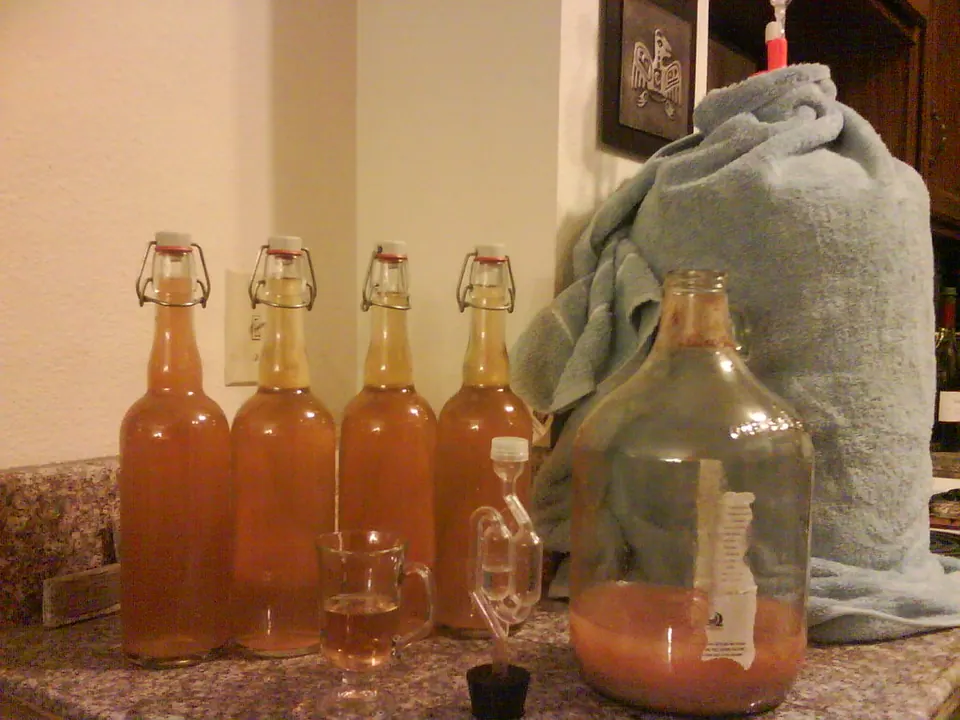
- Bottle only when the hydrometer reads the same 2–3 days in a row. Unfinished beer keeps fermenting in the bottle.
- Weigh priming sugar with a calculator, using the warmest temperature the beer reached after fermentation.
- Mix the dissolved sugar evenly into the beer in a bottling bucket, not bottle by bottle.
- Condition about 2 weeks at room temperature in a closed box, then refrigerate.
- Standard 12 oz pry-off bottles are not meant for more than about 3.0 volumes of CO2.
Knowing how to bottle homebrew well is mostly about two numbers: a stable final gravity and the right weight of priming sugar. Get both right and every bottle carbonates the same; get either wrong and you end up with flat beer or, worse, over-pressured bottles that can burst. This guide gives the full routine for a 5 gal (19 L) batch, which fills about 50 standard 12 oz bottles.
The priming numbers come from the BYO carbonation priming chart and the residual-CO2 formula used by our priming sugar calculator; the process follows Palmer’s How to Brew. Bottle conditioning means the yeast still in the beer eats the priming sugar inside the sealed bottle and makes CO2, which dissolves into the beer.
What you need to bottle a 5 gallon batch
Bottling gear for 5 gal (19 L)
| Item | Amount | Why |
|---|---|---|
| Bottles, 12 oz pry-off | About 50 (or about 26 × 22 oz) | ✓ Heavy brown glass; no twist-offs |
| Crown caps | About 55 (a few spares) | ✓ Oxygen-absorbing caps are optional |
| Capper | Wing or bench | ✓ Bench cappers are easier on long sessions |
| Bottling bucket with spigot | 6.5 gal | ✓ Lets you mix sugar evenly |
| Auto-siphon and tubing | 1 | ✓ Moves beer off the yeast without splashing |
| Spring-tip bottle filler | 1 | ✓ Fills from the bottom, stops when lifted |
| Priming sugar | Weighed per calculator | ✓ Corn sugar is the usual choice |
| Kitchen scale | Grams | ✓ Volume measures vary too much |
| Sanitizer and bottle rinser or tree | Label dilution | ✓ Every bottle, every cap |
Source: Palmer, How to Brew; kit listings
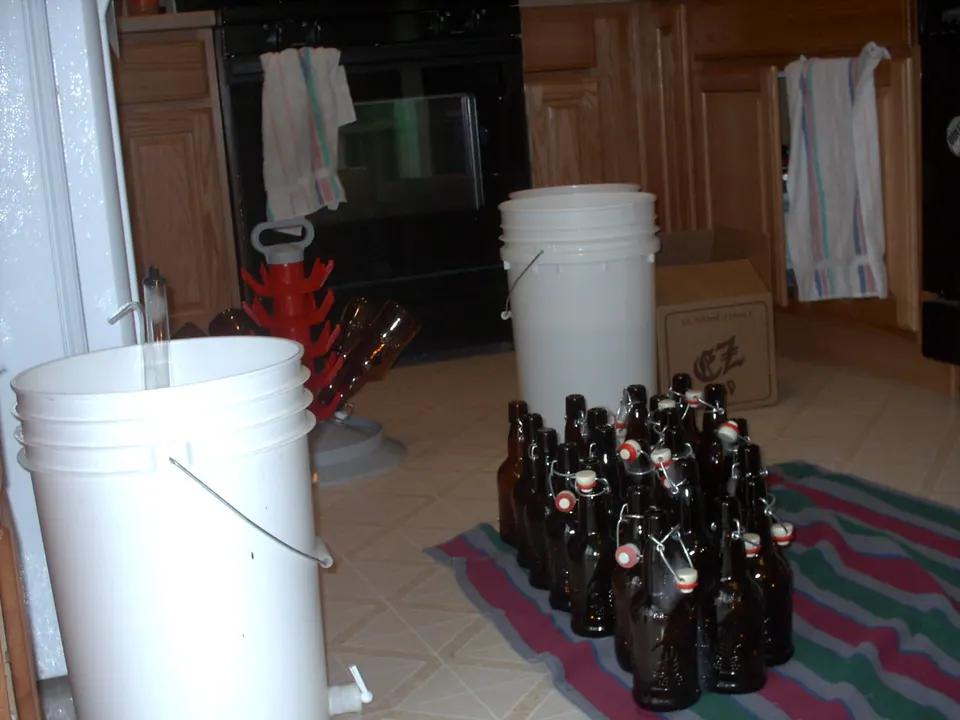
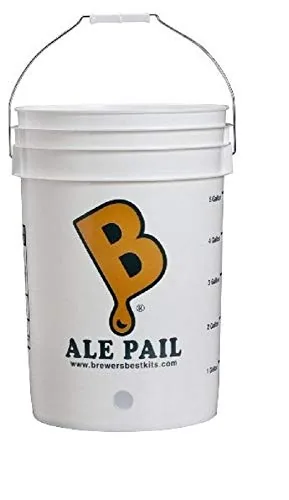
Brewer’s Best 6.5 Gal Bottling Bucket
- Type
- Bottling bucket
- Size
- 6.5 gal
Best for Replacing a bottling bucket
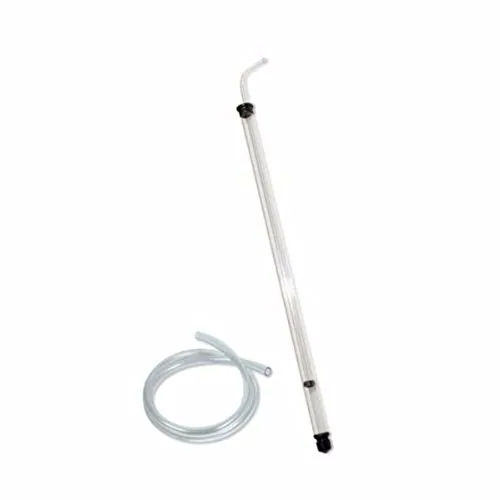
Fermtech Regular 5/16 in. Auto-Siphon, 24 in., with 8 ft Tubing
- Type
- Auto-siphon
- Size
- 5/16 in., 24 in. long, 8 ft tubing
Best for Racking and bottling 5-gallon batches
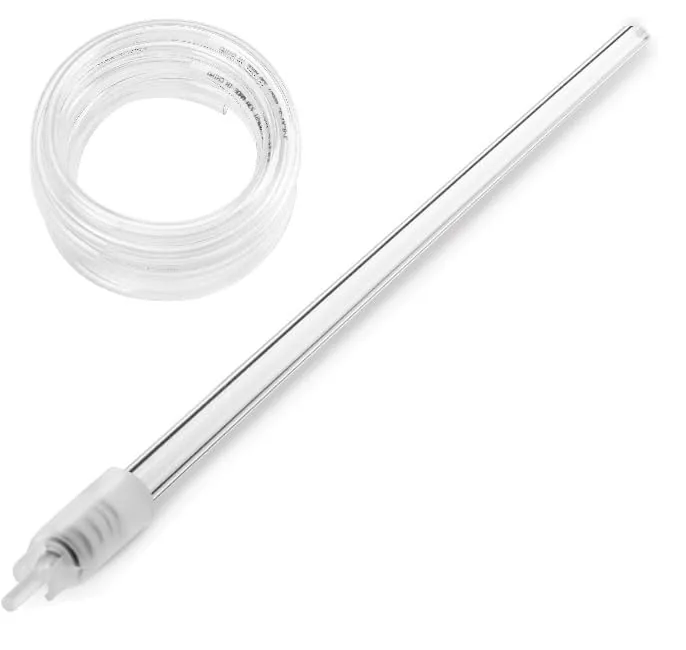
Fermtech Spring Bottle Filler with 6.5 ft Tubing
- Type
- Spring-tip bottle filler
- Size
- With 6.5 ft NSF 51 tubing
Best for First bottling setup
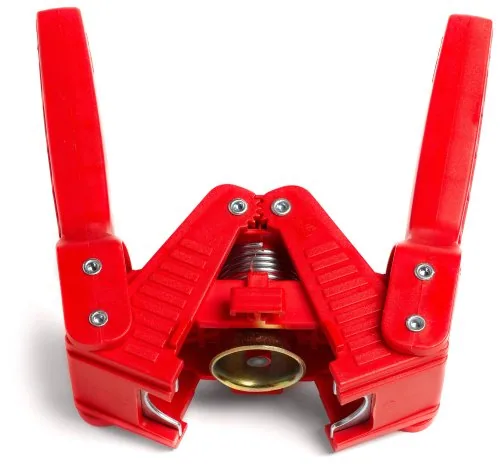
FastRack Red Baron Bottle Capper
- Type
- Handheld capper with magnetic bell
- Cap size
- 26 mm
Best for First bottling day
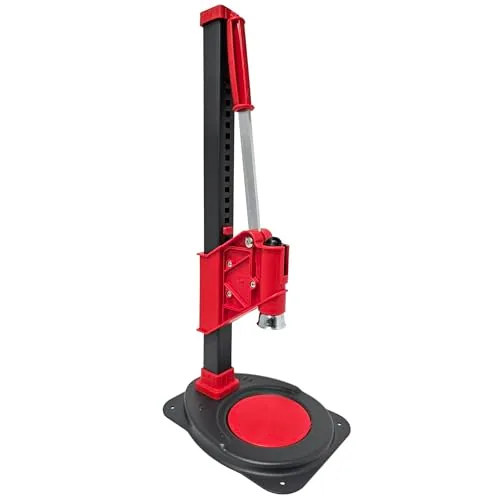
Ferrari Super Agata Bench Capper
- Type
- Adjustable bench capper
- Cap size
- Standard crown
Best for Bottling 5-gallon batches
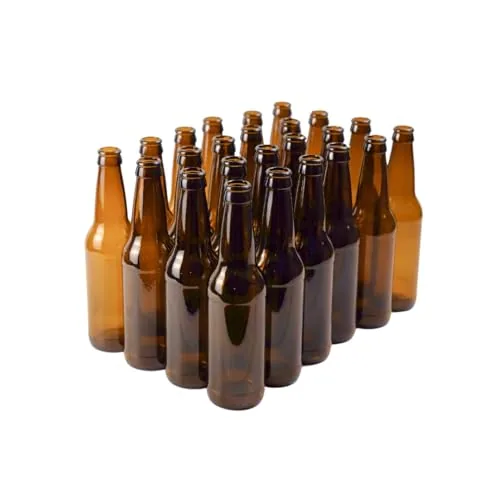
FastRack 12 oz Amber Longneck Beer Bottles, 24-Pack
- Type
- Pry-off amber longneck
- Count
- 24
- Size
- 12 oz
Best for A first bottling day
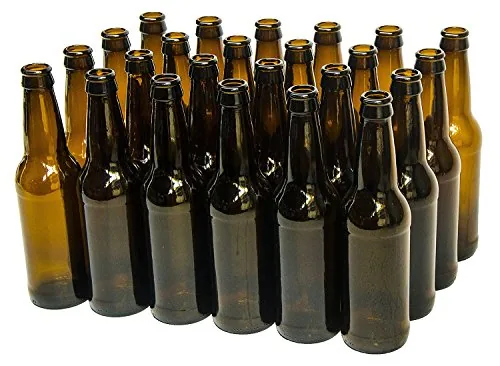
North Mountain Supply 12 oz Amber Longneck Bottles, 24-Pack
- Type
- Pry-off amber longneck
- Count
- 24
- Size
- 12 oz
Best for Bottling 5-gallon batches
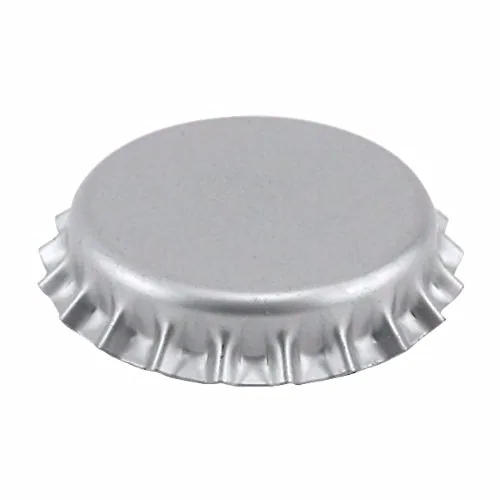
FastRack Oxygen Absorbing Crown Caps, 26 mm, 144 Ct
- Type
- Oxygen-absorbing pry-off caps
- Count
- 144
- Cap size
- 26 mm
Best for Standard bottling
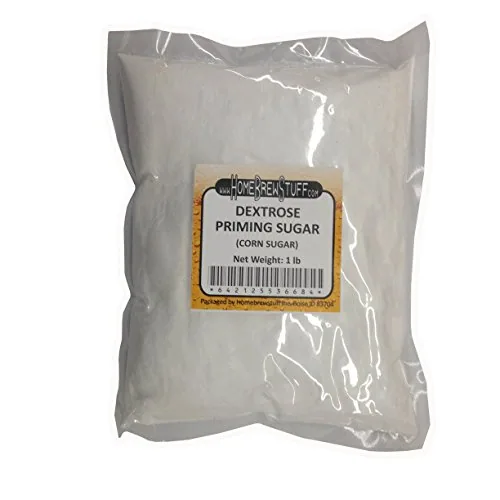
Craft Brew Union Corn Sugar (Dextrose), 1 lb
- Type
- Priming sugar (dextrose)
- Size
- 1 lb
Best for Bottle-conditioning a 5-gallon batch
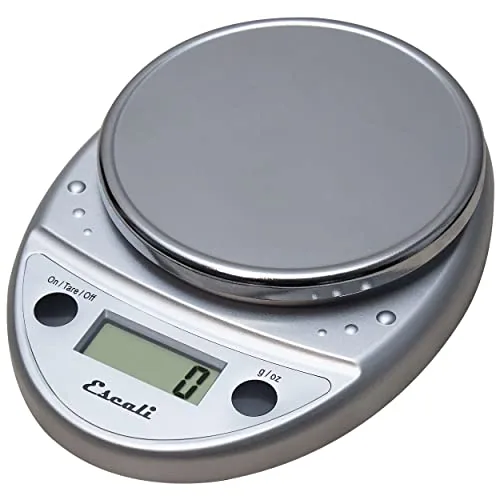
Escali Primo Digital Scale, 11 lb
- Range
- Up to 11 lb (5,000 g)
Best for Weighing hops and specialty grain
Step 1: make sure fermentation is finished
This is the step that prevents bottle bombs. Take a hydrometer reading, wait 2–3 days, and take another. If both match and the number is near the recipe’s expected final gravity, the yeast is done. If the gravity is still falling, wait. Airlock bubbles stopping is not proof; a leaky lid or a temperature drop can quiet the airlock while sugar remains.
If the gravity is stuck well above the expected number, don’t bottle. Warm the beer a few degrees, swirl gently to rouse the yeast and check again in a few days. See how to use a hydrometer for reading and temperature correction.
How much priming sugar for 5 gallons?
Carbonation is measured in volumes of CO2: how many times the beer’s own volume of gas is dissolved in it. Style families have typical ranges, and the beer already holds some CO2 from fermentation. That residual amount depends on the warmest temperature the beer reached after fermentation (warmer beer holds less), so the calculator subtracts it.
CO2 volumes by style family (bottle or keg)
| Style family | Volumes of CO2 | Bottle-safe? |
|---|---|---|
| British ales | 1.5–2.2 | ✓ standard bottles |
| American ales | 2.2–3 | ✓ standard bottles |
| European lagers | 2.4–2.6 | ✓ standard bottles |
| American lagers | 2.5–2.8 | ✓ standard bottles |
| Belgian ales | 2–4.5 | ~ standard bottles only to about 3 vol |
| German weizen | 2.8–5.1 | ~ standard bottles only to about 3 vol |
Style ranges: BYO: Carbonation priming chart. Standard 12 oz pry-off bottles are not meant for more than about 3.0 volumes. Bottle only after the gravity reads the same 2–3 days in a row.
For a 5 gal batch whose warmest temperature after fermentation was 68°F (20°C), the residual CO2 is about 0.86 volumes. The chart shows the corn sugar needed for common targets.
Corn sugar for 5 gal, warmest temperature 68°F
Grams = (target vol − 0.86) × 5 gal × 16.7 g per gal per vol
Table sugar works too but carbonates a little more per gram, so use less; dry malt extract needs more and is less predictable. The calculator handles corn sugar, anhydrous dextrose, table sugar and a DME estimate.
Priming sugar calculatorEnter volume, warmest temperature and style target; it warns when a target goes above about 3.0 volumes.Carbonation drops and tablets
Pre-measured drops are convenient for small batches and mixed bottle sizes, but each drop is a fixed amount per bottle, so you can’t fine-tune the level. Follow the maker’s count per bottle size.
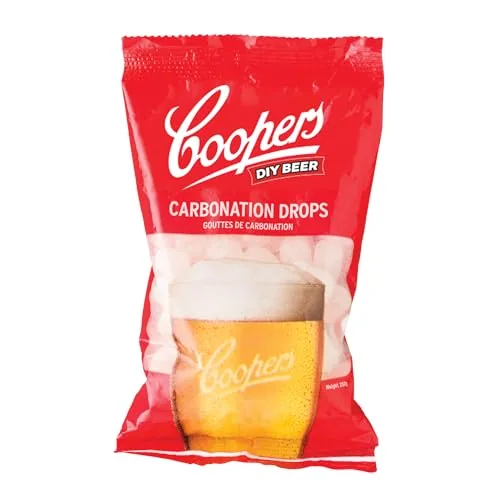
Coopers Carbonation Drops
- Type
- Carbonation drops
- Count
- 60
- Size
- Enough for 6 gal per maker
Best for Priming without measuring
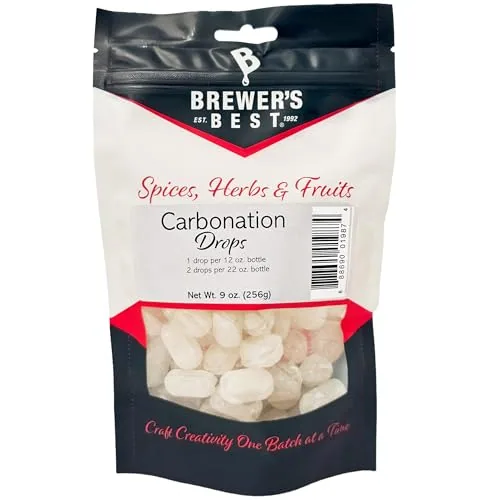
Brewer’s Best Carbonation Drops, 9 oz
- Type
- Carbonation tablets
- Count
- About 60 tablets
- Size
- 9 oz
Best for Simple bottle priming
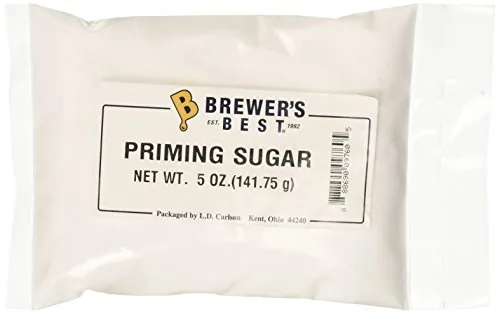
LD Carlson 9760 Priming Sugar, 5 oz
- Type
- Corn sugar for priming
- Size
- 5 oz
Best for One 5-gallon bottling day
Bottling day, step by step
- Clean bottles ahead
Rinse bottles right after pouring commercial or homebrew beer. On bottling day they only need inspection (chips, cracks, residue) and sanitizing.
- Sanitize everything that touches beer
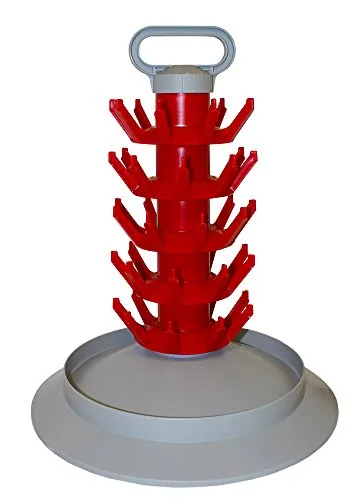
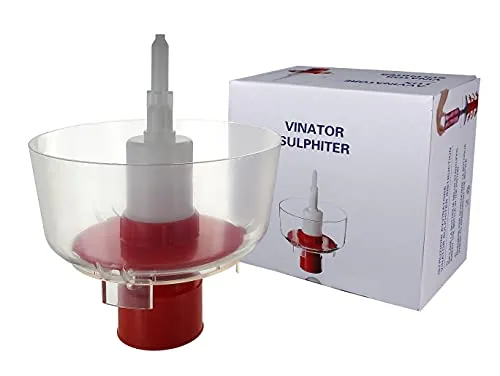
Bottles, caps, bottling bucket, spigot, auto-siphon, tubing and filler, using a no-rinse sanitizer at label dilution. A bottle tree and a rinser speed this up.
- Dissolve the priming sugar
Boil the weighed sugar in about 1–2 cups of water for a few minutes, cover and cool. Pour it into the empty bottling bucket.
- Siphon the beer onto the sugar
Let the tubing curl along the bottom of the bucket so the beer swirls in gently without splashing. Leave the yeast cake behind. The flow mixes the sugar; one slow stir with a sanitized spoon at the end evens it out.
- Fill each bottle
Attach the filler to the spigot, press it to the bottle bottom and fill until the beer reaches the top. Removing the filler leaves about an inch of headspace, which is right.
- Cap right away
Place a sanitized cap and crimp it with the capper. Check that the crimp is even all around.
- Store warm, in a box
Keep the bottles at about 68–75°F (20–24°C), in a closed box or tote, out of light. Most ales carbonate in about 2 weeks; bigger beers take longer.
- Test one, then chill
After 2 weeks, chill one bottle for a day and open it. If it is carbonated, move the batch to the fridge, which stops further pressure build-up and helps the yeast settle.
How to avoid bottle bombs
A bottle bomb is a bottle that over-pressurizes and breaks, sometimes violently. The causes are well known, and so are the fixes.
Bottle bomb causes and prevention
| Cause | What happens | Prevention |
|---|---|---|
| Bottling before final gravity | Leftover sugar ferments in the bottle on top of the priming sugar | ✓ 2–3 identical readings over 2–3 days |
| Too much priming sugar | More CO2 than the glass is meant to hold | ✓ Weigh with the calculator; stay ≤ about 3.0 vol in standard bottles |
| Uneven mixing | Some bottles get a pocket of sugar | ✓ Mix in a bottling bucket, not per bottle |
| Infection | Wild yeast or bacteria eat sugars that brewing yeast can’t | ✓ Clean and sanitize; watch for gushers |
| Weak or damaged bottles | Thin, chipped or twist-off glass fails first | ✓ Inspect each bottle; use heavy pry-off glass |
| Warm storage for months | Pressure rises; any defect shows | ✓ Refrigerate once carbonated |
Source: Palmer, How to Brew; BYO carbonation priming chart
If you suspect over-carbonation (gushing when opened, bulging caps), move the whole batch into a fridge inside a closed container, wearing eye protection and gloves, and open bottles over a sink pointed away from you. Never store bottles where they could injure someone if they broke.
Swing-tops, bombers and other bottles
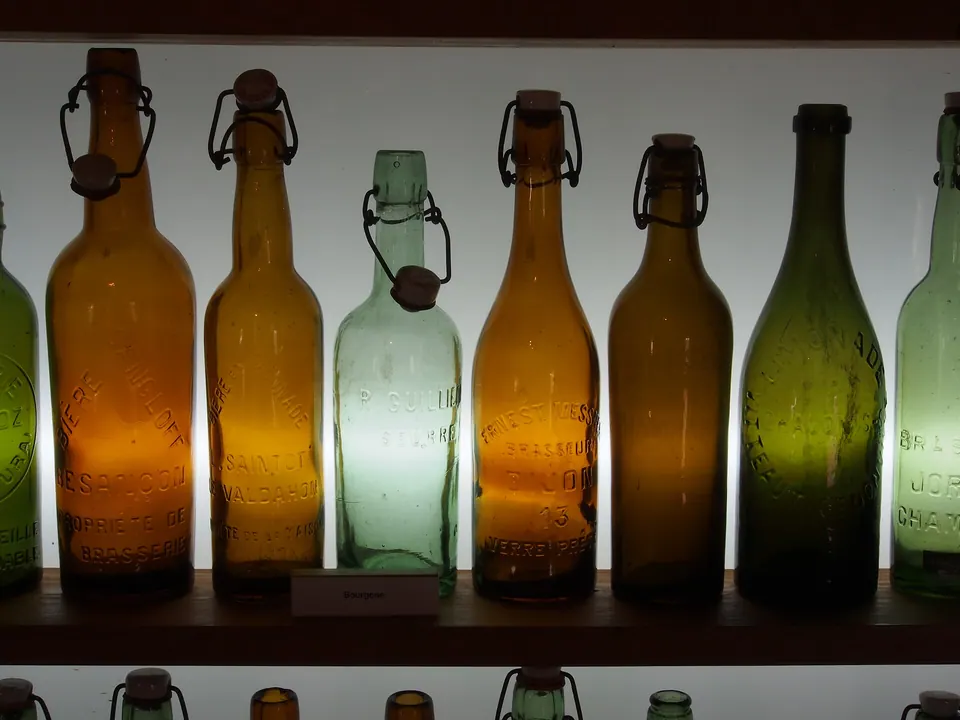
Swing-top bottles skip the capper. Check the rubber gaskets each time and replace them when they crack or flatten. Larger bottles (22 oz bombers, 500 mL, 750 mL) mean fewer to fill and cap. Belgian-style bottles for very high carbonation must be rated for it by the maker; standard American bottles are not.
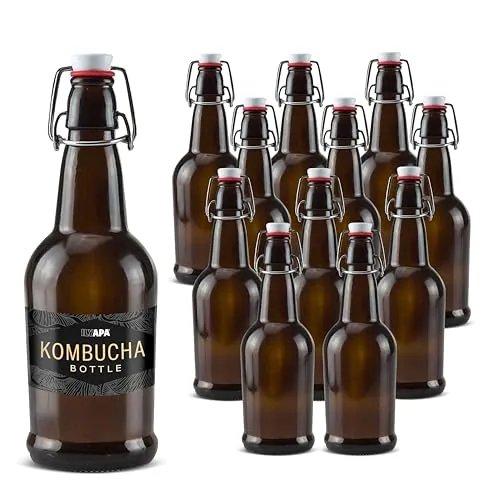
Ilyapa 16 oz Amber Swing-Top Bottles, 12-Pack
- Type
- Swing-top amber glass
- Count
- 12
- Size
- 16 oz
Best for Capper-free bottling
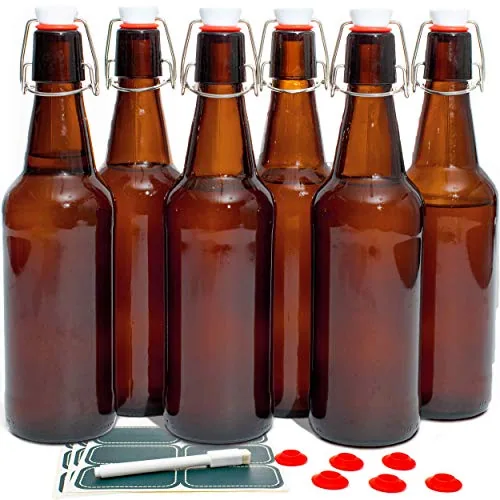
Otis Classic 16 oz Amber Swing-Top Bottles, 6-Pack
- Type
- Swing-top amber glass, ceramic caps
- Count
- 6
- Size
- 16 oz
Best for Gift-ready homebrew bottles
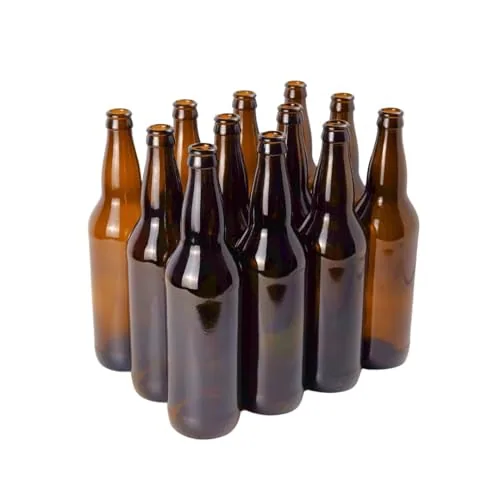
FastRack 22 oz Amber Longneck Beer Bottles, 12-Pack
- Type
- Pry-off amber longneck
- Count
- 12
- Size
- 22 oz
Best for Fewer bottles per batch
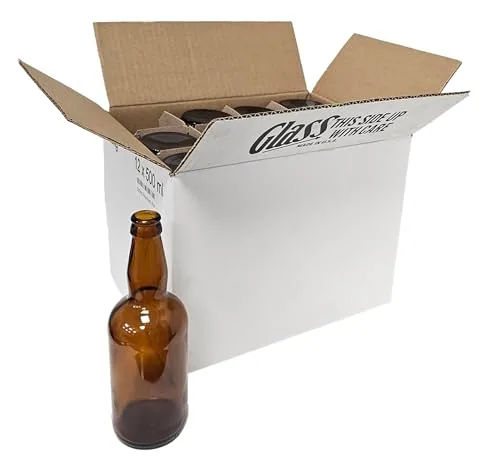
Home Brew Ohio 500 ml Amber Crown Bottles, 12-Pack
- Type
- Pry-off amber longneck
- Count
- 12
- Size
- 500 ml (16.9 fl oz)
Best for Half-liter pours
Mistakes to avoid
- Bottling on a schedule instead of on a reading. The hydrometer decides.
- Measuring sugar by volume. Cups and scoops vary; weigh in grams.
- Using the fermentation temperature you set instead of the warmest the beer reached. It changes the residual CO2.
- Adding sugar to each bottle by hand. Uneven doses are the classic route to a few bombs in a batch.
- Splashing beer during transfer. Oxygen causes cardboard staleness within weeks.
- Refrigerating too early. Cold yeast stops working and the beer stays flat; condition warm first.
- Using twist-off or chipped bottles. They leak or fail.
Bottling or kegging?
Bottles are the cheapest packaging, travel well and age well. Kegging carbonates in days and replaces 50 bottles with one vessel, but costs more up front and needs CO2. Many brewers keg most batches and bottle a few for sharing. Read how to keg homebrew and the background in carbonation explained.
Before you share, use the ABV calculator to know the strength; bottle conditioning adds a small amount of alcohol from the priming sugar. Serve only to adults 21+, and never drink and drive.
Gear picks for this guide: best bottle cappers and best hydrometers for homebrewing.