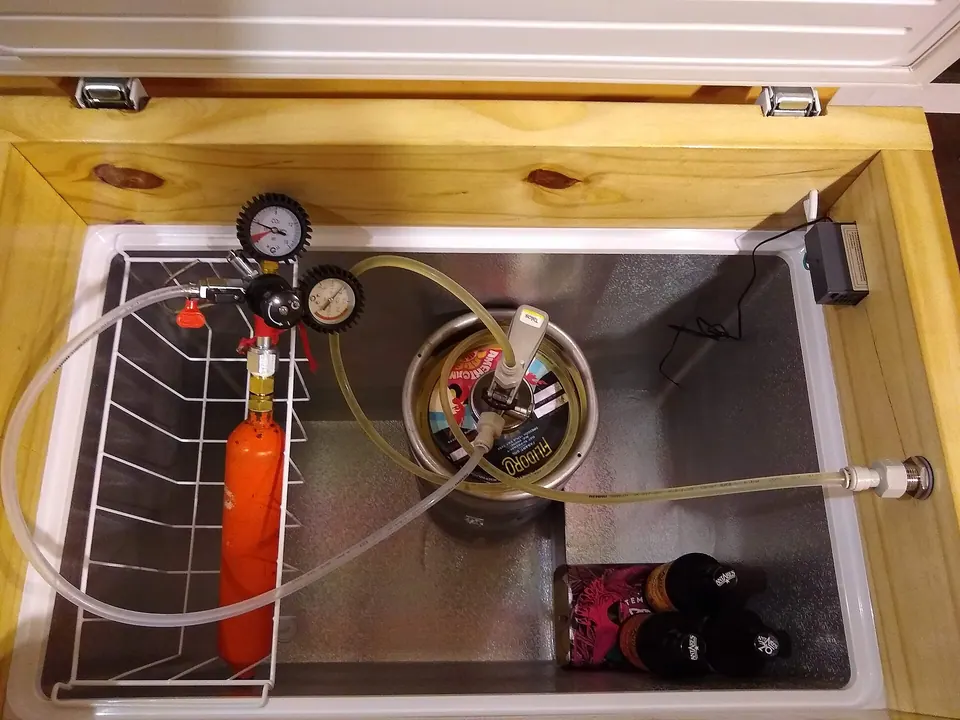
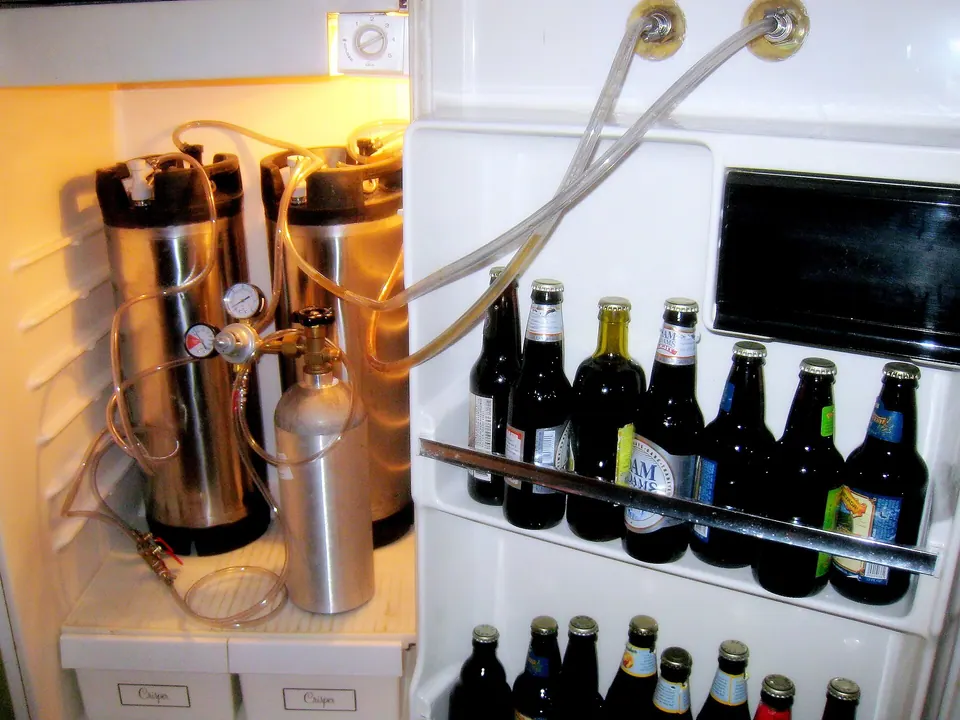
- Kegging replaces about 50 bottles with one 5 gal corny keg and carbonates in days instead of weeks.
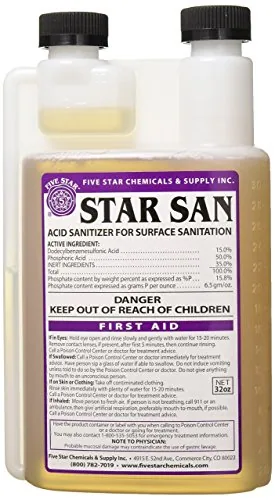
- Clean the keg, sanitize it, and push the sanitizer out with CO2 so the beer goes into an oxygen-free keg.
- Set-and-forget carbonation: hold the beer cold at the PSI from the chart (about 11 psi at 38°F for 2.5 volumes) for 1–2 weeks.
- Leak-check every connection with sanitizer spray; slow leaks empty CO2 tanks and flatten beer.
- Keep CO2 cylinders upright and secured, always use a regulator, and ventilate if you smell or suspect a leak.
Learning how to keg homebrew is the upgrade most brewers wish they had made sooner. A 5 gal (19 L) ball-lock corny keg holds a whole batch, a CO2 cylinder and regulator carbonate it, and a fridge or kegerator keeps it cold and on tap. No priming sugar, no bottle conditioning wait and no washing 50 bottles.
This guide covers the full routine with a standard ball-lock keg. The cleaning and purging steps follow the American Homebrewers Association’s kegging introduction; carbonation pressures come from the empirical formula on our keg carbonation chart, checked against the BYO grid (40°F and 2.4 volumes: 11.2 psi). CO2 safety follows maker manuals.
What you need to start kegging
Kegging parts list
| Part | What to look for | Notes |
|---|---|---|
| Corny keg, 5 gal ball lock | New or reconditioned; good O-rings and posts | ✓ Two kegs let you keep one on tap and one carbonating |
| CO2 cylinder | 5 lb is common; aluminum; in hydrostatic test date | ~ Ships empty; fill at a gas or welding supplier |
| Regulator | Dual gauge (tank and output), 0–60 psi output range | ✓ Built-in pressure relief |
| Gas and liquid disconnects | Ball lock (gas gray, liquid black) | ✓ Match your keg type |
| Gas and beer line | Beer line length matched to serving pressure | ~ Short lines pour foam |
| Faucet | Picnic tap or forward-sealing faucet | ✓ Forward-sealing stays cleaner |
| Cold space | Kegerator, keezer or fridge | ✓ 34–40°F for serving |
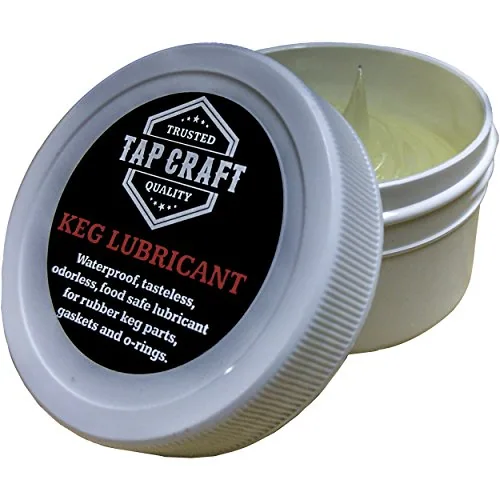
| Cleaner, sanitizer, keg lube | Label use | ✓ Lube O-rings lightly |
Source: AHA: An introduction to kegging homebrew; Kegco and Taprite listings
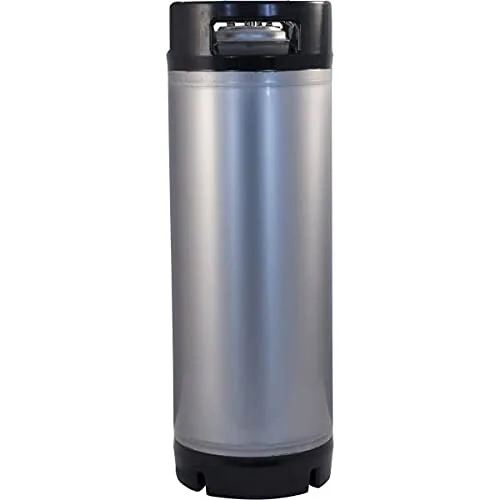
KegLand New Cornelius Keg, 5 Gal, Ball Lock
- Kegs
- 5 gal (19 L), ball lock
- Pressure
- 130 PSI operating
- Material
- 304 stainless
Best for First homebrew keg
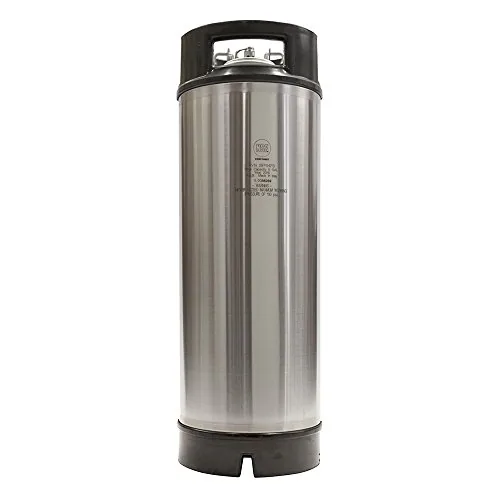
AEB New 5 Gal Ball Lock Keg, Dual Rubber Handle
- Kegs
- 5 gal ball lock
- Material
- 304 stainless, made in Italy
- Size
- 8.75 × 25 in.
Best for Corny keg built to last
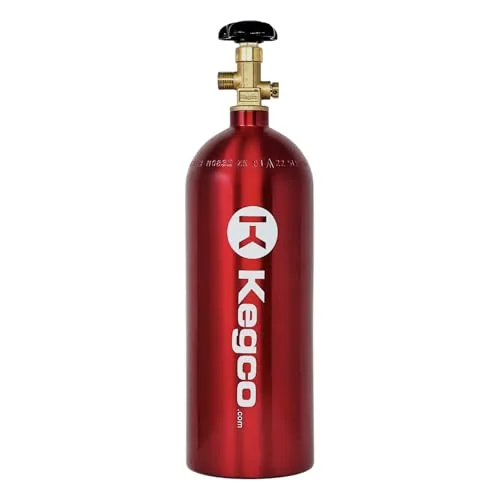
Kegco 3PB5-RED 5 lb Aluminum CO2 Tank
- Gauges
- CGA 320 valve
- Size
- 5 lb
- Material
- 6061-T6 aluminum, 1800 PSI service
Best for Kegerator CO2 supply
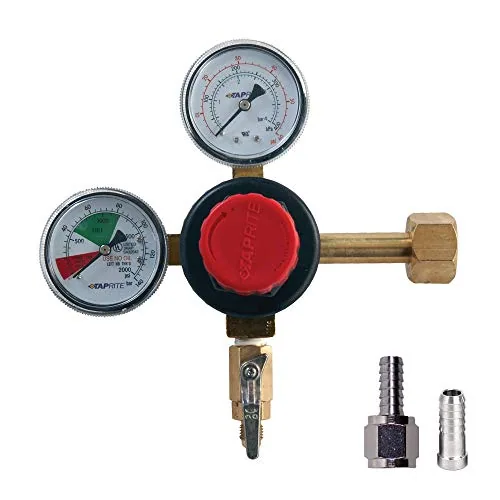
Taprite Dual Gauge CO2 Regulator with MFL Check Valve
- Couplers
- MFL check valve; 1/4 and 5/16 in. barbs
- Gauges
- Dual gauge
- Pressure
- Safety blow-off at 55–60 PSI
Best for First kegging regulator
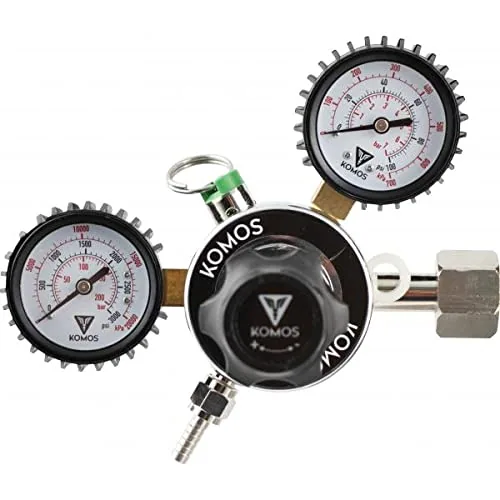
KOMOS Dual Gauge CO2 Regulator, 0–60 PSI, Duotight Adapter
- Couplers
- 1/4 in. flare + Duotight adapter
- Gauges
- Dual gauge
- Pressure
- 0–60 PSI, 65 psi PRV
Best for EVABarrier gas lines
A complete kegerator saves building time. Homebrew models such as the Kegco HBK309 series ship set up for ball-lock kegs; commercial Sanke kegs need a D-system coupler instead. A conversion kit turns a fridge or chest freezer into a keezer.
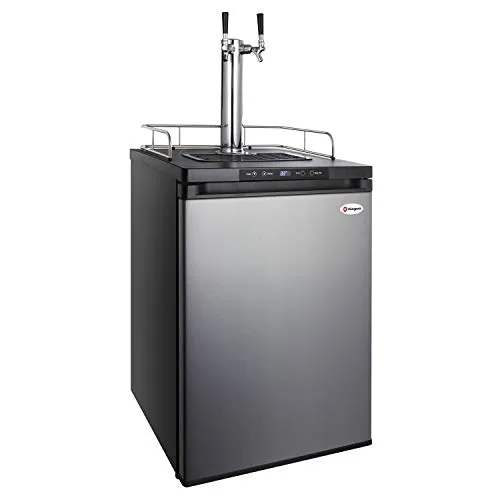
Kegco HBK309S-2 Homebrew Kegerator, 2 Tap, Stainless
- Taps
- 2
- Kegs
- Homebrew (ball lock) kegs
- Temp range
- Digital, 1° steps; dispense or ferment
Best for A dedicated homebrew kegerator
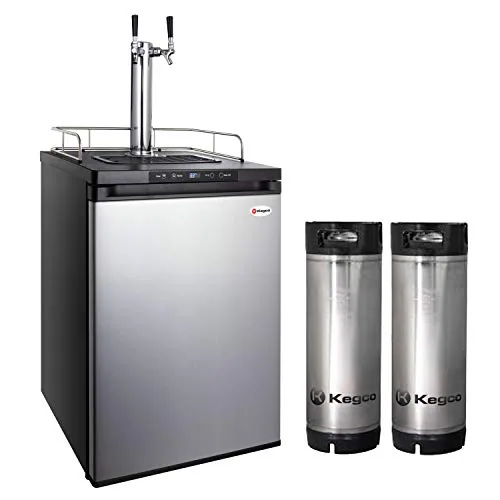
Kegco HBK309S-2K Homebrew Kegerator with Ball Lock Keg
- Taps
- 2
- Kegs
- Includes 1 ball lock keg; fits three 5 gal ball/pin lock
- Temp range
- 32–75°F
Best for Complete homebrew draft setup
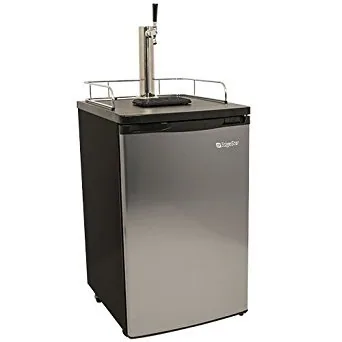
EdgeStar KC2000SS Full Size Kegerator, Stainless
- Taps
- 1
- Kegs
- 1/2 barrel, pony, or two 1/6 or corny kegs
- Temp range
- Low 30s to mid 40s °F
Best for Commercial or corny kegs
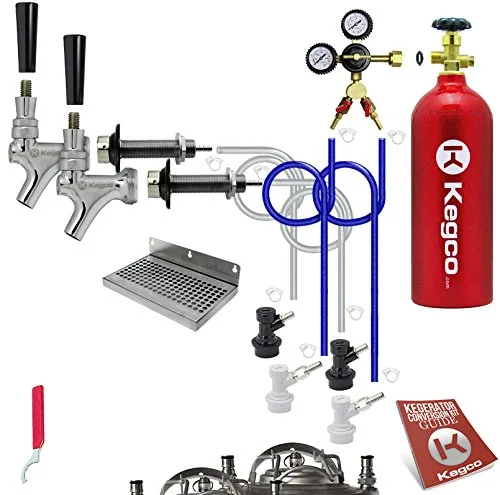
Kegco EBDHCK2-5T Deluxe Homebrew 2-Tap Conversion Kit with 5 lb CO2
- Taps
- 2 (door mount)
- Couplers
- 2 sets ball lock gas-in/beer-out
- Gauges
- Dual gauge, T-style adjuster
Best for Converting a fridge for corny kegs
How do you keg homebrew, step by step?
- Confirm fermentation is finished
Take two matching hydrometer readings a few days apart, just as for bottling. Kegs have pressure relief valves, but you still want a finished, stable beer. Cold crashing for 1–2 days first gives clearer beer.
- Clean the keg
The AHA recommends disassembling the keg now and then, soaking the parts in warm water with cleaner for a few hours and replacing stained or smelly O-rings. Rinse well with hot water.
- Sanitize and purge with CO2
Fill the keg with no-rinse sanitizer at label dilution, close it, shake and flip it to wet the lid. Then connect gas at about 5 psi and push the sanitizer out through the liquid post until gas hisses through, as the AHA describes. The keg is now sanitized and full of CO2.
- Transfer the beer
Siphon or pump the beer into the keg with minimal splashing, or do a closed transfer from a pressure-capable fermenter into the purged keg’s liquid post. Oxygen pickup at this step is the main cause of stale, dull hoppy beers.
- Seal and purge the headspace
Close the lid, pressurize to about 20–30 psi to seat the lid O-ring, then pull the pressure relief valve a few times to vent air from the headspace.
- Leak-check
Spray every connection, the lid and the posts with sanitizer and look for growing bubbles. Then close the tank valve for an hour and see whether the regulator’s output gauge drops.
- Carbonate
Chill the keg to serving temperature and set the regulator to the chart pressure for your target volumes (below). Leave it on gas for 1–2 weeks.
- Balance and pour
Lower to serving pressure if you carbonated higher, connect the beer line and pour. The first pint is often cloudy with yeast; after that it clears.

Keg carbonation chart: what PSI for kegging?
The pressure needed for a carbonation level depends on the beer’s temperature: cold beer absorbs CO2 at lower pressure. Read your beer’s temperature (not the room’s) and your style’s target volumes, and find the PSI in the chart.
Keg pressure (psi, sea level) by beer temperature and target CO2 volumes
| Beer temp | 1.8 vol | 2.0 vol | 2.2 vol | 2.4 vol | 2.6 vol | 2.8 vol | 3.0 vol | 3.2 vol |
|---|---|---|---|---|---|---|---|---|
| 32°F 0°C | 1.6 | 3.5 | 5.4 | 7.3 | 9.2 | 11.0 | 12.9 | 14.8 |
| 34°F 1.1°C | 2.3 | 4.3 | 6.3 | 8.2 | 10.2 | 12.1 | 14.1 | 16.0 |
| 36°F 2.2°C | 3.1 | 5.1 | 7.2 | 9.2 | 11.2 | 13.3 | 15.3 | 17.3 |
| 38°F 3.3°C | 3.9 | 6.0 | 8.1 | 10.2 | 12.3 | 14.4 | 16.5 | 18.6 |
| 40°F 4.4°C | 4.7 | 6.8 | 9.0 | 11.2 | 13.4 | 15.5 | 17.7 | 19.8 |
| 42°F 5.6°C | 5.5 | 7.7 | 10.0 | 12.2 | 14.4 | 16.7 | 18.9 | 21.1 |
| 44°F 6.7°C | 6.3 | 8.6 | 10.9 | 13.2 | 15.5 | 17.8 | 20.1 | 22.4 |
| 46°F 7.8°C | 7.1 | 9.5 | 11.8 | 14.2 | 16.6 | 19.0 | 21.3 | 23.7 |
| 48°F 8.9°C | 7.9 | 10.4 | 12.8 | 15.3 | 17.7 | 20.1 | 22.6 | 25.0 |
| 50°F 10°C | 8.7 | 11.3 | 13.8 | 16.3 | 18.8 | 21.3 | 23.8 | 26.3 |
| 52°F 11.1°C | 9.6 | 12.2 | 14.8 | 17.3 | 19.9 | 22.5 | 25.1 | 27.6 |
| 54°F 12.2°C | 10.4 | 13.1 | 15.7 | 18.4 | 21.1 | 23.7 | 26.3 | 29.0 |
| 56°F 13.3°C | 11.3 | 14.0 | 16.7 | 19.5 | 22.2 | 24.9 | 27.6 | 30.3 |
Formula: PSI = −16.6999 − 0.0101059·T + 0.00116512·T² + 0.173354·T·V + 4.24267·V − 0.0684226·V². Checked against the BYO grid (40°F and 2.4 vol: 11.19 psi by formula, 11.2 psi on the chart). Regulator gauges read relative to local air pressure. BYO notes that Denver needs about 3 psi over the sea-level chart; add roughly 0.5 psi per 1,000 ft. Sources: BYO: Carbonation priming chart; Brewer's Friend: Force carbonation chart; Brewers Association: Draught Beer Quality Manual.
PSI for 2.5 volumes by beer temperature
Sea-level gauge pressure from the empirical PSI formula (checked vs BYO)
Regulator gauges read relative to local air pressure, so at altitude add about 0.5 psi per 1,000 ft; BYO notes Denver needs about 3 psi over the sea-level chart.
Keg carbonation chart and PSI calculatorEnter temperature, target volumes and altitude to get the regulator setting.Force carbonation methods: slow, burst and shake
Three ways to carbonate a keg
| Method | How | Time | Risk |
|---|---|---|---|
| Set and forget | Hold at chart PSI and serving temperature | About 1–2 weeks | ✓ Lowest risk of overcarbonation |
| Burst carbonation | 30–40 psi for 24–36 hours, then vent to serving PSI | 2–4 days | ~ Easy to overshoot; check before serving |
| Shake | Gas connected at higher pressure while rocking the keg | Minutes to hours | ✗ Overcarbonation and foam are common |
| Carbonation stone | CO2 diffused through a stone in the keg | 1–2 days | ~ Needs the right lid or fitting |
Source: AHA kegging introduction; BYO forced carbonation; Brewers Association Draught Beer Quality Manual
Set-and-forget is the method to start with. If you burst-carb, never exceed the keg’s or the fittings’ rated pressure, and remember that the regulator’s relief valve is a backup, not a setting.
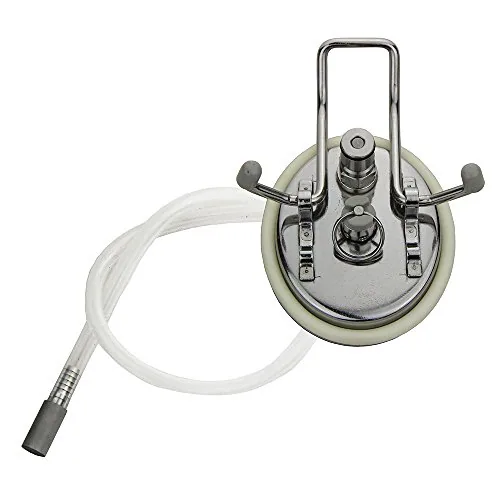
UP100 Corny Keg Carbonation Lid with 0.5 Micron Stone
- Kegs
- Cornelius-style ball lock
- Type
- Carbonation keg lid
- Size
- 0.5 micron stone, 130 PSI working pressure
Best for Carbonating in the keg
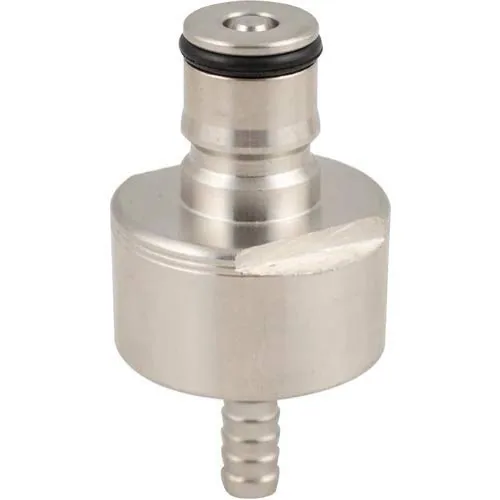
KegLand Stainless Carbonation and Line Cleaning Cap (KL00826)
- Couplers
- Ball lock cap
- Material
- Stainless steel
Best for Carbonating small bottles
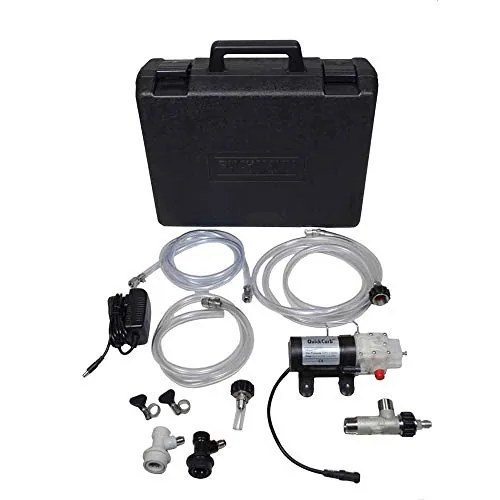
Blichmann QuickCarb Carbonator
- Kegs
- 5 gal
- Couplers
- QuickConnector fittings
- Size
- 10 micron stainless stone, DC pump
Best for Fast carbonation
Serving: temperature, pressure and foam
Foamy pours usually come from one of three things: beer warmer than the chart temperature, pressure set higher than the carbonation level needs, or beer lines too short to slow the flow. Most homebrew kegerators serve at 36–40°F (2–4°C) at roughly 10–12 psi, and 5–10 ft of 3/16 in. beer line gives enough resistance for a gentle pour. The Brewers Association’s Draught Beer Quality Manual explains line balancing in detail.
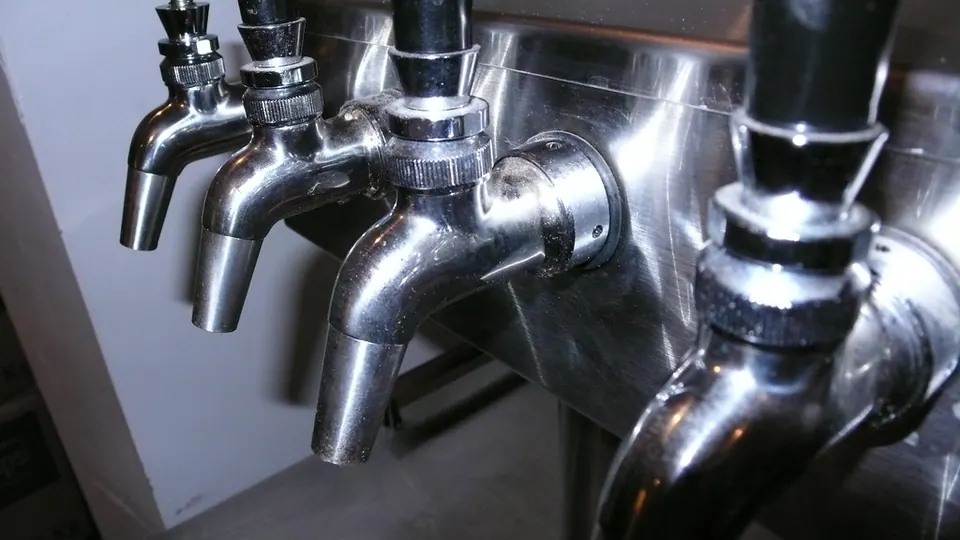
Forward-sealing faucets keep beer out of the faucet body between pours and stay cleaner. Clean beer lines regularly with a line cleaner; dirty lines grow bacteria that cause off-flavors.
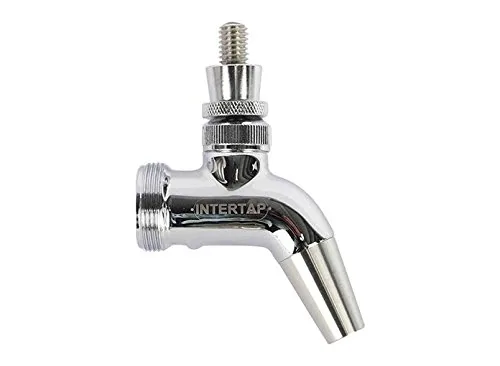
Intertap D1210 Forward Sealing Stainless Faucet
- Taps
- 1 forward-sealing faucet
- Couplers
- Standard 1 1/8 in.-18 body thread
- Material
- All stainless
Best for Upgrading kegerator faucets
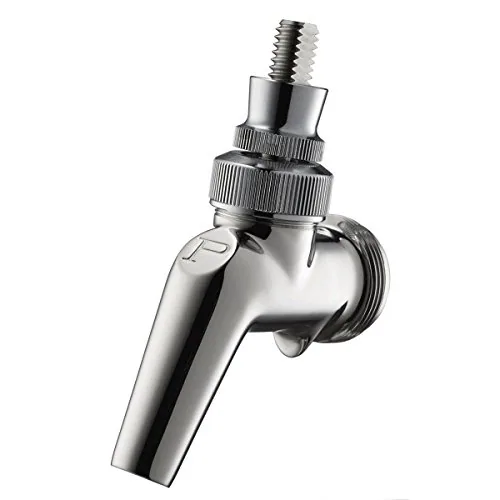
Perlick 630SS Stainless Forward Seal Faucet
- Taps
- 1 forward-seal faucet
- Type
- Beer faucet
- Material
- Stainless steel
Best for Kegerator faucet upgrade
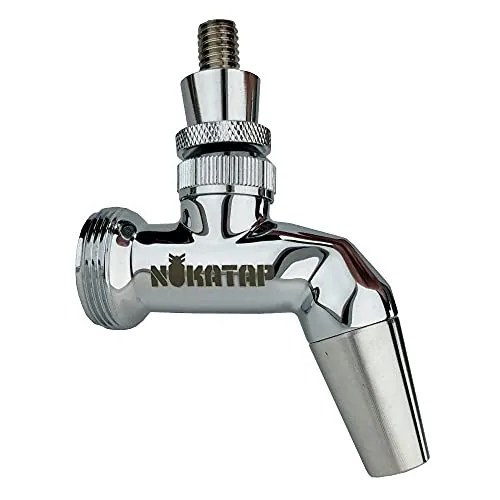
KegLand Nukatap SS Forward Sealing Faucet
- Taps
- 1 forward-sealing faucet
- Couplers
- Fits Intertap accessories and shanks
- Material
- Chrome-plated stainless steel
Best for Budget forward-sealing faucet
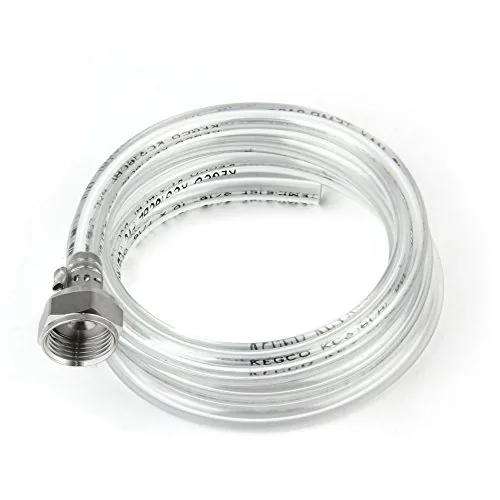
Kegco 5 ft 3/16 in. Beer Line with Hex Nut
- Couplers
- Hex coupling nut
- Type
- Beer line assembly
- Size
- 5 ft × 3/16 in. ID vinyl
Best for Replacing beer line
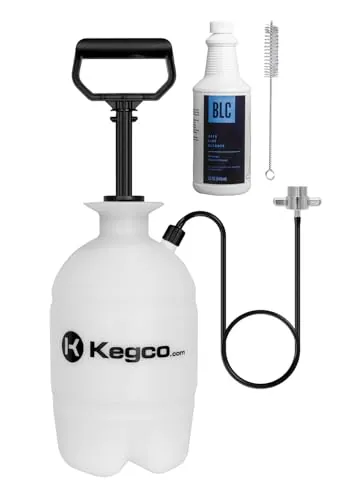
Kegco Deluxe Hand Pump Keg Line Cleaning Kit with 32 oz Cleaner
- Type
- Hand pump bottle + alkaline cleaner
- Use
- Cleaning beer lines and faucet
- Size
- 1/2 gal bottle, 32 oz cleaner
Best for Line cleaning
CO2 safety
CO2 is stored at high pressure, and the gas itself displaces oxygen in closed spaces. Basements, closets and keezers in small rooms deserve extra care.
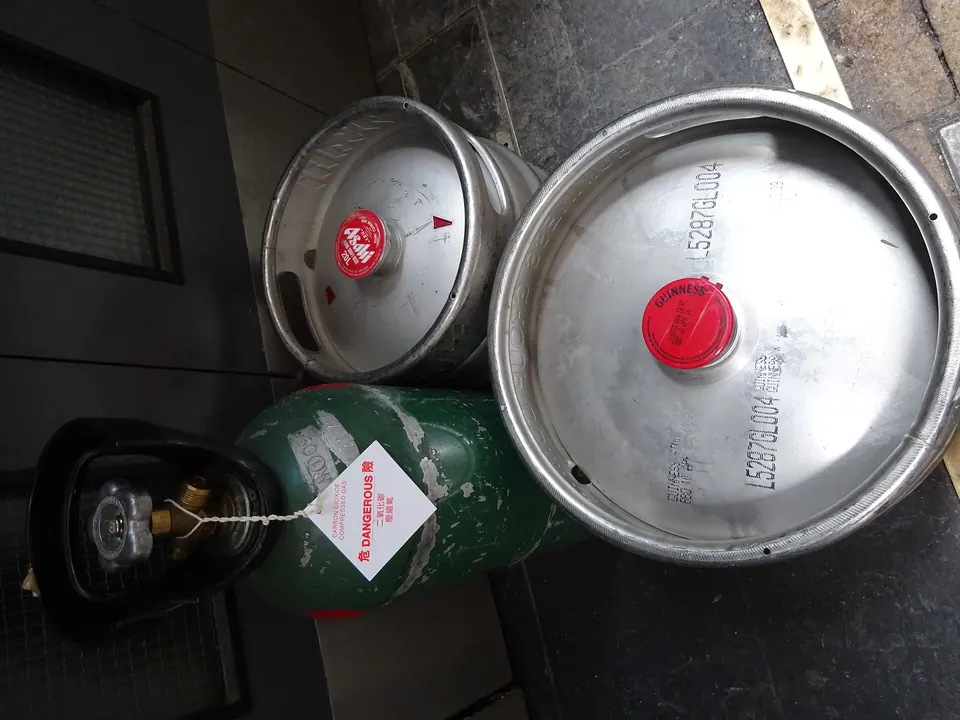
- Keep the cylinder upright and chained or strapped so it can’t fall.
- Always use a regulator; never connect a cylinder directly to a keg.
- Store cylinders away from heat and direct sun; don’t leave them in a hot car.
- If you suspect a big leak, close the tank valve, ventilate and leave the area.
- Consider a CO2 monitor where the keezer or tank lives in a small room.

Aranet4 Wireless CO2 Monitor
- Range
- CO2, temperature, humidity, pressure
- Accuracy
- NDIR sensor
- Battery
- Up to 4 years (maker)
Best for CO2 awareness in a garage or basement
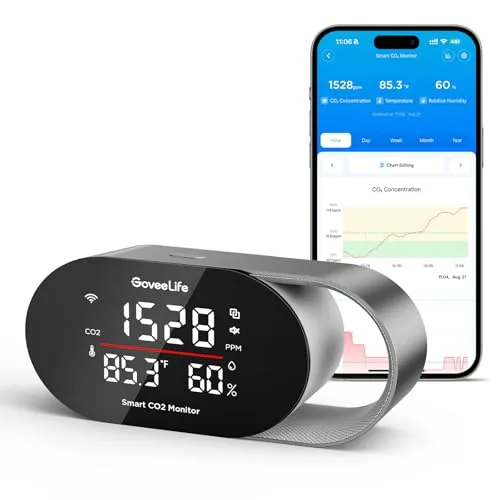
GoveeLife H5140 Smart CO2 Monitor with Alarm
- Range
- CO2, temperature, humidity
- Accuracy
- ±(40 ppm + 5%)
- Connectivity
- App with alarm
Best for CO2 alarm for a keezer room
Mistakes to avoid
- Skipping the leak check. A slow leak can empty a 5 lb tank in days.
- Carbonating at room temperature at serving pressure. Warm beer needs much more pressure for the same carbonation; follow the chart for the beer’s real temperature.
- Shaking aggressively. It overshoots and foams for days.
- Short beer lines. Too little resistance means foam at any pressure.
- Mixing up gas and liquid posts. Disconnects are marked; forcing the wrong one damages the post.
- Ignoring O-rings. Dry or cracked O-rings leak; lube lightly and replace when worn.
- Letting lines go uncleaned. Clean them between kegs.
Who should keg, and with what
- Brewing every month or two: two corny kegs, a 5 lb cylinder, a dual-gauge regulator and a kegerator.
- Already own a spare fridge or chest freezer: a conversion kit or collar build (keezer).
- Small space: mini kegs or a single-tap kegerator.
- Still want bottles for sharing: keg first, then fill bottles from the keg with a counter-pressure filler.
Bottling is still the right choice for aging strong beers or sending beer to competitions; compare the two in how to bottle homebrew. The background on volumes and pressure is in carbonation explained, and every kegerator and keg part is in the switching to kegs section.
Gear picks for this guide: best homebrew keg systems and best CO2 regulators for kegging.