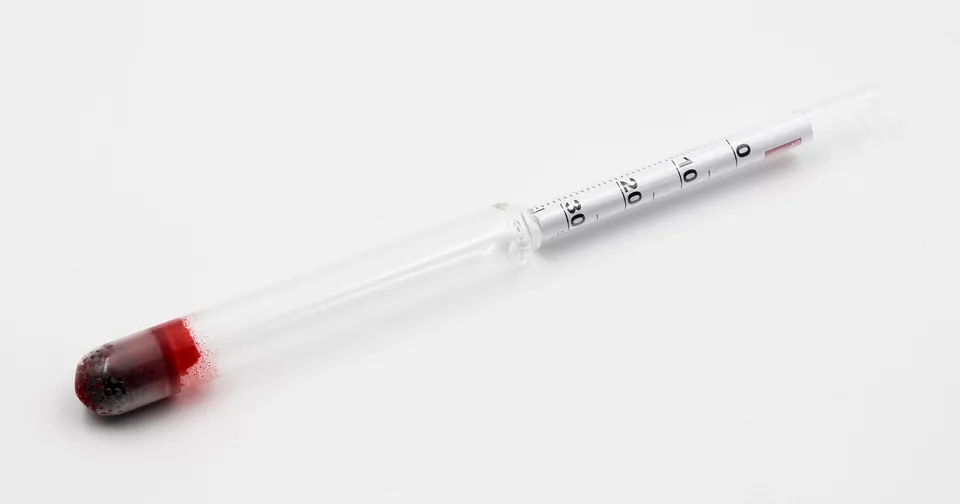
- The best hydrometer for most homebrewers is a triple-scale glass hydrometer sold with a test jar; SOLIGT and Brewing America kits include the jar, a brush and a case or chart.
- Most picks read SG 0.990–1.170 (some 0.99–1.16), which covers beer, cider, wine and most mead.
- Hydrometers are calibrated at one temperature (often 60°F); a 1.050 reading at 80°F corrects to about 1.052 on a 60°F hydrometer.
- Break glass a lot? The Craft A Brew polycarbonate hydrometer is shatter-resistant; a Tilt logs gravity without sampling.
The best hydrometer for homebrewing tells you two things: how much sugar your wort or must starts with (original gravity) and when fermentation is finished (final gravity). Together they give you the alcohol content, and three equal readings over a few days tell you it is safe to bottle. A basic glass hydrometer and a narrow test jar are still the reference tool every other gravity meter is checked against.
We compared eight picks from eight brands: six glass triple-scale hydrometers and kits, a polycarbonate hydrometer and a wireless Tilt for logging. A sanitized wine thief, turkey baster or your auto-siphon pulls the sample. Ranges are exactly as listed; where a listing doesn’t give one, we say not listed. We also flag which picks include a test jar, because a hydrometer without one needs a separate jar.
Our picks
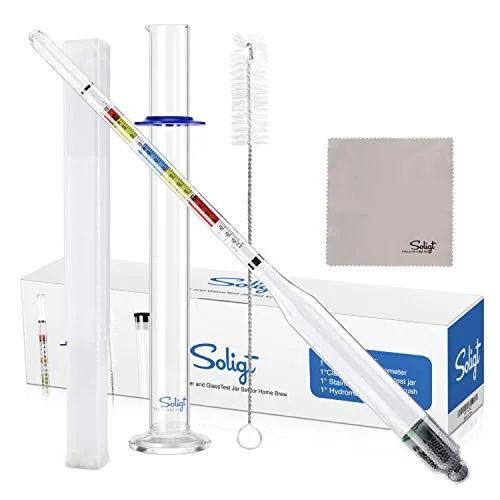
SOLIGT Triple Scale Hydrometer & Glass Test Jar Kit
SOLIGT
- Range
- SG 0.990–1.170, Brix 0–35, potential ABV 0–20%
- Scale
- Triple (SG, Brix, potential alcohol)
SOLIGT packs a triple-scale glass hydrometer (SG 0.990–1.170, Brix 0–35, potential ABV 0–20%) with a glass test jar, a stainless cylinder brush, a storage case, an instruction sheet with a conversion chart and a cloth. The narrow jar needs about 125 mL instead of 250 mL per the maker.
Best for: A complete first hydrometer kit
Skip if: You already own a test jar
- Test jar, case and brush included
- SG 0.990–1.170
- Smaller sample (125 mL per maker)
- Calibration temperature not listed
- Glass can break
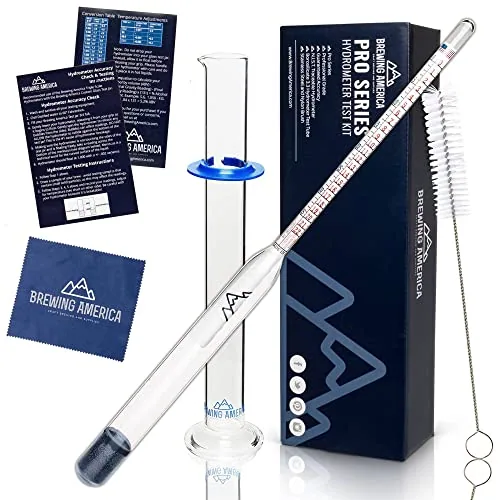
Brewing America Triple Scale Hydrometer & Test Jar (USA-Made)
Brewing America
- Range
- SG 0.990–1.170 (listing)
- Accuracy
- NIST-traceable (per maker)
- Scale
- Triple scale
Brewing America’s kit pairs a US-made triple-scale hydrometer the maker describes as NIST-traceable with a borosilicate glass test jar and a cylinder brush. The listing gives SG 0.990–1.170, Brix/Balling 0–35 and potential alcohol 0–22%.
Best for: Brewers who want a traceable, US-made glass hydrometer
Skip if: You want the cheapest spare
- Made in USA
- NIST-traceable per maker
- Borosilicate jar
- Calibration temperature not listed
- No case listed
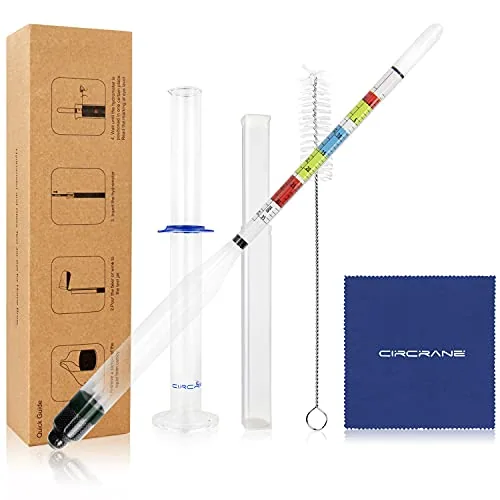
Circrane Triple Scale Hydrometer & Glass Cylinder Set
Circrane
- Range
- SG 0.99–1.17 (listing)
- Scale
- Triple (SG, Brix, potential alcohol)
Circrane’s set pairs a triple-scale hydrometer (SG 0.99–1.17, Brix 0–35, potential ABV 0–20%) with an extra-narrow glass cylinder that needs about 125 mL per the maker, so you waste less beer per reading.
Best for: Frequent readings on small batches
Skip if: You want a storage case
- Narrow cylinder
- Three scales
- Mercury- and lead-free per maker
- No case or brush listed
- Calibration temperature not listed
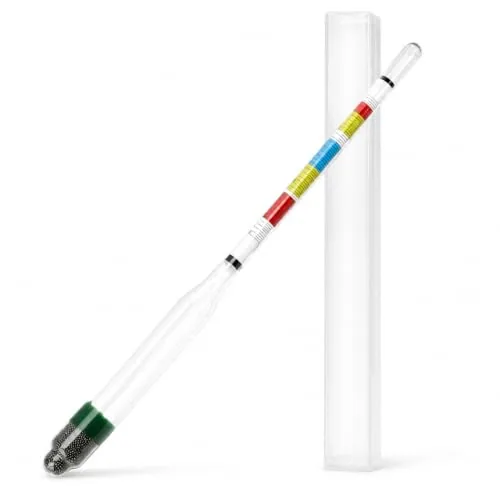
FastRack Triple Scale Hydrometer
FastRack
- Scale
- Triple (SG, Balling, potential alcohol)
FastRack’s triple-scale hydrometer reads SG 0.990–1.170, Balling −3 to +35 and potential alcohol −2 to +22%, and is free of mercury and lead per the listing. It is the hydrometer only, for beer, wine, mead or kombucha fermentations.
Best for: Replacing a broken hydrometer
Skip if: You don’t have a test jar
- Wide Balling scale
- Mercury- and lead-free
- Simple
- No jar
- Calibration temperature not listed
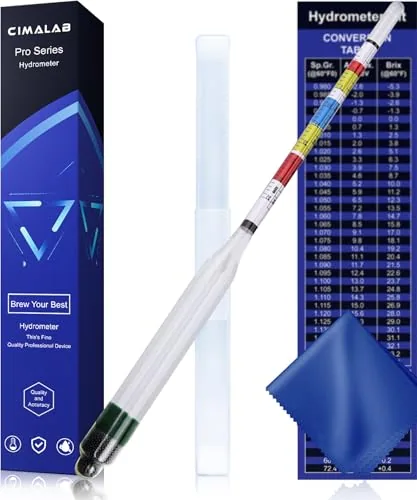
CIMALAB Triple Scale Hydrometer
CIMALAB
- Range
- SG 0.99–1.16, Brix 0–35, potential alcohol 0–20%
- Scale
- Triple, color-coded bands
CIMALAB’s triple-scale hydrometer uses large print and color-coded bands for SG (0.99–1.16), Brix (0–35) and potential alcohol (0–20%), which helps when reading a meniscus in a dim garage.
Best for: Brewers who struggle with tiny markings
Skip if: You brew very high-gravity mead or wine above 1.160
- Color-coded bands
- Large print
- Three scales
- Tops out at 1.16
- Hydrometer only
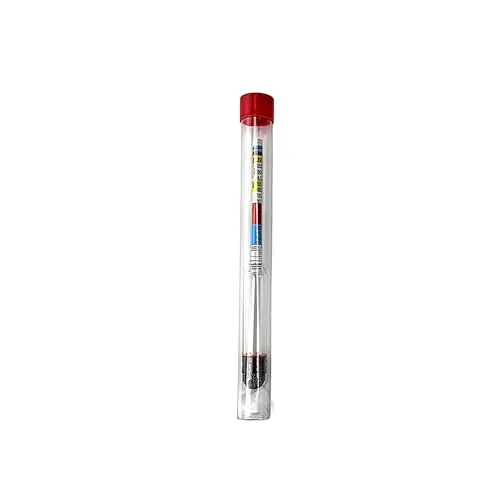
North Mountain Supply 8" Italian Glass Triple Scale Hydrometer
North Mountain Supply
- Range
- SG 0.99–1.16, potential alcohol 0–20%, Brix 0–35
- Scale
- Triple
- Material
- Lead- and mercury-free glass
North Mountain Supply’s 8 in. Italian glass hydrometer is lead- and mercury-free and sized for the maker’s 100 cc test jar, with SG 0.99–1.16, potential alcohol 0–20% and Brix 0–35. A short stem means a smaller sample.
Best for: Short jars and small samples
Skip if: You need a jar in the box (the 100 cc jar is a separate item)
- 8 in. length
- Italian glass
- Lead- and mercury-free
- Jar not included
- Tops out at 1.16
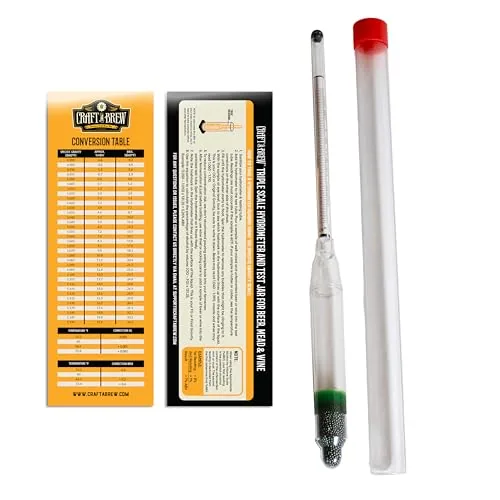
Craft A Brew Polycarbonate Triple Scale Hydrometer
Craft A Brew
- Scale
- Triple (SG, potential ABV, Brix)
- Material
- Polycarbonate
Craft A Brew’s triple-scale hydrometer (SG, potential ABV, Brix) is polycarbonate instead of glass, so it survives a drop that would break a glass stem. The listing doesn’t print the ranges, so check the scale before you buy for high-gravity brews.
Best for: Brewers who keep breaking glass hydrometers
Skip if: You need the range stated on the listing
- Polycarbonate, shatter-resistant
- Triple scale
- No glass shards
- Ranges not listed
- Calibration temperature not listed
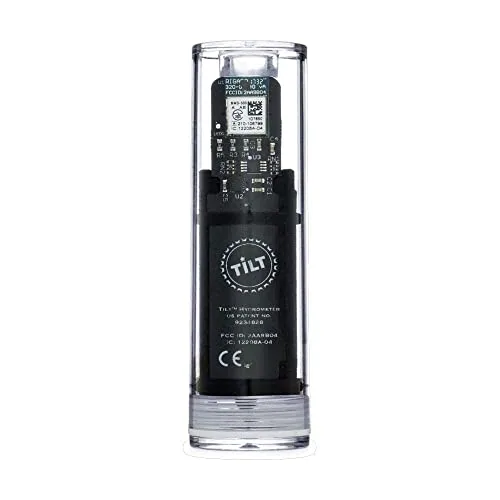
Tilt Wireless Hydrometer & Thermometer (Black)
Tilt
- Range
- SG 0.990–1.120
- Accuracy
- ±0.002 SG (per Tilt)
- Connectivity
- Bluetooth to app or Tilt Pi
- Battery
- 12–24 months (per maker)
The Tilt floats in the fermenter and reports gravity and temperature over Bluetooth to an app or Tilt Pi; Tilt lists ±0.002 SG over 0.990–1.120 and a 12–24 month battery. Check it against a glass hydrometer at the start and end of each batch.
Best for: Watching fermentation curves
Skip if: Your OG is above 1.120 or you ferment in stainless where signal may suffer
- No sampling
- Logs temperature too
- Pre-calibrated
- 0.990–1.120 range
- One color per fermenter
Which hydrometer range do you need?
Look at the top of the specific gravity scale. Beer rarely starts above 1.100; wine, cider and most mead start well below 1.160; very big meads can go higher. A range down to 0.990 covers dry finished wine and cider, which can read below 1.000.
Top of the listed SG scale
Gravity points above 1.000 (1.170 = 170)
Hydrometers compared by listed specs
| Pick | SG range | Material | Test jar | Extras |
|---|---|---|---|---|
| SOLIGT kit | 0.990–1.170 | Glass | ✓ Glass | Case, brush, chart |
| Brewing America kit | 0.990–1.170 | Glass (US-made) | ✓ Borosilicate | Brush |
| Circrane set | 0.99–1.17 | Glass | ✓ Narrow glass | — |
| FastRack | 0.990–1.170 | Glass | ✗ | — |
| CIMALAB | 0.99–1.16 | Glass | ✗ | Color bands |
| North Mountain Supply 8 in. | 0.99–1.16 | Italian glass | ✗ (100 cc jar separate) | — |
| Craft A Brew | Not listed | Polycarbonate | ✗ | Shatter-resistant |
| Tilt | 0.990–1.120 | Wireless | — | ±0.002 SG per Tilt |
Source: Maker listings, November 2026
The style table shows why the range matters: a typical American lager or pale ale starts in the 1.040s–1.060s and finishes around 1.004–1.015, so a hydrometer spends most of its life in a narrow band near the bottom of its scale. Clear, fine markings there matter more than a high top end.
Beer styles by the numbers (BJCP 2021 vital statistics)
| Style | OG | FG | IBU | Color (SRM) | ABV |
|---|---|---|---|---|---|
| 1B American Lager | 1.040–1.050 | 1.004–1.010 | 8–18 | 2–3.5 | 4.2–5.3% |
| 10A Weissbier | 1.044–1.053 | 1.008–1.014 | 8–15 | 2–6 | 4.3–5.6% |
| 18B American Pale Ale | 1.045–1.060 | 1.010–1.015 | 30–50 | 5–10 | 4.5–6.2% |
| 21A American IPA | 1.056–1.070 | 1.008–1.014 | 40–70 | 6–14 | 5.5–7.5% |
Source: BJCP 2021 Beer Style Guidelines. Ranges are for judging; your recipe can sit anywhere inside them. Color swatches are an on-screen approximation.
How to read a hydrometer and correct for temperature
- Sanitize and sample
Sanitize the thief or spigot, then fill the test jar about three-quarters full.
- Float and spin
Lower the hydrometer in and give it a gentle spin to knock off bubbles, which make it read high.
- Read at eye level
Read the scale at the bottom of the curved surface (the meniscus), with your eye level with the liquid.
- Measure sample temperature
Most hydrometers are calibrated at 60°F (15.6°C); some read true at 68°F (20°C). Correct readings taken at other temperatures.
- Record and repeat
Note the reading in the brew-day log. Bottle only when final gravity reads the same 2–3 days in a row.
- Work out ABV
Enter OG and FG in the ABV calculator, which also handles temperature correction and refractometer readings.
Missed your pre-boil target? The dilution and boil-off calculator shows how much water to add or how long to boil.
Hydrometer, refractometer or digital hydrometer?
A glass hydrometer is cheap, needs no batteries and reads both original and final gravity directly. Its drawbacks are sample size, fragility and the temperature correction.
- Refractometer: needs only a few drops and is quick on brew day, but readings after fermentation need an alcohol correction and remain an approximation, as the notes on our ABV calculator explain.
- Wireless hydrometer (Tilt): logs gravity and temperature every few minutes without opening the fermenter. Tilt lists ±0.002 SG over 0.990–1.120, so many brewers confirm the first and last readings with glass.
- Glass hydrometer: the reference for OG and FG, and the tool to check the others against.
For a first batch, a glass hydrometer and test jar are all you need. Add a refractometer for faster brew-day checks or a Tilt if you want to watch the fermentation curve, and keep the glass hydrometer as your calibration check.
Hydrometer mistakes to avoid
- Reading hot wort. Cool the sample first, or correct for temperature; hot samples read low and can crack a cold glass jar.
- Returning the sample to the fermenter. Taste it (adults 21+ only) or discard it; poured-back samples risk contamination.
- Bubbles on the stem. Spin the hydrometer to release them before reading.
- Trusting one reading. Fermentation is done when the gravity holds steady for 2–3 days, not when the airlock stops.
- Never checking calibration. Float the hydrometer in plain water at its calibration temperature; it should read 1.000. Note any offset.
Who should pick which hydrometer?
| If you… | Pick |
|---|---|
| Want everything in one box | SOLIGT hydrometer and test jar kit |
| Want a US-made, traceable hydrometer | Brewing America kit |
| Take frequent small samples | Circrane set or North Mountain Supply 8 in. |
| Broke your hydrometer and have a jar | FastRack triple scale |
| Find small markings hard to read | CIMALAB |
| Keep breaking glass | Craft A Brew polycarbonate |
| Want fermentation curves without sampling | Tilt (check it against glass) |
| Ferment in carboys | Add a wine thief for samples |
Shop more meters in hydrometers and meters, or start with your first brew day. Cider and wine makers can browse wine, cider, mead and kombucha. Our bottle capper picks cover the next step once gravity is stable.
The SOLIGT kit is the best hydrometer for homebrewing if you are starting out, because the jar, case and brush come with it. Choose Brewing America for a US-made traceable hydrometer, Craft A Brew if glass keeps breaking, and add a Tilt only to log fermentation, checked against glass.
Before you buy, read how to use a hydrometer and calculate ABV. For a closer look, see Tilt wireless hydrometer review and Hydrometer vs refractometer.
We compared SG, Brix and potential-alcohol ranges, materials, included jars and accessories from maker listings, and used the formulas, calibration notes and worked examples printed on our ABV calculator (Brewer’s Friend, Palmer) plus BJCP 2021 style statistics. We did not take readings with these hydrometers. No scores, ratings or prices.