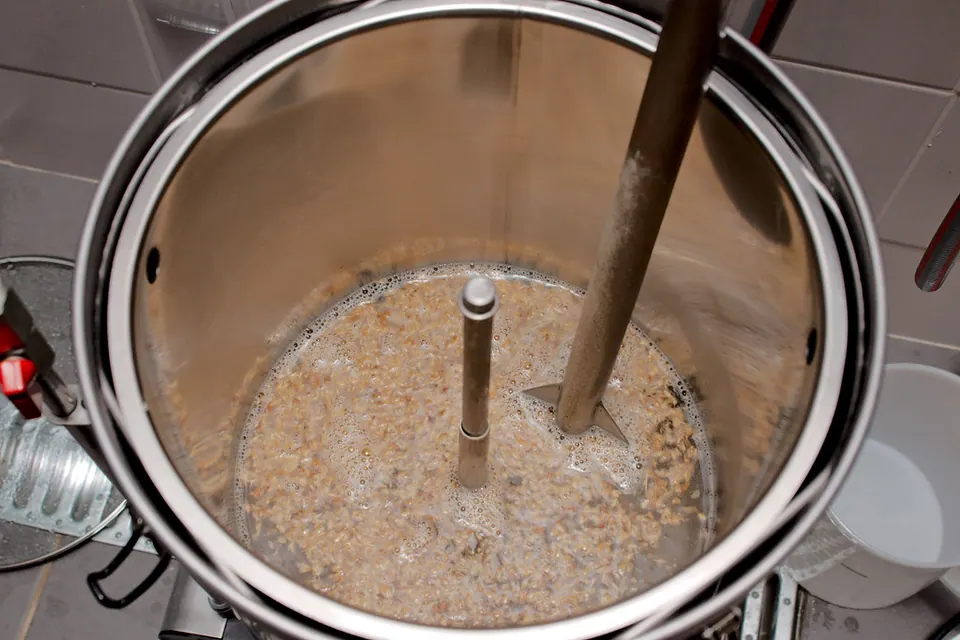
- The best all-in-one brewing system is the one your circuit can run: check 120V vs 240V and the amp draw before anything else.
- Anvil Foundry 10.5 is the most flexible pick, switching between 120V 1600 W and 240V 2800 W per the listing.
- On a standard outlet, the Grainfather G30³ 110V and BrewZilla Gen 4 35L 110V are the polished 5-gallon choices.
- Budget 35L units (VEVOR, FOHERE) list up to 1800 W but no UL or ETL certification on their listings.
The best all-in-one brewing system mashes, boils and often chills in one electric vessel, so all-grain brewing fits in a garage, basement or kitchen with no propane. We compared ten systems from seven brands by the numbers that decide whether one works for you: total volume, voltage and wattage, grain capacity, batch output, and what's in the box (pump, chiller). Every figure comes from maker specs or listings; where a listing leaves a number out, we say not listed.
Two names you may hear: the Grainfather G40 is a 240V-only system sold direct with a NEMA 6-20 plug, so it isn't listed here; and Robobrew is the older name for KegLand's BrewZilla line.
Our picks
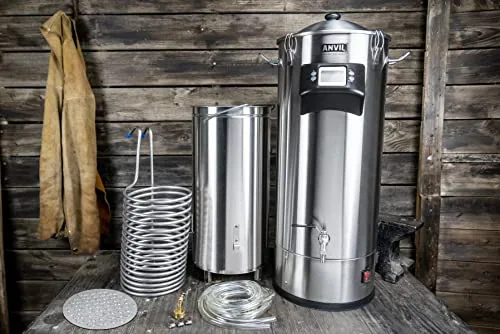
Anvil Foundry 10.5 Gal All-in-One with Pump
Anvil Brewing Equipment
- Volume
- 10.5 gal
- Power
- 120V 1600 W (13 A) or 240V 2800 W (12 A), switchable
- Material
- Stainless, double-wall insulated
The Foundry 10.5 switches between 120V 1600 W (13 A) and 240V 2800 W (12 A) per the listing, so it runs on a household outlet now and faster on a 240V circuit later. It has a high-flow grain basket with 150% more perforations, double-wall insulation, and this version adds a recirculation pump and a stainless immersion chiller with hoses. Anvil's Q&A describes it as built for 5-gallon (19 L) batches; our research notes a 16 lb grain basket.
Best for: 5-gallon all-grain batches with room to upgrade the circuit later
Skip if: You want 10-gallon batches (Anvil sells an 18-gallon size)
- Dual voltage, switchable
- Pump and immersion chiller included
- Double-wall insulation
- 120V heating is slower than 240V
- 1600 W at 120V needs its own circuit
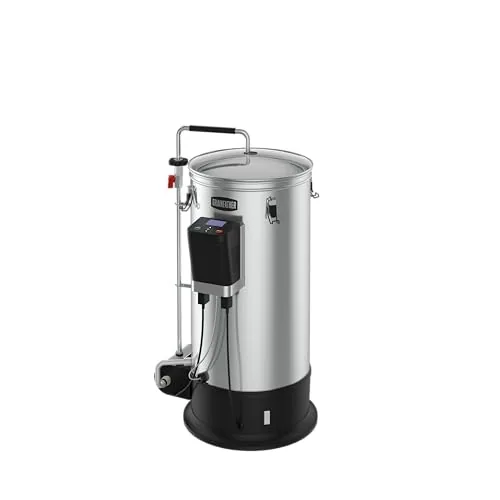
Grainfather G30³ 110V All-in-One Brewing System
Grainfather
- Volume
- 8 US gal
- Power
- 110V (US model)
- Material
- 304 stainless steel
The US Grainfather G30³ has an 8-gallon (30 L) body of 304 stainless, a redesigned grain basket to resist stuck mashes and an auto-reset switch. Our research notes about 6 gallons of finished beer and a grain basket of about 18 lb (8 kg). One G30³ listing says the counterflow chiller is not included, so confirm what ships with the one you buy. Wattage is not listed.
Best for: Indoor 5-gallon brewing on a standard outlet
Skip if: You want to brew on 240V for faster heating
- Compact footprint
- 304 stainless
- Auto-reset switch
- Wattage not listed
- Chiller may be sold separately
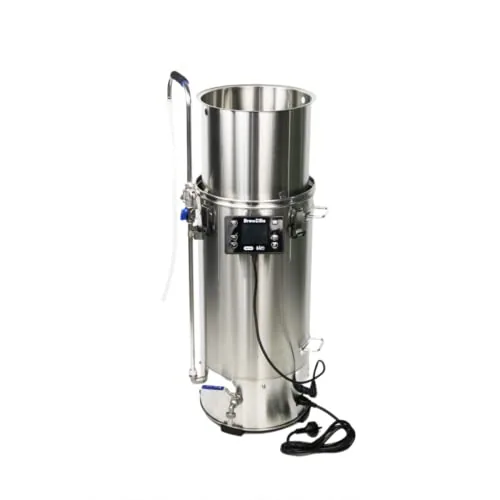
KegLand BrewZilla Gen 4 35L 110V, Wi-Fi/RAPT, with Pump
KegLand
- Volume
- 35 L (9.24 gal)
- Power
- 110V
- Material
- Stainless steel
BrewZilla Gen 4 35L (9.24 gal) runs on a 110V plug and connects to KegLand's RAPT platform over Wi-Fi. The listing includes a pump, a stainless immersion chiller, a full-color LCD, interior volume markings and a 1/2-inch ball valve. Another 35L listing quotes 5–6 gallons of finished beer. Listings mix Gen 3.1.1 and Gen 4 names, so check the generation on the listing.
Best for: Brewers who want Wi-Fi control and a chiller in the box on 120V
Skip if: You want a double-wall insulated body
- Wi-Fi via RAPT
- Pump and chiller included
- Volume markings inside
- Wattage not listed on this listing
- Generation naming varies by listing
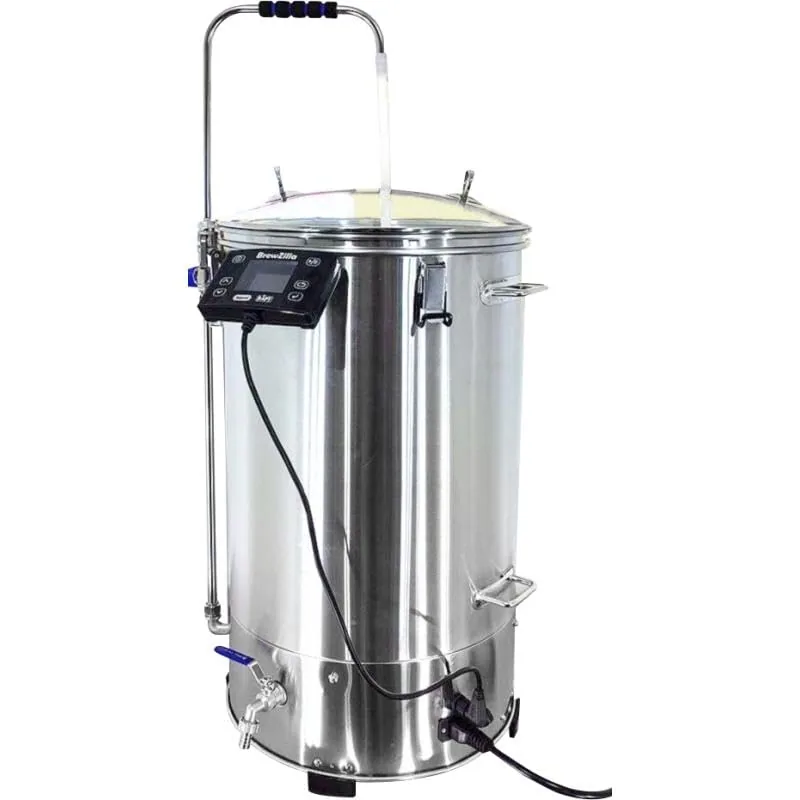
KegLand BrewZilla Gen 4 65L 220V
KegLand
- Volume
- 65 L (17.1 gal)
- Power
- 220V
- Batch size
- 10–12 gal finished beer
- Material
- Stainless steel
The 65L (17.1 gal) BrewZilla Gen 4 turns out 10–12 gallons of finished beer per the listing and runs automatic step mashing with 6 programmable stages. It is a 220V unit, so it needs a 240V circuit installed by a licensed electrician.
Best for: Brewers who already have, or will install, a 240V circuit
Skip if: You only have standard 120V outlets
- 10–12 gal output
- 6-step programmable mash
- Glass lid
- 220V only
- Large and heavy when full
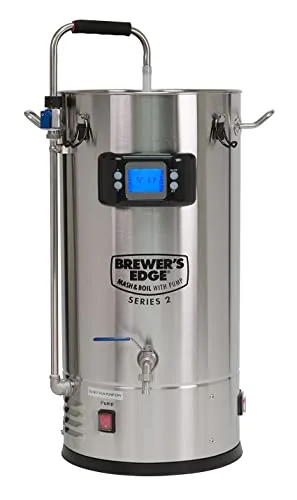
Brewer’s Edge Mash and Boil Series 2 with Pump, 110V
Brewer's Edge
- Volume
- 30 qt
- Power
- 110V
- Material
- Stainless steel
Brewer's Edge Mash and Boil Series 2 has a 30 qt (7.5 gal) stainless body, an integral recirculation pump you turn on with a switch, a high-flow basket and a low-density element meant to reduce scorching. It plugs into a standard 110V outlet.
Best for: A first all-grain system with few settings to learn
Skip if: You want app control or step-mash programs
- Built-in pump
- Low-density element
- Plugs into 110V
- 30 qt is snug for big beers
- Wattage not listed
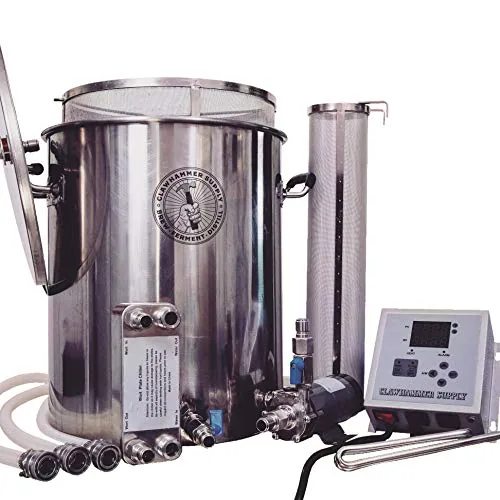
Clawhammer Supply 10.5 Gal Electric BIAB System, 120V
Clawhammer Supply
- Volume
- 10.5 gal
- Power
- 120V
- Material
- 304 stainless steel
Clawhammer Supply's 10.5-gallon system is an electric brew-in-a-bag kettle with a digital controller, replaceable parts and an ultra-low-watt-density element, on 120V. The modular design lets you repair or upgrade parts instead of replacing the whole unit.
Best for: Tinkerers who want serviceable parts
Skip if: You want a basket instead of a bag
- Modular and repairable
- Low-watt-density element
- 10.5 gal vessel
- Bag-based, so lifting grain is on you
- Wattage not listed
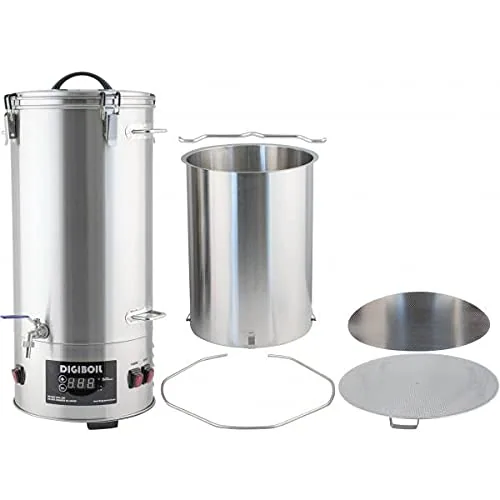
KegLand DigiMash 35L Electric Brewing System, 110V
KegLand
- Volume
- 35 L (9.25 gal)
- Power
- 110V / 15A
- Grain
- 18 lb max. grain bill (maker)
- Material
- 304 stainless steel
DigiMash 35L (9.25 gal) is 304 stainless with digital temperature control on a 110V/15 A plug and a 5-foot cord. KegLand recommends a maximum grain bill of 18 lb. It skips the pump and Wi-Fi of the BrewZilla.
Best for: Budget-minded all-grain on 120V from an established maker
Skip if: You want recirculation without adding a pump
- 18 lb max grain bill (maker)
- 304 stainless
- Simple controls
- No pump
- Short 5 ft cord
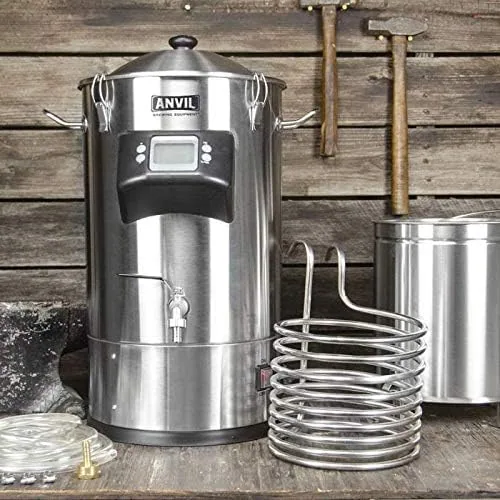
Anvil Foundry 6.5 Gal All-in-One Electric Brewing System
Anvil Brewing Equipment
- Volume
- 6.5 gal
- Power
- 240V or 120V via adapter cable
- Material
- Double-wall insulated
The Foundry 6.5 shares the 10.5's 240V/120V adapter cable, delayed-start timer, serviceable touch screen, 1.5-inch side-wall basket perforations, double-wall insulation and ultra-low-watt-density heaters, in a smaller vessel. It suits 2.5–3 gallon batches.
Best for: Small all-grain batches in an apartment or kitchen
Skip if: You brew 5 gallons regularly
- Delayed start timer
- Double-wall insulation
- 120V option via cable
- Small batch size
- Pump and chiller not in this version
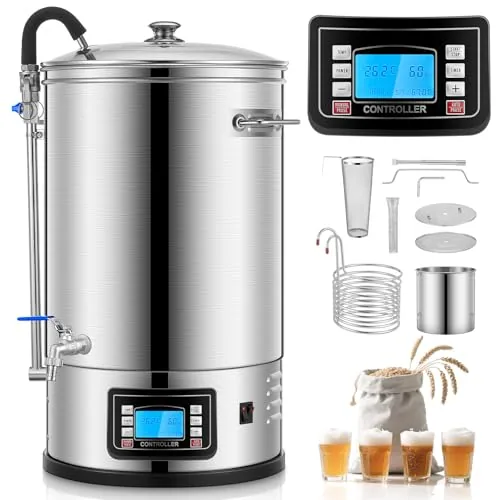
FOHERE 35L All-in-One Electric Brewing System
FOHERE
- Volume
- 9.2 gal (35 L)
- Power
- 100–1800 W adjustable
- Material
- 0.05 in 304 stainless
FOHERE's 35L (9.2 gal) unit lists 0.05-inch 304 stainless, adjustable power from 100 to 1800 W, 25–100°C (77–212°F) control, 7-step programmable mashing, 10-recipe memory, hop alerts, a pump and a 28.8-foot copper cooling coil. The maker says it handles up to 17.6 lb of malt. No UL or ETL certification is stated on the listing.
Best for: Feature-hungry brewers on a tight budget
Skip if: You want a listed safety certification
- 7-step programs
- Pump and copper coil included
- 17.6 lb malt (maker)
- UL/ETL not listed
- 1800 W at 120V would draw about 15 A
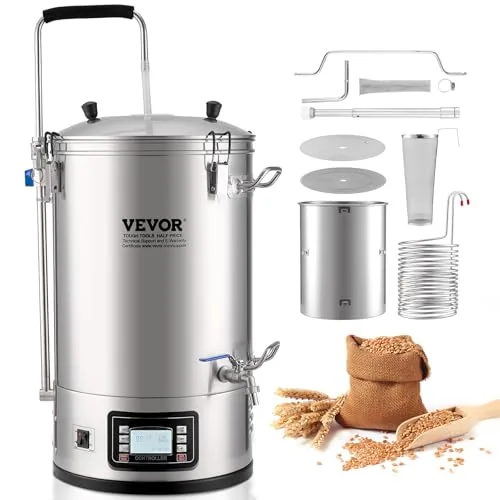
VEVOR 35L Electric Brewing System with Pump
VEVOR
- Volume
- 9.2 gal (35 L)
- Power
- 100–1800 W adjustable
- Batch size
- up to 8 gal (maker)
- Material
- 0.02 in 304 stainless
VEVOR's 35L (9.2 gal) system has a pump, auto and manual modes, 100–1800 W adjustable power, 25–100°C (77–212°F) control, a 1–180 minute timer and 10-recipe memory, with a 0.02-inch 304 stainless inner pot. The maker says it brews up to 8 gallons. No UL or ETL certification is stated on the listing.
Best for: Trying all-in-one brewing with the lowest commitment
Skip if: You want a thicker pot or a listed safety certification
- Pump included
- Recipe memory
- Adjustable power
- UL/ETL not listed
- Thin 0.02 in inner wall
120V or 240V: what your circuit allows
Current draw is watts divided by volts. A 1600 W element at 120V pulls about 13.3 A, close to the limit of a common 15 A household circuit. An 1800 W element at 120V pulls 15 A. The same 2800 W at 240V pulls about 11.7 A. That is why 240V systems heat faster on less current, and why 120V systems want a dedicated circuit with nothing else on it.
Listed heating power
Maximum watts on each listing; systems without a listed figure are left out
All-in-one systems compared by volume, power and grain capacity
Key specs (maker and listing data)
| System | Volume | Power | Grain capacity | Pump | Chiller |
|---|---|---|---|---|---|
| Anvil Foundry 10.5 with pump | 10.5 gal | 120V 1600 W / 240V 2800 W | 16 lb (research notes) | ✓ | ✓ stainless immersion |
| Grainfather G30³ 110V | 8 gal | 110V, watts not listed | About 18 lb (research notes) | ~ not listed | ~ check listing |
| BrewZilla Gen 4 35L Wi-Fi | 35 L (9.24 gal) | 110V | Not listed | ✓ | ✓ stainless immersion |
| BrewZilla Gen 4 65L | 65 L (17.1 gal) | 220V | Not listed | ~ not listed | ~ not listed |
| Brewer's Edge Mash and Boil S2 | 30 qt (7.5 gal) | 110V | Not listed | ✓ | ✗ |
| Clawhammer 10.5 gal BIAB | 10.5 gal | 120V | Not listed | ~ not listed | ~ not listed |
| KegLand DigiMash 35L | 35 L (9.25 gal) | 110V / 15 A | 18 lb (maker) | ✗ | ✗ |
| Anvil Foundry 6.5 | 6.5 gal | 240V or 120V via cable | Not listed | ✗ | ✗ |
| FOHERE 35L | 35 L (9.2 gal) | 100–1800 W | 17.6 lb (maker) | ✓ | ✓ 28.8 ft copper |
| VEVOR 35L | 35 L (9.2 gal) | 100–1800 W | Not listed | ✓ | ~ not listed |
Source: Maker listings and research.md §3, November 2026
Grain capacity where it is published
Pounds of grain; most listings don't give a figure
Grain capacity sets your strongest beer. As a rough guide, a 5-gallon batch of a 1.050 pale ale uses around 10 lb of grain; a big imperial stout can need 16 lb or more, which is where a 16–18 lb basket starts to limit you.
How to choose an all-in-one brewing system
- Check the outlet and the breaker
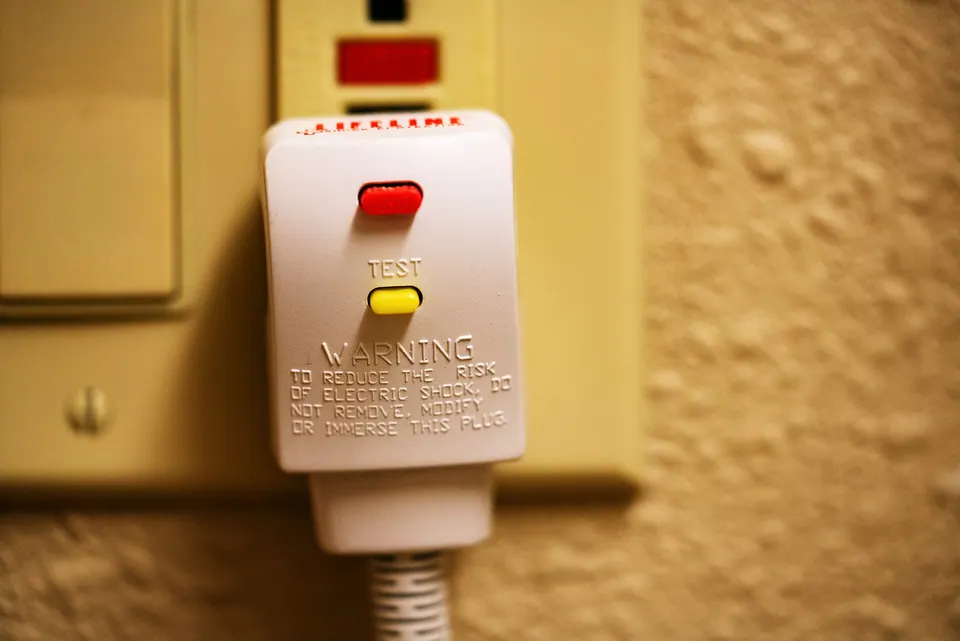
Find out whether the outlet you'd use is on a 15 A or 20 A circuit, whether it's GFCI-protected, and what else shares it. A 240V circuit is a job for a licensed electrician.
- Match the vessel to your batch
About 8–10 gallons of vessel suits 5-gallon batches; 6.5 gallons suits 2.5–3 gallons; 10-gallon batches need 17 gallons or more.
- Decide on pump and chiller
A recirculation pump keeps mash temperature even; an included chiller saves a separate purchase. Compare chillers in our wort chiller guide.
- Look for listed safety certification
Established makers publish manuals and support. If a budget listing names no UL or ETL mark, ask the seller before you buy.
- Plan the ventilation
An hour-long boil releases a lot of steam. Brew near a range hood, an open window or a steam condenser, and keep the cord away from water.
Mistakes to avoid with electric all-in-ones
- Using an extension cord. Plug the system straight into the wall, on the circuit the manual calls for.
- Sharing the circuit. A 1600–1800 W element plus a fridge or space heater on the same 15 A circuit will trip the breaker or overheat wiring.
- Wiring 240V yourself. Have a licensed electrician install it, usually with GFCI protection.
- Overfilling the basket. Respect the grain limit and the mash thickness in the manual, or the mash can stick.
- Ignoring boil-off. All-in-ones lose roughly 0.5–1 gal per hour; measure yours on the first brew day and plan pre-boil volume.
- Skipping the chill plan. If the system has no chiller, budget for one.
Which all-in-one system should you buy?
- Want 120V now and 240V later: Anvil Foundry 10.5 with pump.
- Compact, polished 120V system: Grainfather G30³ 110V.
- Wi-Fi and a chiller in the box on 120V: BrewZilla Gen 4 35L.
- 10-gallon batches with a 240V circuit: BrewZilla Gen 4 65L.
- Fewest settings to learn: Brewer's Edge Mash and Boil Series 2.
- Repairable, modular BIAB: Clawhammer Supply 10.5 gal.
- Plain 120V system from a known maker: KegLand DigiMash 35L.
- Small batches: Anvil Foundry 6.5.
- Lowest commitment: VEVOR or FOHERE 35L, after confirming certification with the seller.
Coming from a stovetop kit? An all-in-one replaces the kettle, the outdoor burner and the BIAB bag in one vessel you can run indoors.
The Anvil Foundry 10.5 is the safest all-round bet because it runs on 120V today and 240V later, with a pump and chiller in this version. If you'll stay on a household outlet, the Grainfather G30³ 110V and BrewZilla Gen 4 35L are the refined 5-gallon choices. For 10-gallon batches, the BrewZilla 65L needs a 240V circuit installed by a licensed electrician. Budget 35L units list strong features but no safety certification; check with the seller first.
Before you buy, read how to brew all-grain: BIAB and all-in-one and electric brewing safety: 120V, 240V and GFCI. For a closer look, see Anvil Foundry 10.5 review (with the 6.5), Grainfather G30v3 review (110V), KegLand BrewZilla Gen 4 review, Anvil Foundry vs BrewZilla and Grainfather G30 vs Anvil Foundry.
We compared volume, voltage, wattage, grain capacity, batch output and included parts from maker listings and our research notes, worked out current draw as watts ÷ volts, and checked electrical guidance against brewing sources (AHA, BYO) and the makers' manuals. We did not brew with, install or wire these systems, and we don't show scores, star ratings or prices.