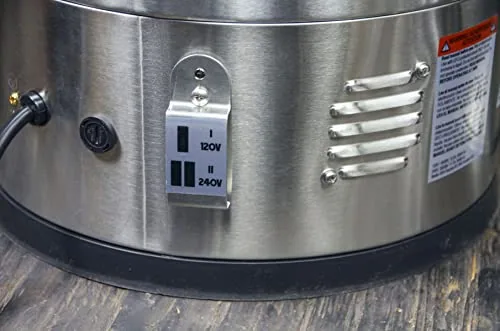
- Switchable power: 120V 1600 W (13 A) or 240V 2800 W (12 A), per the listing. On 120V it fits a 15 A circuit with little room to spare, so a dedicated 20 A GFCI circuit is the safer plan.
- Built for 5 gal (19 L) batches; the manual's 5-gallon mash chart runs from 8 to 16 lb of grain. It is not a 10-gallon system despite the 10.5 in the name.
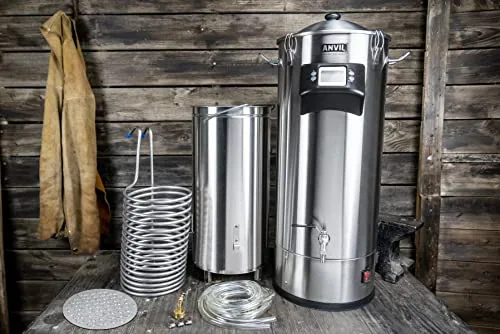
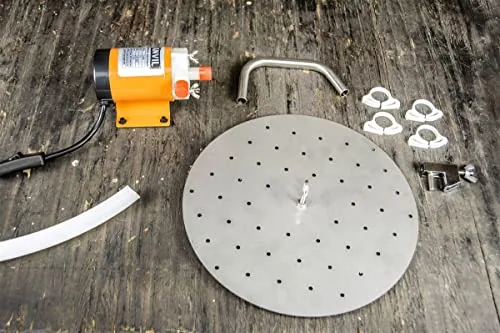
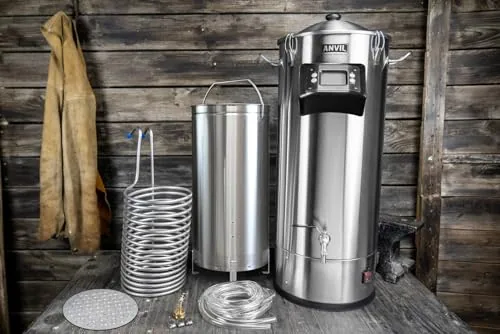
- This bundle (B07SVCNRDT) includes the recirculation pump and a stainless immersion chiller. The newer listing adds a delayed start and a 120V adapter cable.
- The manual calls for GFCI protection on 240V hookups, says never to boil with the lid on and never to use the delay timer with grain in the kettle. Use a GFCI-protected circuit on 120V too.
- For 2.5–3 gallon batches, the Foundry 6.5 uses the same controls in a smaller body.
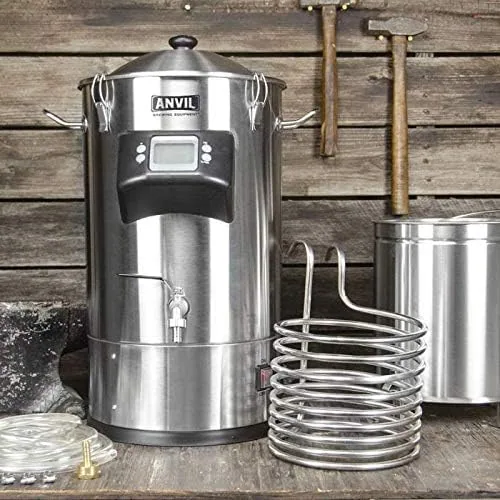
This Anvil Foundry review covers the 10.5-gallon model with the pump bundle, plus the newer 10.5 listing and the smaller 6.5. The Foundry is an electric all-in-one: you mash in a perforated basket inside the kettle, lift the basket out, then boil and chill in the same pot. That replaces a kettle, a mash tun and an outdoor burner, which matters if you brew in a garage, where propane is off the table.
Everything here comes from the product listings, Anvil's assembly and maintenance manual and published brewing sources. We did not brew with, wire or open a Foundry. Where the listings and the manual disagree, we say so and go with the manual. For the bigger picture, see the brewing systems hub and the going all-grain page.
Who it’s for, and who should skip it
- Want to brew 5-gallon all-grain batches with an electric system on a standard 120V GFCI outlet now
- May add a 240V circuit later and want the same kettle to boil faster on it
- Prefer a simple temperature-and-power controller over an app
- Brew in a garage or basement where a propane burner isn't safe
- Want true 10-gallon batches (the 10.5 is built for 5 gal; Anvil's 18 gal size is the bigger option)
- Regularly brew big beers with more than about 16 lb of grain
- Want app control, Wi-Fi logging or programmed step mashes
- Have no GFCI-protected outlet and no plan to add one
Pros and cons
- Runs on 120V at 1600 W or 240V at 2800 W from the same kettle, per the listing
- Double-wall insulation holds mash temperature and speeds heating
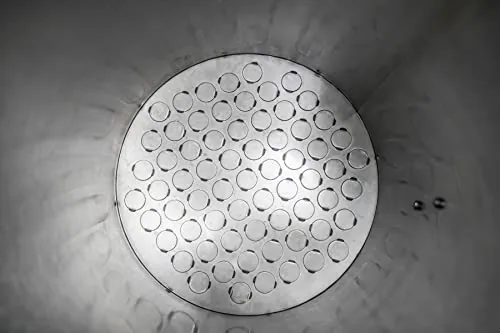
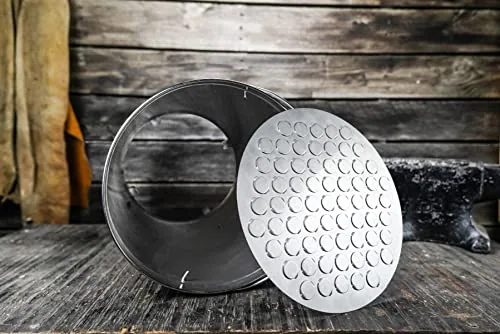
- High-flow grain basket with more perforations to reduce stuck mashes
- Pump bundle includes a stainless immersion chiller with hoses and fittings
- Rotating dip tube and valve let you leave trub behind when you drain
- 1600 W on 120V draws about 13.3 A, close to the limit of a 15 A circuit
- Grain capacity tops out around 16 lb for a 5-gallon batch, per the manual's chart
- No app, Wi-Fi or programmable step mash
- Switching to 240V means fitting a plug (or using the adapter cable on newer units) and a 240V circuit
Specs
| Volume | 10.5 gal |
|---|---|
| Power | 120V 1600 W (13 A) or 240V 2800 W (12 A), switchable |
| Material | Stainless, double-wall insulated |
As stated by the maker or seller; confirm on the listing before you buy.
Is the Anvil Foundry worth it on 120V or 240V?
The answer depends on the outlet you have. On 120V the Foundry 10.5 is listed at 1600 W and 13 A. Watts divided by volts gives 1600 ÷ 120 ≈ 13.3 A, which is most of what a standard 15 A household circuit can carry. If a freezer or a shop light shares that circuit, the breaker may trip mid-boil. A dedicated 20 A circuit with GFCI protection is the clean answer, and no extension cords.
On 240V the listing gives 2800 W at 12 A (2800 ÷ 240 ≈ 11.7 A). The manual says the 240V setup cuts heating time by about half and gives a stronger boil. You set a switch on the unit from 120V to 240V and fit a grounded 240V plug rated at least 15 A, such as a NEMA 6-15P or 6-20P. Newer units use an adapter cable instead. The manual is blunt: running the Foundry on 240V with the switch still set to 120V can permanently damage it. If you are unsure about your power source, it says to call a licensed electrician.
Foundry 10.5 power on each voltage
| Setting | Watts (listing) | Amps (listing) | W ÷ V check | What it means |
|---|---|---|---|---|
| 120V | 1600 W | 13 A | ≈13.3 A | ~ Fits a 15 A circuit with little margin; a 20 A circuit is better |
| 240V | 2800 W | 12 A | ≈11.7 A | ✓ Faster heat and boil; needs a 240V circuit installed by an electrician |
Source: Anvil Foundry 10.5 listing; amps by W ÷ V arithmetic
What the manual says about power and safety
Anvil's assembly and maintenance manual is short and practical. A few lines matter more than the rest:
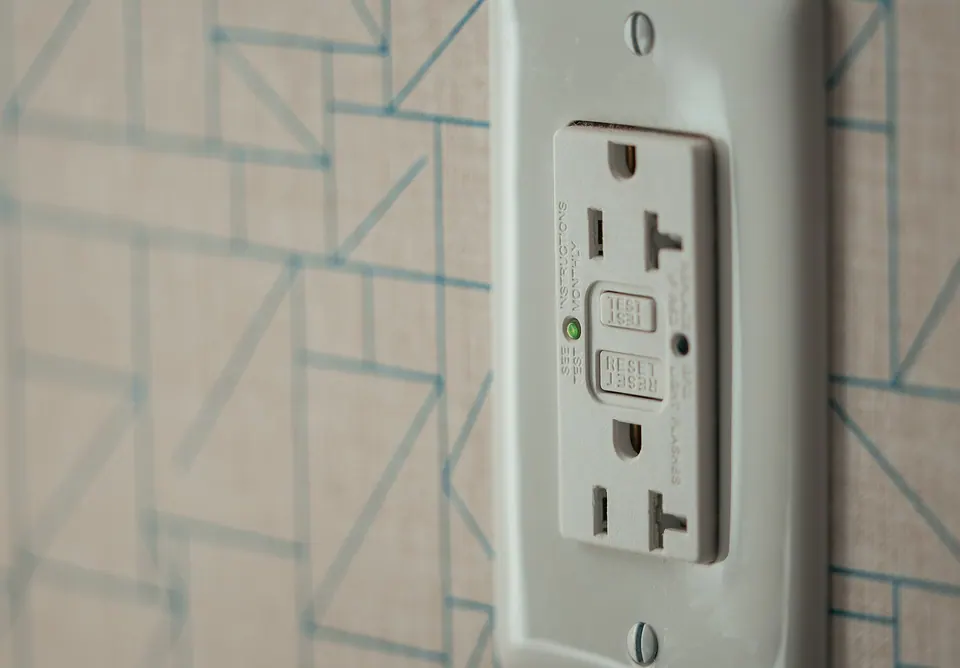
- GFCI-protected circuit only. The manual repeats this in its warnings and its quick-start steps.
- Never leave it unattended, and run it on a level, solid surface such as concrete.
- Don't boil with the lid on. Boiling wort under the lid can boil over and burn you.
- Delay timer for water only. Don't set the delay with grain in the kettle.
- No ungrounded plugs for 240V, and use only the specified fast-acting fuse.
- No bleach on the stainless. Clean with mild unscented detergent, PBW or percarbonate cleaners, and keep the inside bottom bright with a cleanser such as Bar Keepers Friend.
The manual we read is the 2019 V1 edition. Current listings describe updates, including a water-deflecting screen, a touch screen with more mounting screws, 1.5-inch side-wall perforations and a 240V/120V adapter cable. Check the manual that ships with your unit for the current wiring steps.
Can you brew 10 gallons in a Foundry 10.5?
No. The name refers to the kettle's total volume, not the batch size. The manual's mash tables cover 2.5- and 5-gallon batches, with post-boil targets of 2.75 and 5.5 gallons to cover losses. The 5-gallon no-sparge chart runs from 8 to 16 lb of grain, assumes a 152°F mash and lists strike water from 156°F to 160°F. Anvil also lists an 18-gallon Foundry for bigger batches.
That 16 lb ceiling covers most pale ales, ambers, stouts and IPAs at normal strength. A big imperial stout or barleywine at full 5 gallons will run out of basket. Brew a smaller batch or add extract to the boil. The strike water calculator has an all-in-one mode for the water volume and temperature, and the dilution and boil-off calculator helps you hit your pre-boil volume.
Strike water calculatorWork out strike volume and temperature for a no-sparge all-in-one mash before you fill the Foundry.Specs from the listing and the manual
Anvil Foundry 10.5 (pump bundle) at a glance
| Item | Figure | Source |
|---|---|---|
| Kettle volume | 10.5 gal | Listing |
| Batch size | Built for 5 gal (19 L); 2.5 gal tables also given | Manual |
| Grain | 8–16 lb in the 5 gal no-sparge chart | Manual |
| Power, 120V | 1600 W, 13 A | Listing |
| Power, 240V | 2800 W, 12 A (plug rated ≥15 A at 240V) | Listing; manual |
| Insulation | Double wall | Listing |
| In the box (B07SVCNRDT) | Recirculation pump, stainless immersion chiller, hoses and fittings | Listing |
| Controls | Set temperature, power %, delay timer (water only) | Manual |
| App or Wi-Fi | Not listed | — |
| Circuit | GFCI-protected only | Manual |
Source: Anvil Foundry assembly and maintenance manual (PDF)
The pump has to sit level with the base of the Foundry to work, per the manual. It also says to wait a few minutes after dough-in before starting it, and to throttle it back so the wort doesn't pile up on top of the grain. If you use wheat, rye or oats, add rice hulls to keep the mash flowing.
Foundry 10.5 vs 6.5: which size?
The Foundry 6.5 uses the same controls and voltage options in a smaller kettle, sized for 2.5–3 gallon batches. Its listings describe the 240V/120V adapter cable, a delayed-start timer, a touch screen and anti-scorch heaters. The pump-and-chiller bundle of the 6.5 says it is switchable between 120V and 240V and that 220V needs a pigtail. Pick the 6.5 if you brew small batches more often, have little storage space, or want to try recipes before you scale up. Pick the 10.5 if you mainly brew 5-gallon batches.
Anvil Foundry 10.5 Gal All-in-One Electric Brewing System
- Volume
- 10.5 gal
- Power
- 240V or 120V via adapter cable
- Material
- Double-wall insulated, ultra-low watt density heaters
Best for Updated Foundry without pump bundle
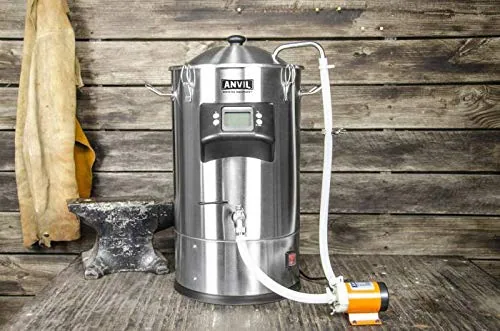
Anvil Foundry 6.5 Gal All-in-One Electric Brewing System
- Volume
- 6.5 gal
- Power
- 240V or 120V via adapter cable
- Material
- Double-wall insulated
Best for 2.5–3 gallon all-grain batches
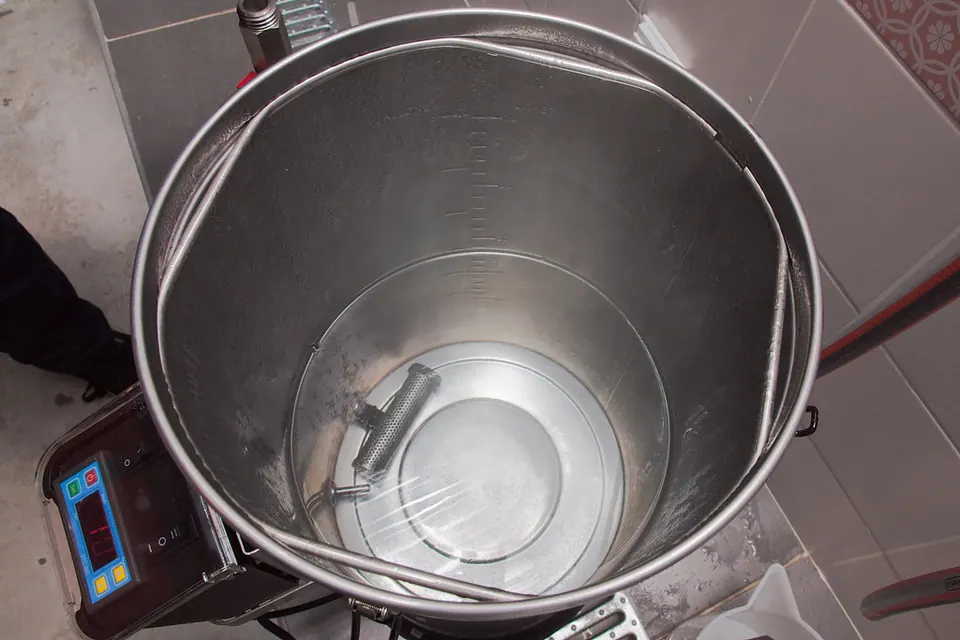
Anvil Foundry 6.5 Gal with Recirculation Pump and Chiller
- Volume
- 6.5 gal (26 qt)
- Power
- 120V/240V switchable (220V needs pigtail)
- Material
- Insulated stainless
Best for Small-batch all-grain kit
How it compares with other all-in-ones
The Grainfather G30³ (110V) also runs at 1600 W on 120V and adds a pump and Bluetooth app control, but it can’t move to 240V. The KegLand BrewZilla Gen 4 35L adds automatic step mashing and RAPT Wi-Fi; its 110V elements total about 1500 W per US retailer listings. Our Anvil Foundry vs BrewZilla and Grainfather vs Anvil Foundry comparisons go deeper.
New to all-grain? Read how to brew all-grain first, and check the equipment checklist for what an all-in-one still leaves you to buy: a fermenter, a hydrometer, a scale and a way to control fermentation temperature.
Alternatives worth a look
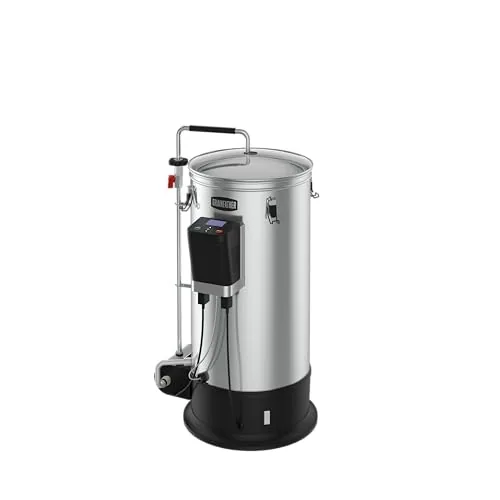
Grainfather G30³ 110V All-in-One Brewing System
- Volume
- 8 US gal
- Power
- 110V (US model)
- Material
- 304 stainless steel
Best for Compact 120V all-grain
For app control: Same 1600 W on 120V, with Bluetooth app guidance and a built-in pump, but no 240V option.
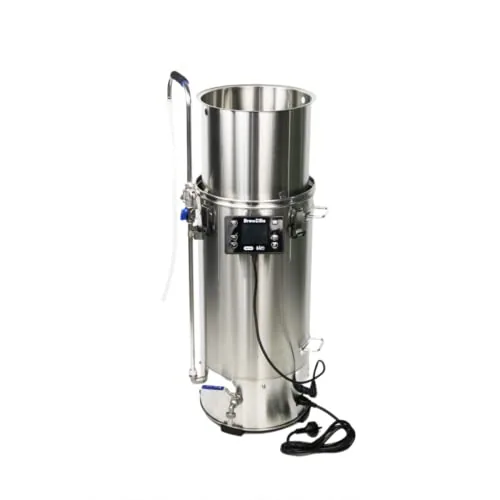
KegLand BrewZilla Gen 4 35L 110V, Wi-Fi/RAPT, with Pump
- Volume
- 35 L (9.24 gal)
- Power
- 110V
- Material
- Stainless steel
Best for 120V all-grain with app control
For automation: Automatic step mashing, RAPT Wi-Fi and a built-in pump on 110V, with an immersion chiller in the box.
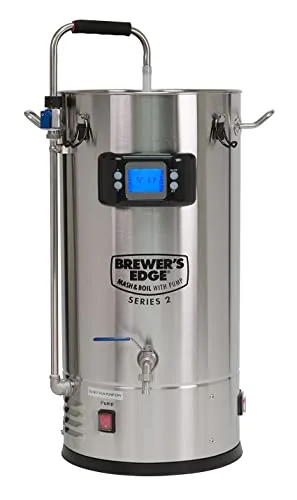
Brewer’s Edge Mash and Boil Series 2 with Pump, 110V
- Volume
- 30 qt
- Power
- 110V
- Material
- Stainless steel
Best for Simple 120V all-grain
For a smaller, simpler kettle: A 30 qt 110V all-in-one with an integral recirculation pump and a low-density element, for brewers who don't need 240V.
We read the maker’s specs, the manual and the current listing, and checked them against published brewing sources (Palmer, BJCP, AHA, BYO) and safety guidance where it applies. We did not brew with, install or lab-test this product. We never show scores, star ratings or prices.