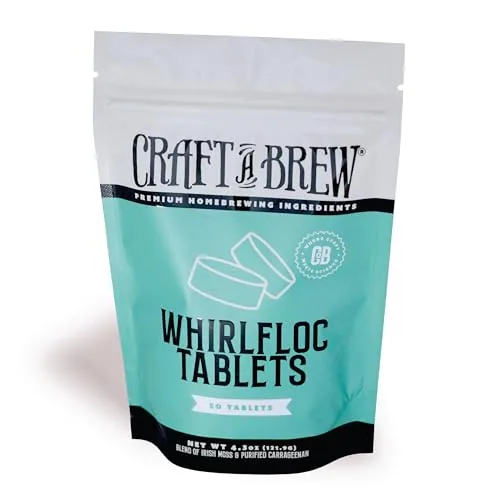
- Whirlfloc is a tablet of Irish moss and purified carrageenan. Craft A Brew's label: half a tablet per 5 gal (19 L) with 5 minutes left in the boil.
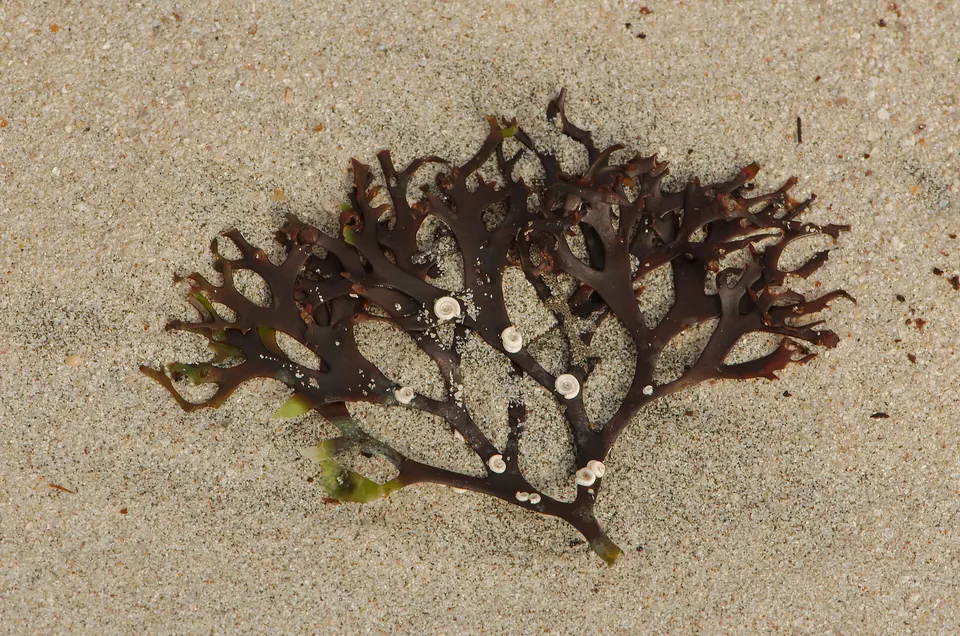
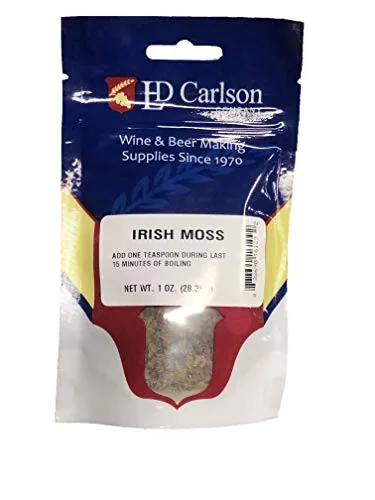
- Irish moss is the dried seaweed itself, in flakes. It does the same job (helps proteins clump into the cold break) and is dosed per the packet, usually a little earlier in the boil.
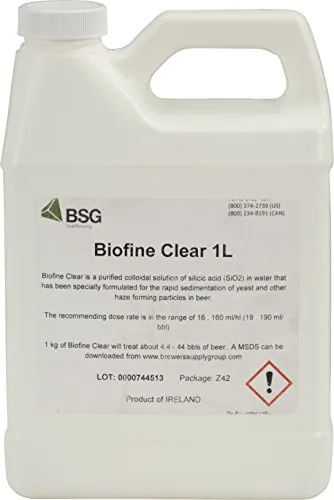
- Both are kettle finings. They don't clear yeast from finished beer; for that, use a post-fermentation fining such as gelatin, Biofine (silica sol) or kieselsol and chitosan.
- Gelatin is animal-derived and chitosan is often shellfish-derived; Biofine Clear is silica-based. Skip kettle finings in beers meant to be hazy.
Whirlfloc vs Irish moss is a small decision that shows up on almost every brew day. Both are kettle finings made from red seaweed (carrageenan is the active part). Added near the end of the boil, the negatively charged carrageenan binds positively charged proteins so they clump with the hot and cold break and settle in the kettle or fermenter. The result is clearer wort going in and usually clearer beer coming out.
This page compares the two on form, dose, timing and convenience using the labels and listings of LD Carlson, Craft A Brew, BSG and Brewmaster, then covers the post-fermentation finings that do a different job: Biofine, gelatin from Mangrove Jack's and LD Carlson, and two-part kieselsol and chitosan kits from Liquor Quik and FermFast. Everything here is in the brewing chemicals and water hub.
Whirlfloc tablets
Irish moss plus purified carrageenan in a tablet; half a tablet per 5 gal at 5 minutes (label)
BrowsePicks from each side
Whirlfloc tablets
Craft A Brew Whirlfloc Tablets, 50 ct
- Use
- Half a tablet per 5 gal at 5 minutes left in the boil
- Type
- Irish moss and carrageenan
- Size
- 50 tablets
Best for Clearer extract and all-grain beer
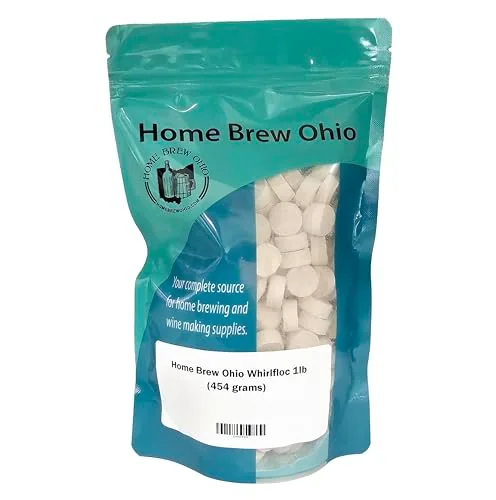
LD Carlson Whirlfloc Tablets, 1 lb (about 214)
- Use
- Kettle fining, late in the boil
- Type
- Irish moss/carrageenan tablet
- Size
- 1 lb (about 214 tablets)
Best for Regular brewers
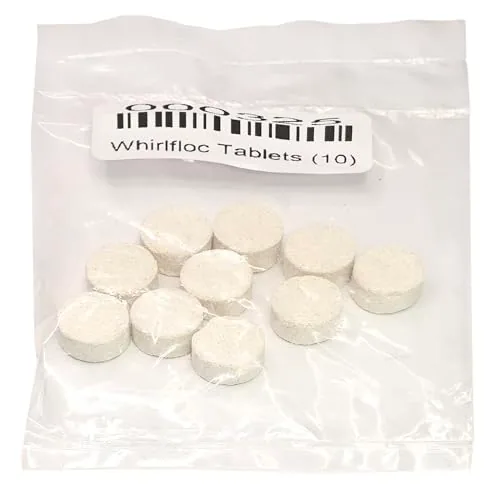
BSG HandCraft Whirlfloc Tablets, 10 ct
- Use
- Add for the final 5 minutes of the boil
- Type
- Irish moss concentrate tablet
- Size
- 10 tablets
Best for Trying kettle finings
Irish moss flakes
LD Carlson Irish Moss, 1 oz
- Use
- Kettle fining
- Type
- Irish moss flakes
- Size
- 1 oz
Best for Extract kit brewers
Brewmaster Irish Moss, 1 lb
- Use
- Kettle fining
- Type
- Irish moss
- Size
- 1 lb
Best for Bulk kettle fining
Whirlfloc vs Irish moss side by side
| Whirlfloc | Irish moss | |
|---|---|---|
| What it is | Tablet of Irish moss + purified carrageenan | Dried seaweed flakes |
| Dose | Half a tablet per 5 gal (Craft A Brew label) | Per the packet |
| When to add | With 5 minutes left in the boil (label) | Per the packet, usually late boil |
| Measuring | ✓ Pre-dosed tablet | ~ Measure by spoon |
| Rehydrating first | ✗ Drop it in | ~ Some brewers soak it first |
| Works in extract and all-grain | ✓ | ✓ |
| Removes yeast haze in finished beer | ✗ | ✗ |
| Origin | Seaweed (not animal) | Seaweed (not animal) |
| Pack sizes in our catalogue | 10 tablets, 50 tablets, 1 lb (about 214) | 1 oz, 1 lb |
Source: Craft A Brew, BSG and LD Carlson Whirlfloc listings; LD Carlson and Brewmaster Irish moss listings
Craft A Brew's listing describes Whirlfloc as drawing "haze-causing proteins and beta glucans out of suspension" and says it isn't recommended for beers that are meant to be hazy. Irish moss packets in the catalogue don't print a dose on the listing, so follow the label on the pack you buy.
How much Whirlfloc per batch?
At the label dose of half a tablet per 5 gallons, a small pack goes a long way. Here's how many 5-gallon batches each listed pack treats:
5 gal batches per pack at half a tablet
Tablet counts from the listings
For 1-gallon batches a quarter tablet is awkward; many small-batch brewers switch to Irish moss flakes, which are easier to scale with a measuring spoon. Keep the tablets dry and sealed, since humidity softens them.
Kettle finings vs post-fermentation finings
Kettle finings act on proteins in hot wort. Haze in finished beer is often yeast or chill haze, which needs a different fining added after fermentation, usually in a cold keg or fermenter.
Finings compared
| Fining | When | What it targets | Origin | Label notes |
|---|---|---|---|---|
| Whirlfloc / Irish moss | Late boil | Proteins (cold break) | Seaweed | Half a Whirlfloc tablet per 5 gal at 5 min (Craft A Brew) |
| Gelatin | Cold, after fermentation | Yeast and chill haze | Animal-derived | Dissolve in water first (Craft A Brew: 2 oz water per gram) |
| Biofine Clear | After fermentation | Yeast and haze | Silica sol (not animal) | 3–30 mL per 5 gal; clear in 24–48 h per maker |
| Kieselsol + chitosan | After fermentation, two steps | Yeast and haze in beer, wine, cider | Chitosan often from shellfish | One pack per 5–6 gal (Super-Kleer) |
| Bentonite | Wine must, before or during fermentation | Proteins in wine | Clay | Mix as a slurry per label |
Source: Listings for Craft A Brew, Biofine, Liquor Quik, FermFast and Mangrove Jack's finings
Biofine Clear, 1 L
- Use
- 3–30 mL per 5 gal batch
- Type
- Silica sol fining
- Size
- 1 L (33.8 oz)
Best for Vegan-friendly beer fining
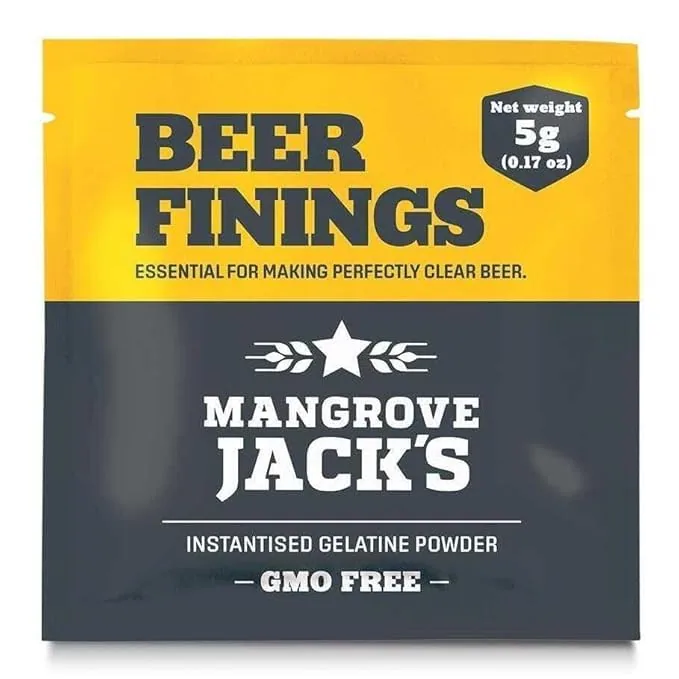
Mangrove Jack's Gelatin Finings, 5 g
- Use
- Single-dose clarifier for beer and wine
- Type
- Gelatin, 100 Bloom Type B (animal-derived)
- Size
- 5 g
Best for One batch of clearer beer
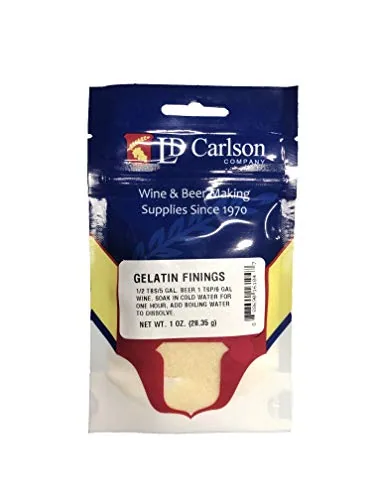
LD Carlson Gelatin Finings, 1 oz
- Use
- Post-fermentation fining
- Type
- Gelatin (animal-derived)
- Size
- 1 oz
Best for Clearing kegged beer
Liquor Quik Super-Kleer K.C. Finings, 4-pack
- Use
- One pack treats 5–6 gal
- Type
- Kieselsol + chitosan (two-part)
- Size
- 4 packs
Best for Clearing wine and cider fast
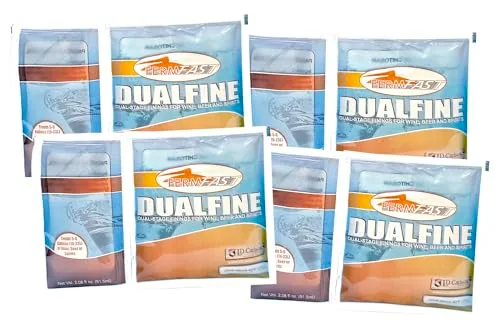
FermFast Dualfine Clarifier, 2.2 oz (4-pack)
- Use
- Two-step fining for beer, wine or cider
- Type
- Chitosan + kieselsol
- Size
- 4 x 2.2 oz
Best for Clearing cider and wine
Gelatin and isinglass are animal products and not vegan; chitosan is commonly made from shellfish shells, a concern for people with shellfish allergies. If you share beer with guests who avoid these, say what you used. For the bigger picture, see the finings and clarifiers guide.
What about enzymes like Clarity Ferm?
Clarity Ferm (White Labs) isn't a fining: it's a proline-specific enzyme added at pitching that breaks down the proteins behind chill haze. It's also marketed for making "gluten-reduced" beer. Under TTB Ruling 2014-2, beer made from barley and treated this way cannot be called gluten-free, and gluten-reduced beer is not safe for people with celiac disease. Use it for clarity, not as a health measure.
Who should choose which
- Choose Whirlfloc if you brew 5-gallon batches and want a pre-measured dose: half a tablet, five minutes, done.
- Choose Irish moss if you brew 1–3 gallon batches, like to scale doses with a spoon, or already have a bag.
- Skip both for New England IPAs and other beers meant to be hazy.
- Add a post-fermentation fining (gelatin, Biofine or kieselsol-chitosan) if your beer is still cloudy after a week or two cold; choose Biofine if you want a fining that isn't animal-derived.
- Making wine, cider or mead? Bentonite and two-part kieselsol-chitosan kits are the usual choices; find them with the rest of the gear in the wine, cider and mead hub.
Clarity changes how color reads in the glass; the SRM color calculator predicts color, not haze. Note which fining you used in the brew-day log so you can compare batches.
Mistakes to avoid
- Adding Whirlfloc at the start of the boil. Long boiling breaks down carrageenan; the label says the last 5 minutes.
- Overdosing. More isn't clearer; too much kettle fining can make a loose, fluffy trub layer that's hard to rack off.
- Expecting kettle finings to fix yeast haze. That's a job for cold conditioning or a post-fermentation fining.
- Adding gelatin to warm beer. It works best cold; follow the label for dissolving and temperature.
- Mixing up the two-part kits. Kieselsol and chitosan go in a set order and spacing; follow the pack instructions.
- Using finings in hazy styles. You'll strip the haze you wanted.
Whirlfloc and Irish moss do the same kettle job; Whirlfloc is the measured, convenient tablet for 5-gallon batches, and Irish moss flakes are easier to scale for small batches. Neither clears yeast from finished beer: for that, use gelatin, Biofine or a kieselsol-chitosan kit after fermentation, and note which ones are animal- or shellfish-derived.
We compared the label directions and listing data for the finings shown, with Palmer's How to Brew on kettle finings and TTB Ruling 2014-2 on gluten-reduced labeling. We did not measure clarity or haze with these products.