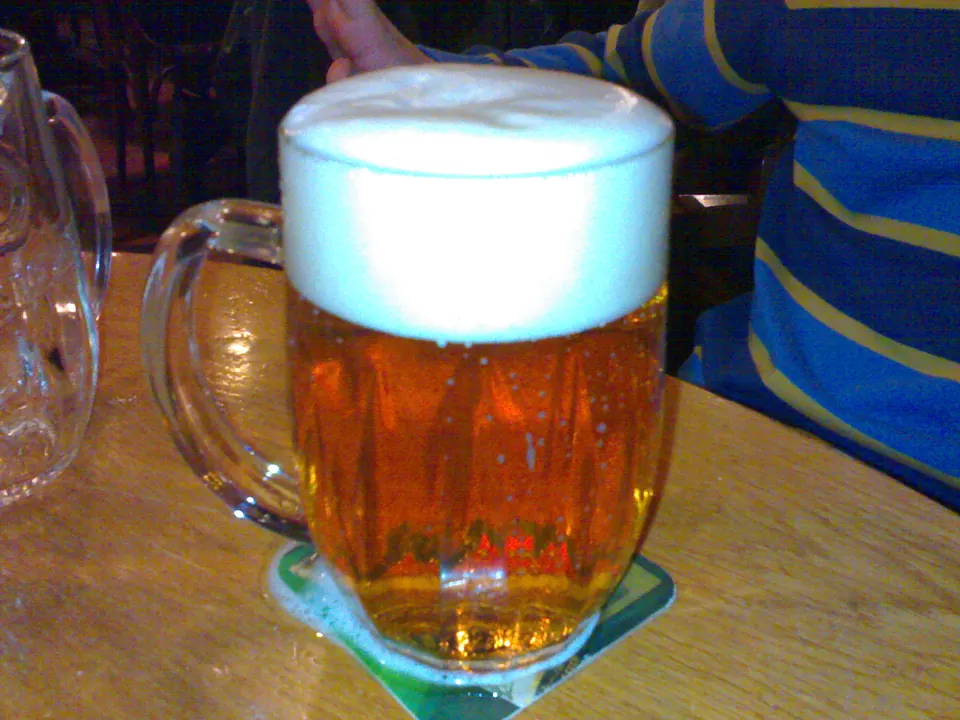
- Finings and clarifiers grab haze-forming particles (proteins, yeast, polyphenols) so they drop out faster; time and cold do the same job more slowly.
- Kettle finings (Whirlfloc, Irish moss) go in during the last 15 minutes of the boil, per BYO.
- Post-fermentation finings: gelatin and isinglass are animal-derived, chitosan comes from shellfish, silica and bentonite are mineral.
- Wine kits usually include their own finings (often kieselsol and chitosan); use them in the order printed.
- Dose and mixing come from the label. Overdosing can make clarity worse.
Finings and clarifiers are the shortcut to clear beer, wine, cider and mead. Haze comes from proteins, yeast, polyphenols and, in fruit wines, pectin. Given enough cold and time, most of it settles on its own; finings speed that up by attaching to particles with the opposite electric charge and dragging them to the bottom.
This guide sorts the common products by when you add them and what they are made from, using BYO’s fining article, maker labels and listing data. Doses here come from those sources only; always use the label on the package you buy.
Which fining does what?
Common finings and clarifiers
| Product | When | Made from | Main target | Notes |
|---|---|---|---|---|
| Whirlfloc / Irish moss | Last ≤15 min of the boil | Seaweed carrageenan (plant) | Protein and cold break | BYO: longer boils degrade it; erring low on dose |
| Gelatin | After fermentation, cold beer | Collagen (animal) | Yeast, chill haze | ✗ Not vegan; small flocs, slow settling |
| Isinglass | A few days before packaging | Fish swim bladder (animal) | Yeast | ✗ Not vegan; large, fast-settling flocs (BYO) |
| Silica sol (Biofine Clear) | After fermentation | Silica (mineral) | Yeast, chill-haze proteins | ✓ Vegan; label: 3–30 mL per 5 gal |
| Kieselsol + chitosan (Super-Kleer, Dualfine) | Two parts, a day apart or per label | Silica + shellfish-derived chitosan | Yeast, general haze | ~ Shellfish allergen note |
| Bentonite | Wine and mead, often at the start | Clay (mineral) | Protein haze | ✓ Common in wine kits |
| Sparkolloid | Wine, hot-mixed | Polysaccharide blend | Stubborn haze | Follow the package directions |
| Pectic enzyme | Fruit must, before fermentation | Enzyme | Pectin haze | Can slightly raise methanol; see methanol guide |
| Clarity Ferm | At pitching | Proline-specific enzyme | Chill haze | Also used for gluten-reduced beer; not celiac-safe |
Source: BYO: Fining homebrew; product labels and listings
Kettle finings: Whirlfloc and Irish moss
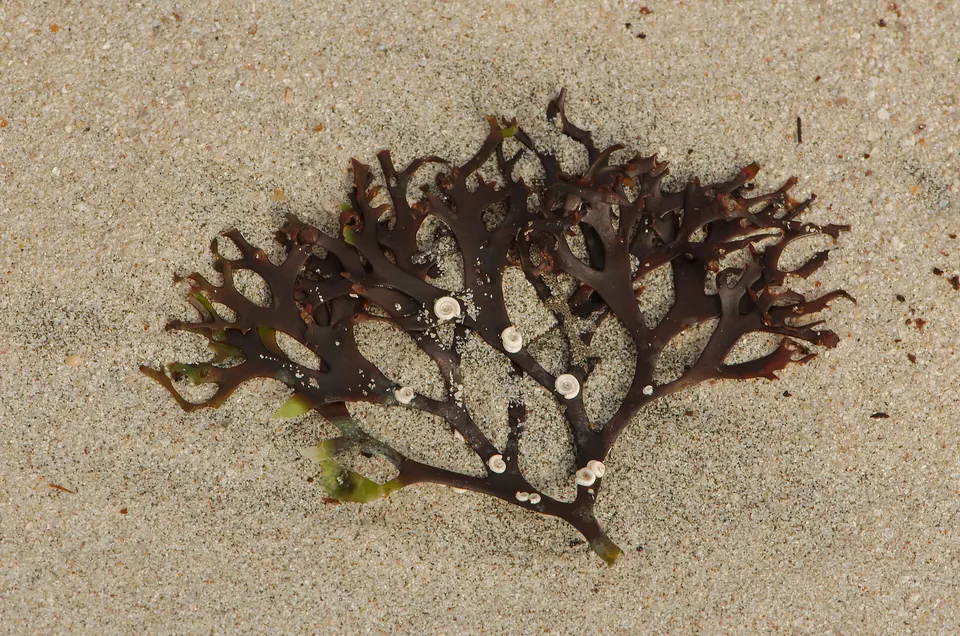
Whirlfloc tablets and Irish moss are carrageenan from red seaweed. Added near the end of the boil, they help proteins clump into the cold break as the wort chills. BYO recommends adding them 15 minutes or less before flameout, because a longer boil degrades the carrageenan, and suggests erring on the low side: an overdose makes loose, fluffy trub that traps wort. Tablets are often dosed at about half a tablet per 5 gal (19 L) in BYO’s article; your package states its own dose.
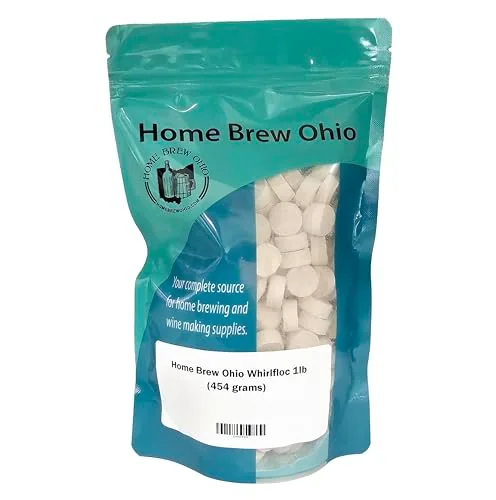
LD Carlson Whirlfloc Tablets, 1 lb (about 214)
- Use
- Kettle fining, late in the boil
- Type
- Irish moss/carrageenan tablet
- Size
- 1 lb (about 214 tablets)
Best for Regular brewers
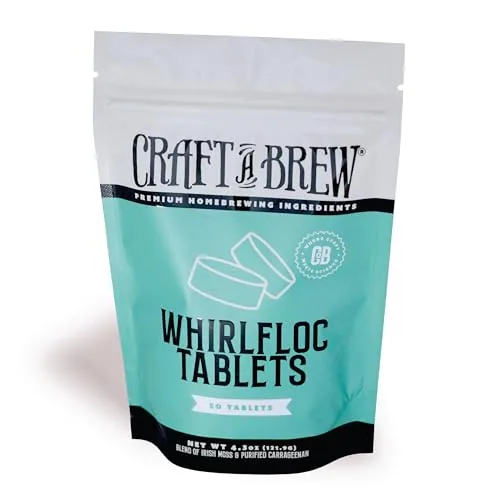
Craft A Brew Whirlfloc Tablets, 50 ct
- Use
- Half a tablet per 5 gal at 5 minutes left in the boil
- Type
- Irish moss and carrageenan
- Size
- 50 tablets
Best for Clearer extract and all-grain beer
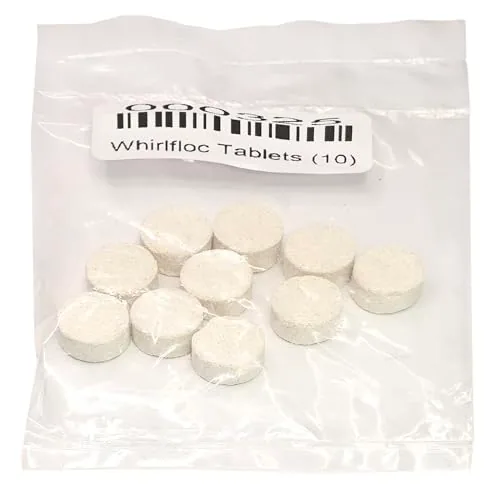
BSG HandCraft Whirlfloc Tablets, 10 ct
- Use
- Add for the final 5 minutes of the boil
- Type
- Irish moss concentrate tablet
- Size
- 10 tablets
Best for Trying kettle finings
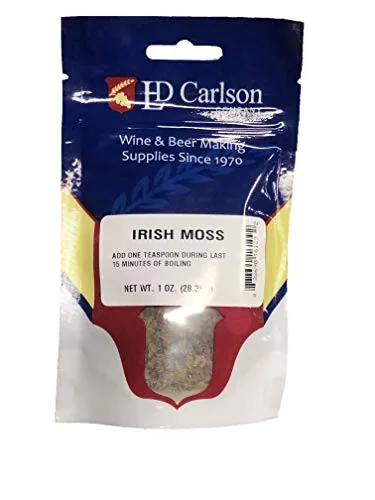
LD Carlson Irish Moss, 1 oz
- Use
- Kettle fining
- Type
- Irish moss flakes
- Size
- 1 oz
Best for Extract kit brewers
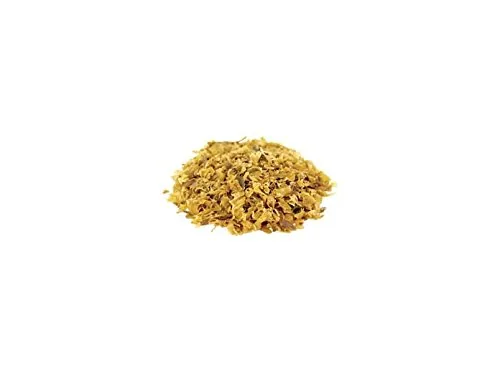
Brewmaster Irish Moss, 1 lb
- Use
- Kettle fining
- Type
- Irish moss
- Size
- 1 lb
Best for Bulk kettle fining
For a deeper head-to-head, see the extract brewing guide for where this fits in the boil.
Post-fermentation finings for beer
Gelatin
Gelatin is hydrolyzed collagen. The usual method is to dissolve it in a little water, warm it until fully dissolved without boiling, and stir it into cold beer in the keg or fermenter. Craft A Brew’s label, for example, says to dissolve in water after fermentation at 2 oz water per gram. BYO notes gelatin forms small flocs that settle over days, so it works best in beer that is already cold.
Isinglass
Isinglass comes from fish swim bladders. BYO describes larger, faster-settling flocs and a mild foam-stabilizing effect, and its method adds it 3–4 days before bottling. Keep prepared solutions refrigerated.
Silica sol (Biofine Clear)
Silica sol is a mineral, vegan fining. Its label gives 3–30 mL per 5 gal batch; the wide range is why a small bench trial in a few glasses is worth doing before treating a whole keg.
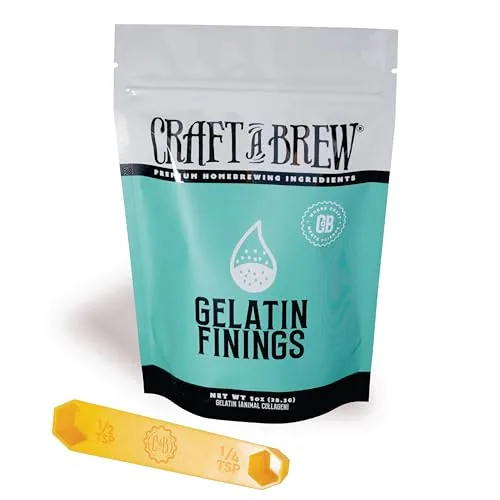
Craft A Brew Gelatin Finings, 1 oz
- Use
- Dissolve in water after fermentation (2 oz water per gram)
- Type
- Gelatin (animal-derived)
- Size
- 1 oz
Best for Clearing beer before kegging
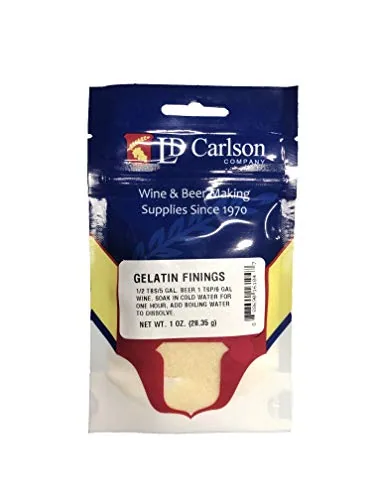
LD Carlson Gelatin Finings, 1 oz
- Use
- Post-fermentation fining
- Type
- Gelatin (animal-derived)
- Size
- 1 oz
Best for Clearing kegged beer
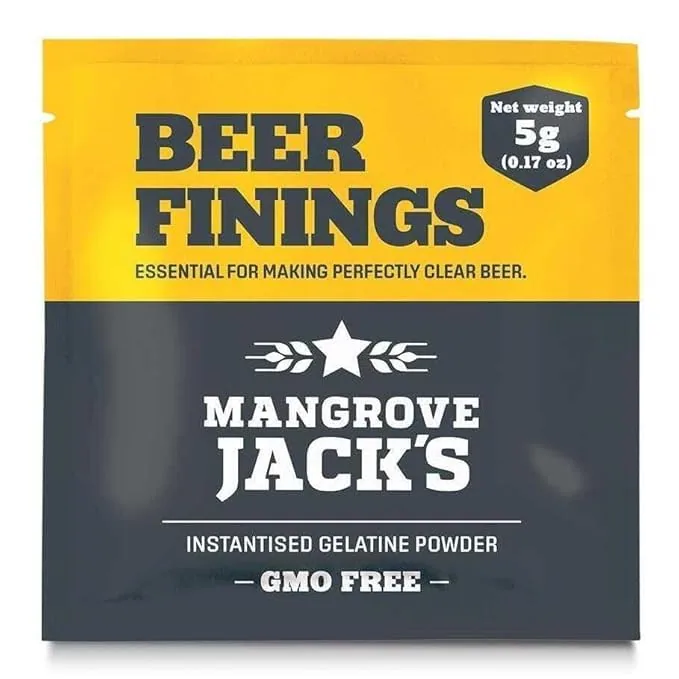
Mangrove Jack's Gelatin Finings, 5 g
- Use
- Single-dose clarifier for beer and wine
- Type
- Gelatin, 100 Bloom Type B (animal-derived)
- Size
- 5 g
Best for One batch of clearer beer
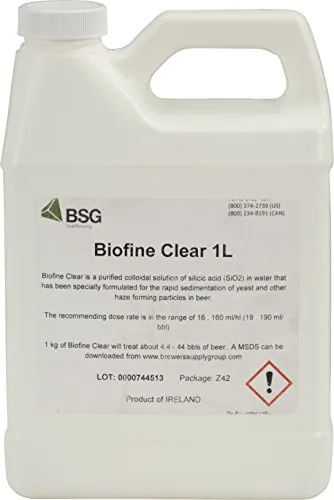
Biofine Clear, 1 L
- Use
- 3–30 mL per 5 gal batch
- Type
- Silica sol fining
- Size
- 1 L (33.8 oz)
Best for Vegan-friendly beer fining
Gelatin and isinglass are animal-derived, so finished beer is not vegan or vegetarian. Chitosan is made from shellfish shells; flag it for guests with shellfish allergies. Lactose and honey are other common allergens or dietary flags in homebrew.
Source: BYO; product listingsCold, time and yeast choice: clarity without additives
Before reaching for a packet, remember that most haze is temporary. Yeast settles once fermentation ends, especially when the beer is cold, and many protein-polyphenol complexes drop out after a week or two near freezing. A well-flocculating yeast, a good hot and cold break in the kettle, and a few weeks of cold conditioning in a keg produce clear beer in most styles without any post-fermentation fining.
There are also beers that are meant to be hazy. Hazy IPAs, wheat beers and many farmhouse styles keep yeast and protein in suspension on purpose, and finings would strip body and hop character that the style expects. Check the style in the beginner beer styles guide before deciding a haze is a fault.
Chill haze vs permanent haze
If a beer is clear at room temperature but cloudy cold, that is chill haze: proteins and polyphenols that bind when cold. Kettle finings, a strong cold break, silica sol or gelatin and enzyme products like Clarity Ferm target it. If the beer is cloudy at every temperature and the haze grows over weeks, think yeast still in suspension, starch from a mash problem or an infection. Finings will help with yeast; they will not fix starch or bacteria.
White Labs Clarity Ferm
- Use
- Haze-reducing enzyme added at pitching
- Type
- Proline-specific enzyme
- Size
- Single vial
Best for Clearer beers
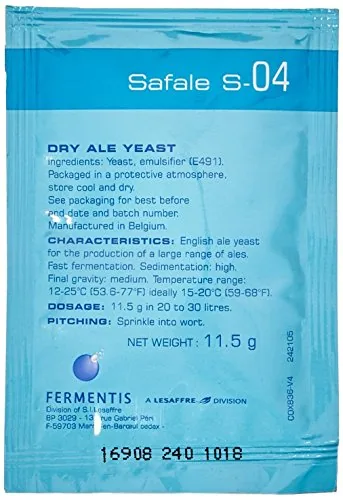
Fermentis SafAle S-04 Dry Ale Yeast, 11.5 g
- Type
- Dry ale yeast, English
Best for English ales and stouts
LD Carlson Whirlfloc Tablets, 1 lb (about 214)
- Use
- Kettle fining, late in the boil
- Type
- Irish moss/carrageenan tablet
- Size
- 1 lb (about 214 tablets)
Best for Regular brewers
Finings for wine, cider and mead
Wine kits usually come with their own clarifier packs, often kieselsol followed by chitosan, and the instructions specify the order and timing. Use them as printed: WineMaker’s kit articles stress degassing fully before fining day, because dissolved CO2 keeps fining particles suspended. See how to make wine from a kit.
For fruit wine, cider and mead, bentonite removes protein haze, two-part kieselsol and chitosan clears yeast, and Sparkolloid is a hot-mix option for stubborn haze. Pectic enzyme is not a fining, but it prevents pectin haze in fruit wines; read methanol in homemade wine for why that matters.
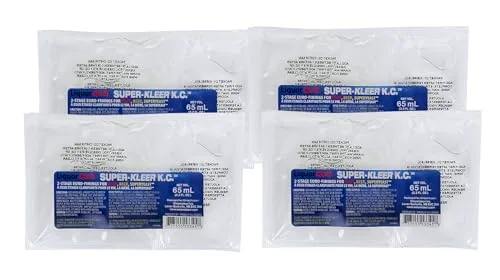
Liquor Quik Super-Kleer K.C. Finings, 4-pack
- Use
- One pack treats 5–6 gal
- Type
- Kieselsol + chitosan (two-part)
- Size
- 4 packs
Best for Clearing wine and cider fast
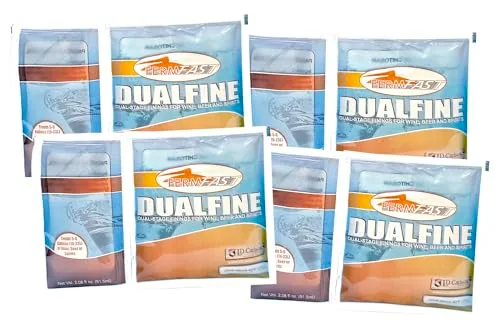
FermFast Dualfine Clarifier, 2.2 oz (4-pack)
- Use
- Two-step fining for beer, wine or cider
- Type
- Chitosan + kieselsol
- Size
- 4 x 2.2 oz
Best for Clearing cider and wine
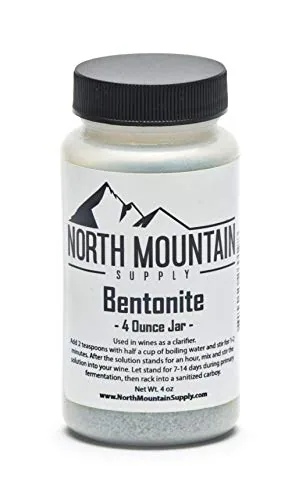
North Mountain Supply Bentonite Clay, 4 oz
- Use
- Wine clarifier
- Type
- Bentonite clay granules
- Size
- 4 oz
Best for Wine kits and fruit wines
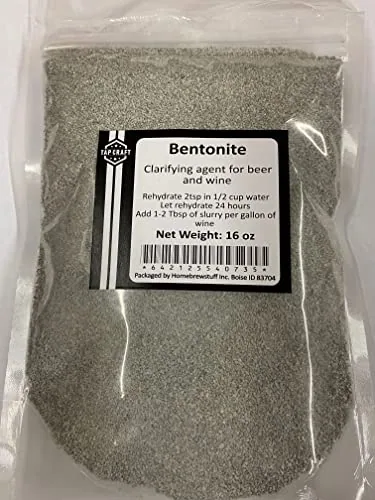
Tapcraft Bentonite, 1 lb
- Use
- Add before primary fermentation
- Type
- Bentonite
- Size
- 1 lb
Best for Frequent winemakers
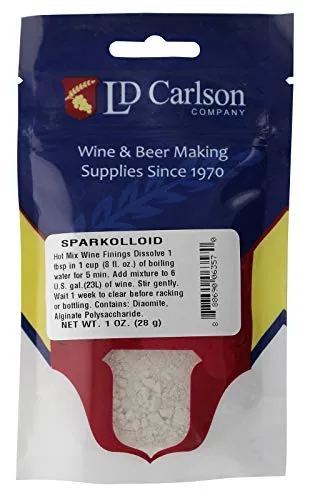
LD Carlson Sparkolloid Powder, 1 oz
- Use
- Wine clarifier
- Type
- Sparkolloid (hot-mix)
- Size
- 1 oz
Best for Clearing stubborn wine haze
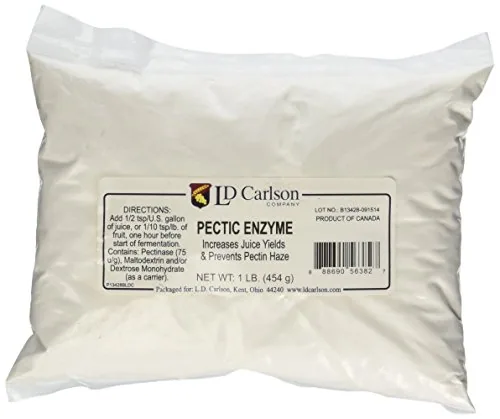
Home Brew Ohio Pectic Enzyme Powder, 1 lb
- Use
- Breaks down fruit pectin
- Type
- Pectic enzyme powder
- Size
- 1 lb
Best for Fruit wine and cider
How to fine a batch, step by step
- Let fermentation finish
Confirm final gravity with two or three equal readings. Fining an active fermentation strips yeast it still needs.
- Degas wine and mead
Stir out CO2 before fining; gas bubbles keep particles suspended.
- Cold-crash beer
Chill beer near freezing for a day or two before gelatin or silica; most finings work faster cold. Use a closed or pressurized vessel so the airlock does not suck back.
- Bench-trial a new product
Treat a few glasses at the low, middle and high label dose and compare clarity after a day or two.
- Dose per the label
Mix as the package says (dissolve, warm, or add in order) and stir gently.
- Wait, then rack or keg off the sediment
Give it the label’s time. In a keg, the first pint pulls the sediment out of the dip tube.
- Record what worked
Note product, dose and days in the brew-day log.
Mistakes to avoid
- Boiling Whirlfloc for an hour. BYO: add it in the last 15 minutes or less.
- More is better. Overdosing several finings can leave loose, fluffy sediment or new haze.
- Fining warm beer. Chill haze only forms cold, so cold-crash first.
- Skipping degassing in wine. Gas keeps the wine cloudy no matter the fining.
- Not warning guests. Animal-derived and shellfish-derived finings matter to some people.
- Expecting finings to fix infection haze. Bacterial or wild yeast haze needs a different fix; see beer off-flavors.
Which fining should you choose?
For most beer: Whirlfloc in the kettle, then time and cold. For a bright lager or pale ale on tap: add gelatin or silica after cold-crashing. For vegan beer: kettle finings plus silica sol. For wine kits: use the included packs. For fruit wine and mead: pectic enzyme at the start, then bentonite or two-part kieselsol and chitosan if needed. Products live in brewing chemicals and water.
Gear picks for this guide: best wort chillers and best wine making kits.
Keg carbonation chart and PSI calculatorKeg carbonation chart and calculator: regulator PSI by beer temperature and CO2 volumes, with an altitude…Printable brew-day log and recipe sheetFree brew-day log: record recipe, water and salts, mash, gravities, yeast, fermentation temperatures,…Questions
When should I add Whirlfloc?
Is gelatin or Biofine better for clearing beer?
Are finings vegan?
Do I need finings at all?
Can I use beer finings in wine?
Does pectic enzyme clear wine?
Sources
- BYO: Fining homebrew
- WineMaker: Fermenting and degassing wine kits (Tim Vandergrift)
- Ohimain (2016): Methanol contamination in traditionally fermented alcoholic beverages, SpringerPlus (PMC)
- TTB Ruling 2014-2: Revised interim policy on gluten content statements (PDF)
- EPA: Star San label (Reg. No. 65001-1, PDF)