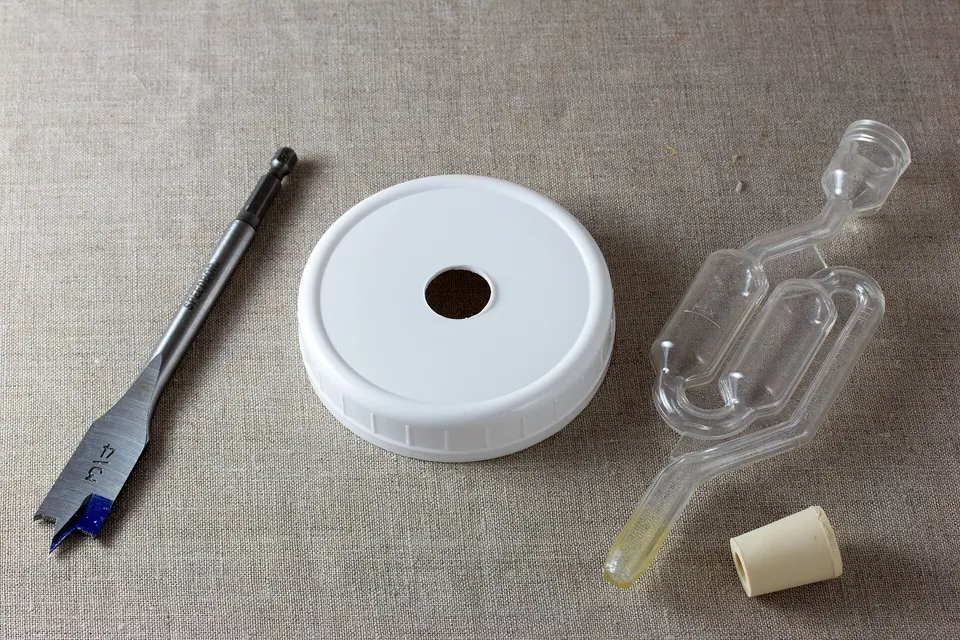
- Cleaning and sanitizing are two jobs: a cleaner (PBW, OneStep, B-Brite) removes soil; a sanitizer (Star San, iodophor) kills what's left. You need both.
- Star San is EPA-registered (Reg. No. 65001-1) as a no-rinse sanitizer at label dilution; check the dilution and contact time on your bottle.
- No-rinse sanitizers in our catalogue come from only two makers, Five Star and National Chemicals (BTF iodophor), so this list combines cleaners and sanitizers, as the title says.
- Use every product only at the dose and contact time on its label, wear eye protection with concentrates and powders, and never mix products.
The best brewing sanitizer and cleaner setup is two products, not one: a cleaner that lifts krausen rings and dried wort, then a sanitizer that knocks down the microbes the cleaner left behind. Skipping either step is the most common cause of infected homebrew, and both steps only work at the dose on the label.
Honest note on the field: the no-rinse sanitizers in our catalogue come from just two makers, Five Star (Star San, plus the Saniclean acid rinse) and National Chemicals (BTF iodophor). Cleaners have more brands. So this list ranks eight products from six brands across both jobs, with one tool that makes the work easier. Doses come from each label as listed; where a listing doesn't give one, we say so.
Our picks
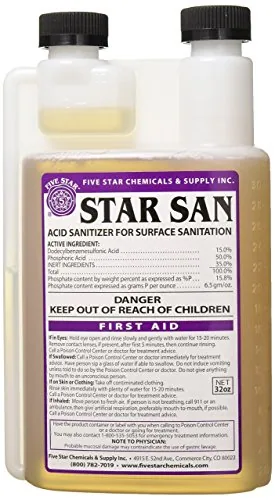
Five Star Star San Acid Sanitizer, 32 oz
Five Star Chemicals
- Type
- Acid sanitizer, high-foaming
- Use
- Sanitizer; no-rinse at label dilution
- Size
- 32 fl oz
- EPA reg.
- 65001-1
Star San is an acid sanitizer registered with the EPA (Reg. No. 65001-1). Used at label dilution it doesn't need rinsing, and its foam reaches into crevices. Five Star's directions give 1 fl oz per 5 gal of water; confirm the dilution and contact time on the label of the bottle you buy.
Best for: Sanitizing everything that touches cooled wort, wine or cider
Skip if: You recirculate through pumps and can't stand foam (look at Saniclean)
- EPA Reg. No. 65001-1
- No-rinse at label dilution
- A 32 oz bottle makes a lot of solution
- Concentrate is acidic: eye protection
- Foams heavily in pumps
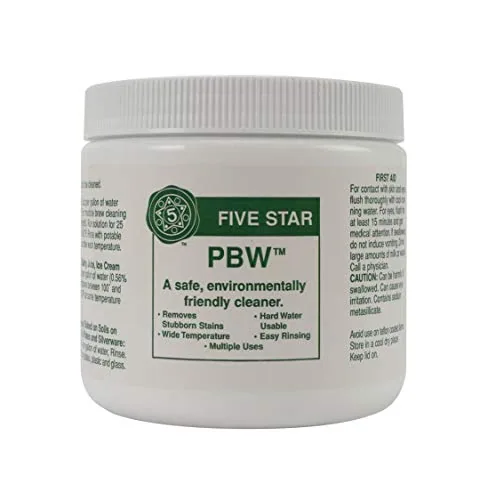
Five Star PBW Alkaline Cleaner, 1 lb
Five Star Chemicals
- Type
- Non-caustic alkaline powder
- Use
- Cleaner (not a sanitizer)
- Size
- 1 lb
PBW (Powdered Brewery Wash) is a non-caustic alkaline cleaner for thick, caked-on organic soil. Five Star says it cleans parts you can't reach with a brush by soaking and rinsing, and is safe on stainless, rubber, soft metals and plastics. It cleans; it does not sanitize, so follow it with a sanitizer.
Best for: Soaking fermenters, kettles and kegs after a batch
Skip if: You want a no-rinse product
- Lifts caked-on soil by soaking
- Non-caustic per maker
- Safe on stainless, rubber and plastics per maker
- Rinse required
- Dose not printed on this listing; read the tub
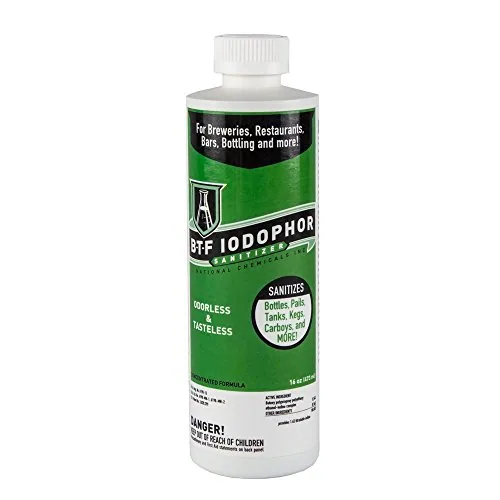
National Chemicals BTF Iodophor Sanitizer, 16 oz
National Chemicals
- Type
- Iodophor
- Use
- Sanitizer; no-rinse, low-foam per label
- Size
- 16 fl oz
BTF iodophor is an iodine-based sanitizer from National Chemicals, labelled low-foam and no-rinse. It's the main alternative to Star San when foam gets in the way, such as in lines or pumps. It can stain plastic with long contact. The EPA registration number isn't shown on this listing; check the bottle.
Best for: Brewers who want a low-foam, no-rinse sanitizer
Skip if: Stained plastic would bother you
- Low-foam
- No-rinse per label
- Odorless and tasteless per maker
- Can stain plastic
- EPA reg. not listed on this listing
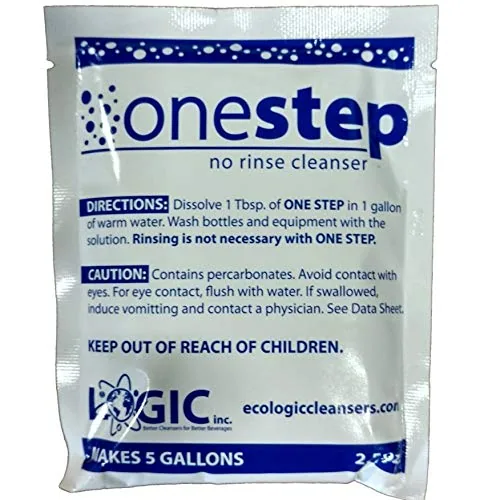
Logic OneStep No-Rinse Cleanser, 2.5 oz
Logic (One Step)
- Type
- Oxygen-based powder
- Use
- No-rinse cleanser; 2-minute contact time
- Size
- 2.5 oz
OneStep is an oxygen-based cleanser: the label gives 1 tablespoon per gallon of water and a 2-minute contact time, no rinse. The 2.5 oz trial size makes about 5 gallons. The listing title calls it a sanitizer, but it's sold as a cleanser, not an EPA-registered sanitizer, so pair it with Star San or iodophor.
Best for: First brew days with a starter kit
Skip if: You're cleaning heavily soiled gear (PBW soaks harder)
- 1 tbsp per gallon, 2 minutes
- No rinse per label
- Oxygen-based, no chlorine
- Cleaner, not a registered sanitizer
- Trial size only makes about 5 gal
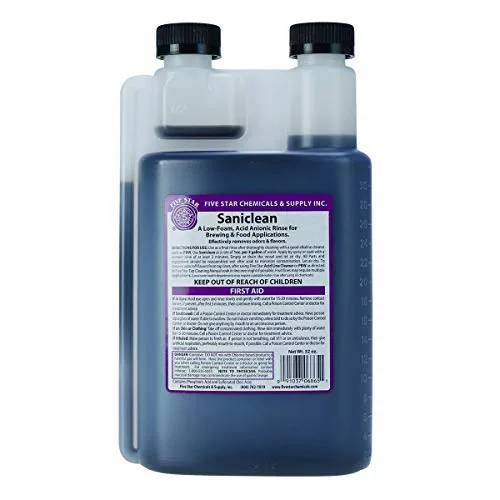
Five Star Saniclean, 32 oz
Five Star Chemicals
- Type
- Acid-based, non-foaming
- Use
- Acid final rinse; 2 oz per 5 gal water
- Size
- 32 fl oz
Saniclean, from the makers of Star San, is labelled as an acid-based, non-foaming final rinse at 2 oz per 5 gallons of water. Its low foam suits pumps and clean-in-place loops where Star San foams. The listing doesn't show an EPA sanitizer registration, so use it as the label describes.
Best for: Recirculating systems and keg washers
Skip if: You need a product the label lists as an EPA-registered sanitizer
- Non-foaming
- Label dose 2 oz per 5 gal
- Same maker as Star San
- EPA reg. not listed on this listing
- Acid concentrate: eye protection
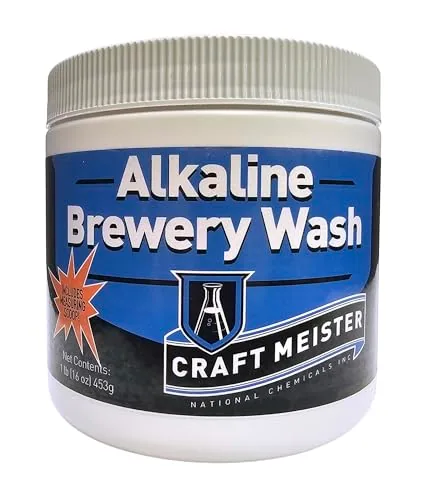
Craft Meister Alkaline Brewery Wash, 16 oz
Craft Meister
- Type
- Alkaline powder
- Use
- Cleaner
- Size
- 16 oz
Craft Meister's Alkaline Brewery Wash is a powdered alkaline cleaner for carbon build-up, labelled safe on glass, plastic and stainless and easy on hands. It's the alternative if you want a second alkaline cleaner brand. The dose isn't printed on this listing; read the tub.
Best for: Routine fermenter and kettle cleaning
Skip if: You need the dose before you buy
- Alkaline formula
- Glass, plastic and stainless per maker
- 16 oz screw-top tub
- Dose not listed
- Rinse required
BSG HandCraft B-Brite Cleanser, 8 oz
BSG
- Type
- Powdered cleanser
- Use
- Cleaner; 1 tbsp per gallon; rinse required
- Size
- 8 oz
BSG's B-Brite is a powdered cleanser for fermentation residue and the go-to for soaking labels off reused bottles. The label gives 1 tablespoon per gallon and says it is not rinse-free; the 8 oz tub makes about 14 gallons of solution.
Best for: Prepping reused bottles and scrubbing krausen rings
Skip if: You want a no-rinse cleaner
- 1 tbsp per gallon
- Makes about 14 gal per 8 oz
- Lifts bottle labels
- Must be rinsed off
- Cleaner only
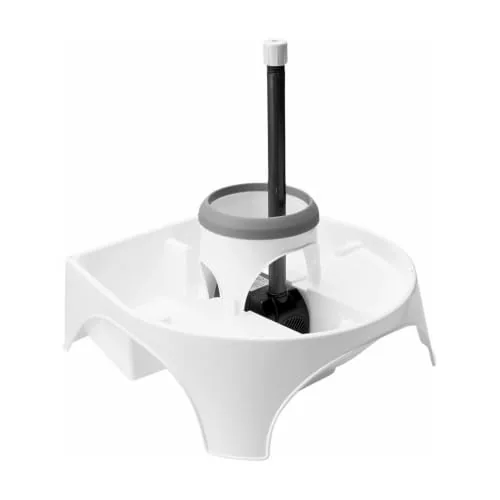
Mark II Keg and Carboy Washer
Mark II
- Type
- Pump washer
- Use
- Cleaning and sanitizing kegs, carboys, kettles
The Mark II is a hands-free pump washer for carboys, kettles and kegs. Fill the basin with cleaner, invert the vessel over the spray stem, then drain and refill with no-rinse sanitizer. The maker notes the pump isn't self-priming (fill before plugging in) and says never to leave it running unattended.
Best for: Brewers who keg or ferment in carboys
Skip if: You only clean buckets you can reach into
- Hands-free spraying
- Reuses the same solution
- Works with cleaner, then sanitizer
- Bucket, carboy and keg not included
- Pump must not run dry
Cleaner or sanitizer: what each product does
A cleaner removes soil you can see: hop gunk, protein, dried krausen and beer stone. A sanitizer reduces the microbes on a surface that is already clean. Sanitizer can't work through a film of dirt, so the order is always clean, rinse if the label says so, then sanitize.
Brewing cleaners and sanitizers as labelled
| Product | Job | Rinse? | Label dose (as listed) | Foam | EPA reg. |
|---|---|---|---|---|---|
| Five Star Star San | Sanitizer | ✓ No rinse at label dilution | 1 fl oz per 5 gal (maker directions; confirm on label) | High | 65001-1 |
| BTF Iodophor | Sanitizer | ✓ No rinse per label | Per label (not on this listing) | Low | Not listed |
| Five Star Saniclean | Acid final rinse | Per label | 2 oz per 5 gal | None | Not listed |
| Logic OneStep | Cleaner | ✓ No rinse per label | 1 tbsp per gal, 2 min | Low | Not listed |
| Five Star PBW | Cleaner | ✗ Rinse | Per label (not on this listing) | Low | Not applicable |
| Craft Meister Alkaline Wash | Cleaner | ✗ Rinse | Not listed | Not listed | Not applicable |
| BSG B-Brite | Cleaner | ✗ Rinse (not rinse-free) | 1 tbsp per gal | Not listed | Not applicable |
Source: Product listings and labels; EPA Star San label (Reg. No. 65001-1)
Working solution per package at the label dose
Package size ÷ label dose; Star San assumes the 1 fl oz per 5 gal direction
The chart shows why sanitizer concentrate lasts so long: a 32 oz bottle of Star San at the 1 oz per 5 gallon direction makes about 160 gallons of solution. Cleaners go faster because you soak whole vessels in them.
Label directions, EPA registration and safety
Sanitizers that make a kill claim are pesticides under federal law, and their EPA-registered label is the legal set of directions: dilution, contact time and whether you rinse. Star San's registration is EPA Reg. No. 65001-1, and Five Star describes the use solution as no-rinse at label dilution. You can look up any registered product's current stamped label in the EPA's pesticide label search.
How to clean and sanitize brewing gear step by step
- Rinse right after use
Hot water rinses off most fresh soil before it dries. The sooner you rinse, the less the cleaner has to do.
- Soak in cleaner at the label dose
Fill the fermenter or kettle with cleaner mixed per the label and let it soak. Use a soft cloth or brush; abrasive pads scratch plastic.
- Rinse if the label says so
PBW, the Craft Meister wash and B-Brite need a rinse; OneStep doesn't, per its label.
- Mix sanitizer fresh
Measure the concentrate into water exactly as the label says. A spray bottle of the same solution handles small parts and the outside of fittings.
- Give it the full contact time
Wet every surface and wait the contact time on the label before the beer touches it. With Star San at label dilution, don't rinse afterward.
- Use a washer for big vessels
Carboys and kegs are hard to reach by hand. A pump washer sprays cleaner, then sanitizer, through the same basin.
- Log it
Note which products and doses you used in the brew-day log; if a batch goes wrong, it's the first thing to check.
Mistakes to avoid
- Sanitizing a dirty surface. Sanitizer can't get through soil. Clean first.
- Treating a cleaner as a sanitizer. PBW, B-Brite and OneStep clean; they aren't EPA-registered sanitizers.
- Guessing the dose. Too weak doesn't sanitize; too strong can damage gear or leave flavors. Measure per the label.
- Rinsing a no-rinse sanitizer with tap water. That puts microbes right back on the surface.
- Skipping eye protection. Acid concentrates and alkaline powders can splash or dust. Wear glasses and add concentrate to water.
- Leaving iodophor in plastic for days. It can stain; follow the label's contact time.
- Mixing products. Use one product at a time and rinse between cleaner and sanitizer where the labels call for it.
Which brewing sanitizer and cleaner should you choose?
Pick by how you brew
| You… | Clean with | Sanitize with |
|---|---|---|
| Are brewing your first kit | OneStep | Star San |
| Brew all-grain in a kettle or all-in-one | PBW | Star San |
| Keg, or run pumps and plate chillers | PBW, through a pump washer | Iodophor or Saniclean (low foam), per label |
| Reuse commercial bottles | B-Brite (labels off) | Star San |
| Want a second cleaner brand | Craft Meister Alkaline Wash | Star San or iodophor |
Starter kits often include a packet of cleanser; plan on buying a real sanitizer anyway. Browse everything in cleaning and sanitizing, see what a first batch needs in your first brew day, and if you're moving to kegs, the switching to kegs list covers line cleaners. Price your consumables in the startup budget builder. Making wine instead? The wine kit picks note which kits include cleaner and sulfite.
For most homebrewers the pair is PBW to clean and Star San (EPA Reg. No. 65001-1) to sanitize, both used exactly as labelled. On a first brew day, OneStep plus Star San is simpler. If foam is a problem in pumps or lines, BTF iodophor is the low-foam no-rinse sanitizer, and Saniclean is the non-foaming acid rinse. Add B-Brite if you reuse bottles and a Mark II washer once carboys and kegs arrive.
Before you buy, read cleaning vs sanitizing brewing gear and draft line cleaning and line balancing.
We compared product labels and listings for each product's job (cleaner or sanitizer), dose, contact time, rinse requirement, foam and EPA registration, checked Star San's registration against the EPA label letter, and quote label directions only, never off-label doses. No-rinse sanitizers come from only two makers in our catalogue, so cleaners fill out the list. We did not use these products on brew days. No scores or prices.