- Only two floating digital hydrometer brands are in our catalogue: Tilt (several models) and KegLand's RAPT Pill. We say so up front and fill the list with honest alternatives.
- The standard Tilt lists SG 0.990–1.120, ±0.002 SG and a 12–24 month battery; the Tilt Pro Mini lists 0.0001 SG resolution and fits through a 1.5-inch Tri-Clamp port.
- The RAPT Pill listing gives almost no specs; check KegLand's manual before you buy.
- Every digital hydrometer still needs a check against a glass hydrometer, and a stable reading over 2–3 days before you bottle.
The best digital hydrometer floats in your fermenter and sends gravity and temperature to your phone, so you can watch fermentation without pulling samples. In practice the choice on store shelves is narrow: the catalogue we track has only two brands of floating digital hydrometer, Tilt and KegLand (RAPT Pill). The open-source iSpindel exists, but as a DIY build with no branded listing.
So this list does two things. It compares the Tilt models and the RAPT Pill by the specs each maker lists, and it adds the honest alternatives that answer the same question: a digital refractometer that corrects for alcohol, a budget optical refractometer, and a glass hydrometer to calibrate everything against. Specs that aren't on a listing are marked "not listed".
Our picks
Tilt Wireless Hydrometer & Thermometer (Black)
Tilt
- Range
- SG 0.990–1.120
- Accuracy
- ±0.002 SG (per Tilt)
- Connectivity
- Bluetooth to app or Tilt Pi
- Battery
- 12–24 months (per maker)
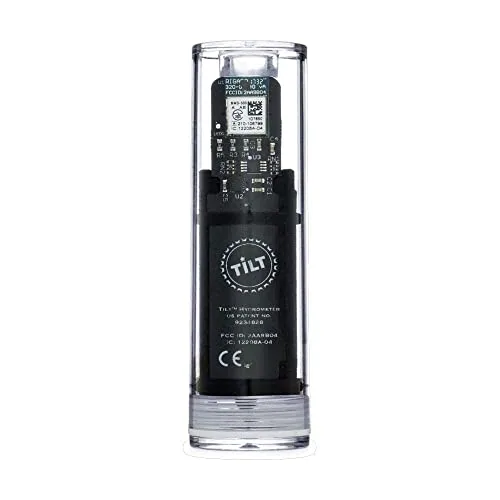
The standard Tilt lists SG 0.990–1.120 with ±0.002 SG accuracy (per Tilt), temperature logging, a 12–24 month battery and Bluetooth to the free Tilt app or a Tilt Pi. It arrives pre-calibrated. Each color is its own channel, so you use one color per fermenter.
Best for: Plastic or glass fermenters in a room where your phone or a Tilt Pi sits nearby
Skip if: You ferment in stainless and have no Wi-Fi bridge nearby
- SG 0.990–1.120, ±0.002 SG per Tilt
- Pre-calibrated
- 12–24 month battery per maker
- One color per batch
- Bluetooth range needs a receiver nearby
Tilt Pro Mini Wireless Hydrometer & Thermometer (Black)
Tilt
- Range
- SG 0.9900–1.1200 (user-calibratable to 1.2000)
- Accuracy
- 0.0001 SG resolution (per Tilt)
- Connectivity
- Bluetooth
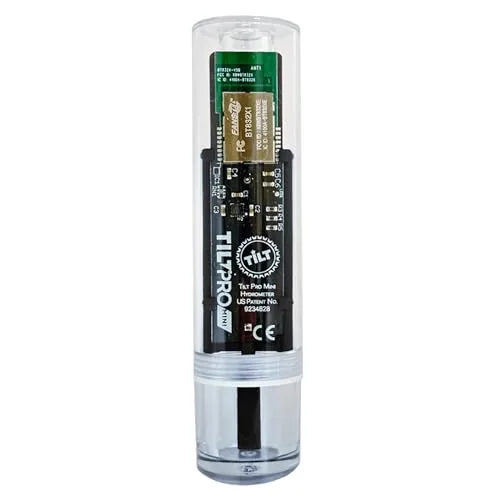
The Tilt Pro Mini is 1.13 in (29 mm) wide and 4.51 in (115 mm) tall, so it retrieves through a 1.5-inch Tri-Clamp port. Tilt lists SG 0.9900–1.1200, user-calibratable up to 1.2000, with 0.0001 SG resolution, for batches up to 5 BBL.
Best for: Fermenting in corny kegs, FermZillas and small stainless conicals
Skip if: You brew in a bucket and the standard Tilt already fits
- Compact 29 × 115 mm body
- Calibratable to 1.200 for big musts
- 0.0001 SG resolution per Tilt
- Battery life not listed on this listing
- Resolution is not the same as accuracy
Tilt Pico Wi-Fi Bridge for Tilt Hydrometers
Tilt
- Connectivity
- Bluetooth to Wi-Fi bridge, cloud logging
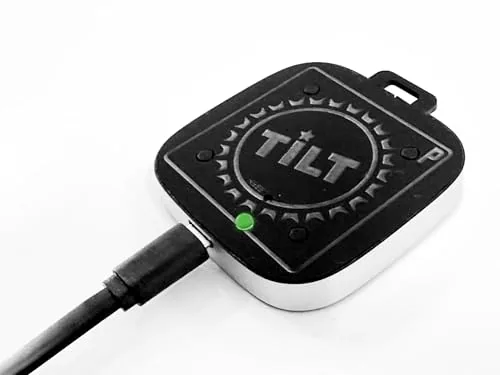
The Tilt Pico is a Bluetooth-to-Wi-Fi bridge: it relays Tilt readings to the cloud, handles several Tilts at once (even two of the same color, by MAC address) and stores about two months of data locally. Tilt says it is optimized for mounting on the fermenter, with better range for stainless vessels.
Best for: Tilt owners who want readings away from home
Skip if: You don't own a Tilt; it doesn't measure anything itself
- Several Tilts on one bridge
- About 2 months of local storage
- Better range for stainless per Tilt
- Accessory only, no sensor
- Needs a power outlet nearby
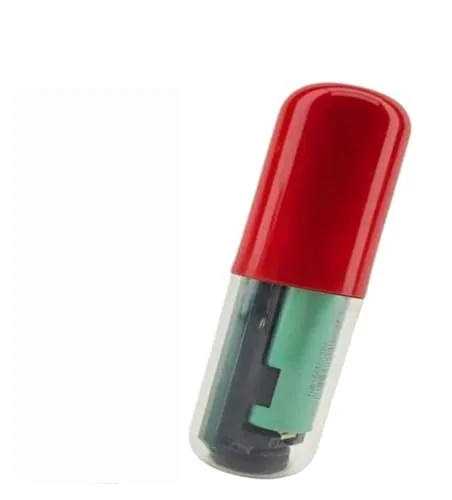
KegLand RAPT Pill Digital Hydrometer & Thermometer (Red)
KegLand
- Connectivity
- Not listed on this listing (RAPT app per maker)
KegLand's RAPT Pill is the other floating digital hydrometer and thermometer in the catalogue, in a red housing for beer and wine fermentation. This listing gives no range, accuracy, battery or connection details, so read KegLand's manual first. It makes most sense if you already run RAPT-connected KegLand gear.
Best for: Brewers with BrewZilla or other RAPT-connected KegLand equipment
Skip if: You want every spec confirmed on the listing before you buy
- Floating gravity and temperature
- Fits the KegLand RAPT ecosystem
- Range not listed
- Accuracy and battery not listed
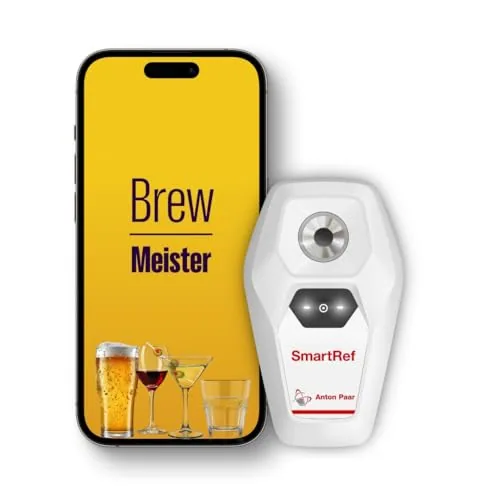
Anton Paar SmartRef Digital Refractometer
Anton Paar
- Accuracy
- ±0.04 °Brix (per maker)
- ATC
- Yes
- Connectivity
- Bluetooth app
Not a floating sensor, but it answers the same question from a 0.4 mL sample. Anton Paar's SmartRef lists automatic wort and alcohol correction, an estimated-ABV readout, ±0.04 °Brix, ATC, IP66 and Bluetooth to the Brew Meister app.
Best for: Brewers who prefer a daily sample over a device in the beer
Skip if: You want continuous, hands-off logging
- Alcohol correction on the device
- Tiny sample
- SG, Plato and est. ABV units
- You still pull a sample each time
- Range not listed
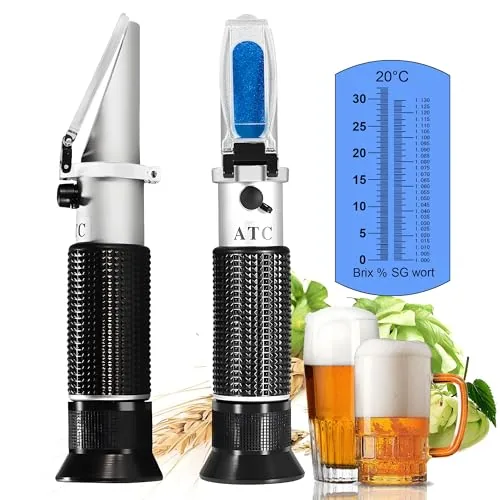
V-Resourcing Beer Wort Refractometer (Brix/SG)
V-Resourcing
- Range
- Brix 0–32%, SG 1.000–1.130
- Accuracy
- ±0.2% Brix, ±0.001 SG
- Scale
- Dual (Brix, wort SG)
An optical refractometer with a wort SG scale (1.000–1.130) and stated ±0.001 SG. Before fermentation it reads directly; after pitching, enter original and current Brix into the ABV calculator's refractometer mode for a corrected estimate.
Best for: Brew-day gravity and occasional fermentation checks
Skip if: You don't want to do the alcohol correction yourself
- Wort SG scale
- 2–3 drop sample
- No batteries
- ATC not stated on this listing
- Fermenting readings need correction
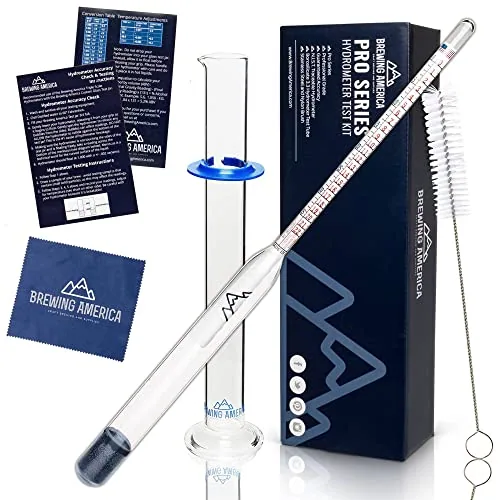
Brewing America Triple Scale Hydrometer & Test Jar (USA-Made)
Brewing America
- Range
- SG 0.990–1.170 (listing)
- Accuracy
- NIST-traceable (per maker)
- Scale
- Triple scale
A glass hydrometer is what you check a digital one against. Brewing America's US-made triple-scale hydrometer reads SG 0.990–1.170, comes with a borosilicate test jar and brush, and is described as NIST-traceable by the maker.
Best for: Checking a Tilt or RAPT Pill reading and confirming final gravity
Skip if: You already own a hydrometer you trust
- SG 0.990–1.170
- Test jar included
- NIST-traceable per maker
- Needs a full test jar of beer
- Glass
How the digital hydrometer options compare
A floating digital hydrometer works out gravity from how steeply it tilts in the beer: denser wort holds it more upright, and as sugar turns into alcohol it lies down. That is clever, but it also means foam, krausen, gas bubbles and the fermenter wall can nudge readings. Treat the curve as the story and a glass hydrometer as the final word.
Digital hydrometers and alternatives: listed specs
| Model | How it reads | SG range | Stated accuracy | Connectivity | Battery |
|---|---|---|---|---|---|
| Tilt (standard) | Floats, continuous | 0.990–1.120 | ±0.002 SG (Tilt) | Bluetooth to app or Tilt Pi | 12–24 months (maker) |
| Tilt Pro Mini | Floats, continuous | 0.9900–1.1200 (to 1.2000 calibrated) | 0.0001 SG resolution (Tilt) | Bluetooth | Not listed |
| KegLand RAPT Pill | Floats, continuous | Not listed | Not listed | Not listed (RAPT app per maker) | Not listed |
| Anton Paar SmartRef | Sample, corrected | Not listed | ±0.04 °Brix (maker) | Bluetooth app | Not listed |
| V-Resourcing refractometer | Sample, manual correction | 1.000–1.130 | ±0.001 SG | None | None needed |
| Brewing America hydrometer | Sample, direct | 0.990–1.170 | NIST-traceable (maker) | None | None needed |
Source: Maker listings, November 2026
Top of each listed SG range
Gravity points above 1.000; big meads and barleywines need headroom
The larger Tilt Pro (rated by Tilt for batches up to 20 BBL and retrieved through a 2-inch port) is also sold, but it is built for commercial tanks, so it isn't ranked here. If you like to tinker, the open-source iSpindel is a DIY alternative; there's no branded listing to compare.
What a digital hydrometer can and can't tell you
It can show when fermentation starts, how fast it runs and when the curve flattens. Paired with the temperature reading, it helps you spot a fermentation that stalls because the garage got cold, or one that runs hot in summer.
It can't replace a sample when the decision matters. A reading of 1.012 from a floating sensor is an estimate. Before you bottle, confirm the gravity has held steady, and check it with a hydrometer if anything looks odd. Then plug original and final gravity into the ABV calculator and the priming sugar calculator.
How to set up a digital hydrometer step by step
- Sanitize it like any other cold-side part
Soak the device in no-rinse sanitizer at label dilution before it goes into the wort. Don't use abrasive pads on the shell.
- Check it in plain water
Float it in water at room temperature. A pre-calibrated Tilt should read close to 1.000; if it doesn't, use the app's calibration offset.
- Match it to a hydrometer reading
Take a glass hydrometer reading of the cooled wort at pitching and enter it as your original gravity reference.
- Place the receiver
Bluetooth is short-range and stainless blocks it. Keep a phone, tablet or Tilt Pi nearby, or mount a Pico bridge on the fermenter.
- Log, don't chase single readings
Watch the trend. Krausen and CO2 bubbles move readings around in the first days.
- Confirm before packaging
When the curve has been flat for 2–3 days, take a hydrometer or corrected refractometer reading before you bottle or keg.
- Record the batch
Copy OG, FG and the temperature notes into the brew-day log so the next batch starts from real numbers.
Mistakes to avoid
- Bottling on the app's number alone. Confirm a stable gravity over 2–3 days and check with a hydrometer.
- Two Tilts of the same color in one room on the phone app. Each color is a channel; use different colors, or a Pico, which can tell same-color Tilts apart by MAC address.
- Expecting Bluetooth through stainless. Plan a bridge or a receiver right next to the vessel.
- Confusing resolution with accuracy. The Pro Mini's 0.0001 figure is resolution; foam and temperature still move the reading.
- Skipping the water check. A quick float in water catches an offset before it spoils a whole batch log.
- Buying the RAPT Pill on specs you haven't seen. The listing is thin; read KegLand's manual for range and battery first.
Which digital hydrometer should you choose?
Pick by setup
| Your setup | Choose | Why |
|---|---|---|
| Bucket or PET fermenter, phone nearby | Tilt (standard) | Listed range, accuracy and battery life |
| Kegs, FermZilla or small stainless | Tilt Pro Mini + Pico | Fits a 1.5-inch port; bridge helps through steel |
| Already on KegLand RAPT gear | RAPT Pill | Same ecosystem; check the manual for specs |
| You'd rather sample than float a device | Anton Paar SmartRef | Alcohol-corrected reading from 0.4 mL |
| Tight budget | V-Resourcing + ABV calculator | Wort SG scale; you do the correction |
| Everyone | A glass hydrometer | The reference you calibrate against |
Digital logging pays off most when temperature is your problem, such as a garage that swings between night and day. Pair it with the gear in temperature control and summer, browse every meter in the hydrometers and meters hub, and if you lean toward sampling, compare the best refractometers for brewing.
Start with the standard Tilt if you ferment in plastic or glass: it is the model with listed range (0.990–1.120), accuracy (±0.002 SG per Tilt) and battery life. Choose the Tilt Pro Mini with a Pico for kegs and stainless, and the RAPT Pill only if you're already on KegLand's RAPT system and have read its manual. If you'd rather not float electronics in your beer, the Anton Paar SmartRef gives alcohol-corrected readings from a sample. Whatever you choose, keep a glass hydrometer for the final check.
Before you buy, read how to use a hydrometer and calculate ABV. For a closer look, see Tilt wireless hydrometer review and Tilt vs RAPT Pill vs iSpindel.
The floating digital hydrometer category is small: our catalogue has two brands, Tilt and KegLand. We compared their listed ranges, accuracy or resolution claims, connectivity, battery life and size, then added sample-based alternatives (a digital refractometer with alcohol correction, an optical refractometer and a glass hydrometer) so the list covers at least four brands honestly. We did not ferment with these devices; specs missing from a listing are marked "not listed". No scores or prices.