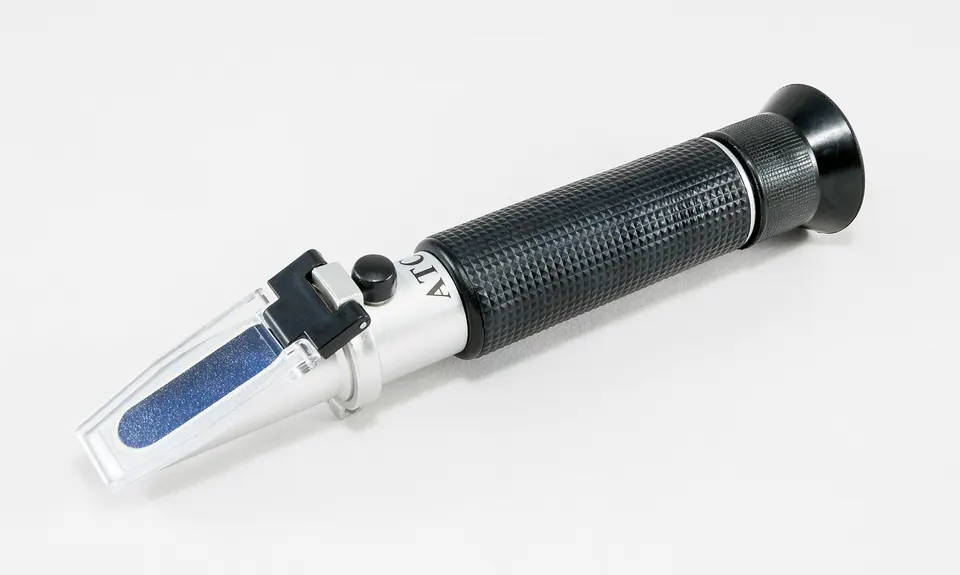
- For wort, a dual-scale optical refractometer with a wort SG scale and ATC covers most brew days; the V-Resourcing lists ±0.001 SG.
- A refractometer reads sugar, not alcohol: once fermentation starts, every reading needs an alcohol correction before it means anything.
- Mead and high-sugar musts can run past the 32% Brix ceiling of most optical models; digital meters list 0–53% (Atago) and 0–85% Brix (Milwaukee).
- The Anton Paar SmartRef is the only pick here that lists automatic wort and alcohol correction and an estimated-ABV readout.
The best refractometer for brewing is the one that reads your wort from two drops, compensates for temperature and gives you a number you can trust on brew day. Optical refractometers do that for little money, digital ones remove the squinting, and one high-end model even applies the alcohol correction for you.
This list compares seven picks from seven brands by the specs makers actually list: Brix range, SG scale, stated accuracy, automatic temperature compensation (ATC) and whether any alcohol correction is built in. Where a spec isn't on the listing, we say "not listed" rather than guess. Pair whichever you choose with the free ABV calculator, which has a refractometer mode with the correction built in.
Our picks
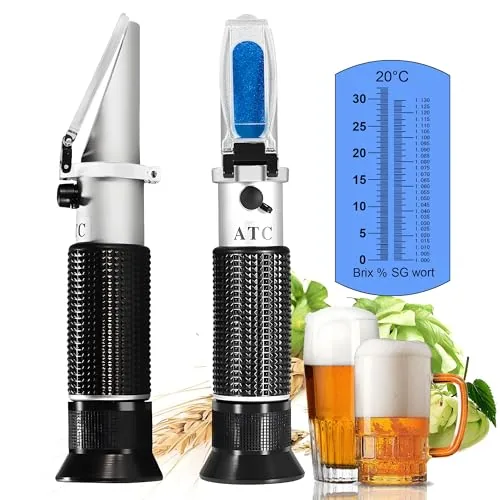
V-Resourcing Beer Wort Refractometer (Brix/SG)
V-Resourcing
- Range
- Brix 0–32%, SG 1.000–1.130
- Accuracy
- ±0.2% Brix, ±0.001 SG
- Scale
- Dual (Brix, wort SG)
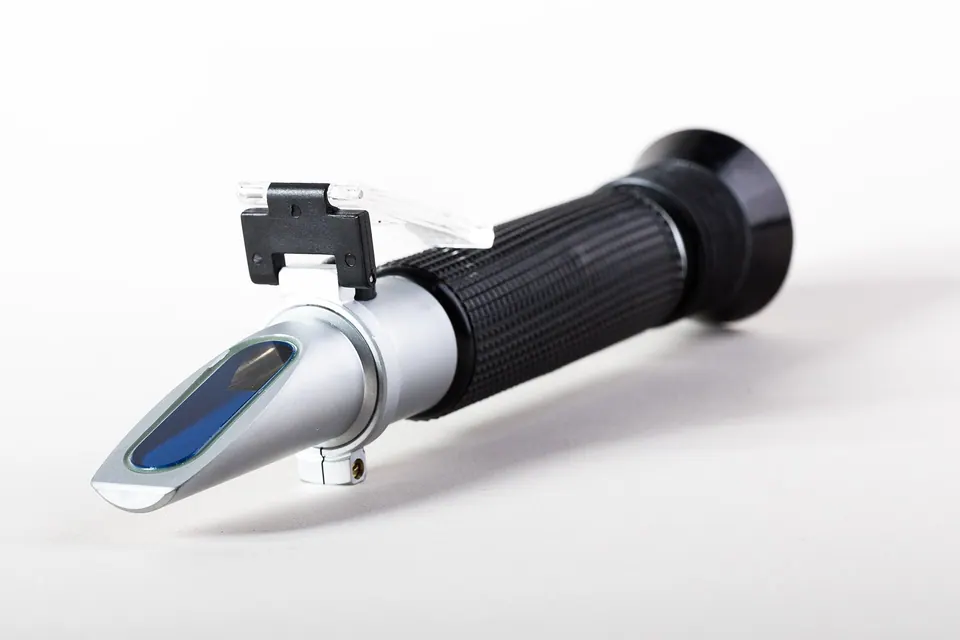
V-Resourcing lists a dedicated wort SG scale (1.000–1.130) next to Brix 0–32%, with stated accuracy of ±0.2% Brix and ±0.001 SG. Two or three drops on the prism give both readings through the eyepiece, and it ships in a plastic case.
Best for: All-grain and BIAB brewers checking pre-boil and post-boil gravity
Skip if: You want a digital readout or mostly measure honey musts above 32% Brix
- Wort SG scale, not only Brix
- ±0.001 SG stated
- Tiny sample from the kettle
- ATC is not stated on this listing
- Optical scale needs good light to read
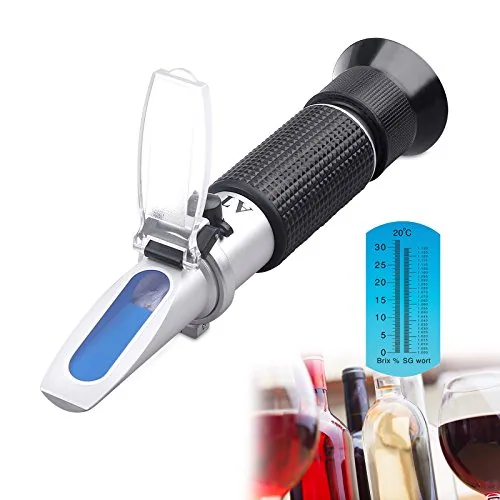
Tiaoyeer Brix/SG Refractometer with ATC
Tiaoyeer
- Range
- Brix 0–32%, SG 1.000–1.130
- Accuracy
- ±0.2% Brix
- Scale
- Dual (Brix, SG)
- ATC
- Yes, 10–30°C
Tiaoyeer lists the same dual scale (Brix 0–32%, SG 1.000–1.130) with ±0.2% Brix and automatic temperature compensation from 50–86°F (10–30°C). Sample with the dropper, hold it to the light and read. ATC is the spec that matters when you sample hot wort that cools on the prism.
Best for: Brewers who want ATC spelled out on the listing
Skip if: You sample wort straight from a boiling kettle and won't let the drop cool
- ATC 50–86°F (10–30°C) listed
- Dual Brix and SG scale
- Light and compact
- SG accuracy not listed separately
- Generic sugar-tester listing, not brewing-specific
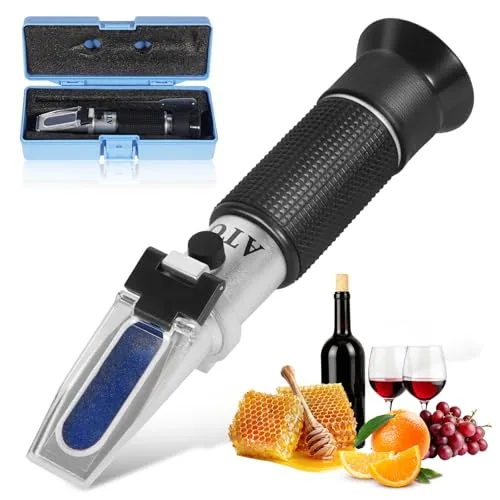
GYE Brix/SG Refractometer with ATC
GYE
- Scale
- Dual (Brix, SG)
- ATC
- Yes
GYE sells a dual-scale (Brix and SG) optical refractometer with ATC. The listing gives no range or accuracy figures, so treat it as a spare for the brew bag, or a second meter for a friend, and check it against distilled water before you rely on it.
Best for: A low-cost second refractometer
Skip if: You want a listed range and accuracy before you buy
- Dual Brix and SG scale
- ATC listed
- Range not listed
- Accuracy not listed
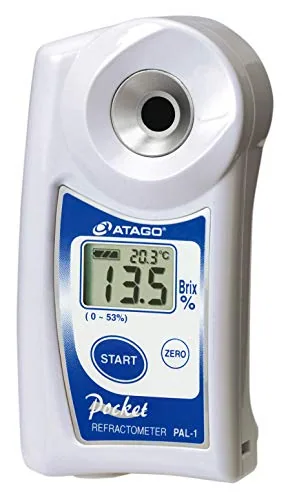
Atago PAL-1 Digital Pocket Refractometer
Atago
- Range
- 0.0–53.0% Brix
- Scale
- Brix
- ATC
- Not listed
Atago's PAL-1 is a digital pocket refractometer: apply a sample, press start and it shows % Brix in seconds. The listed range is 0.0–53.0% Brix, it is IP65-rated, and it zeroes with water. ATC is not stated on this listing, so check Atago's manual before you buy.
Best for: Winemakers and mead makers who want a digital Brix number without squinting
Skip if: You want an SG scale on the display (it reads Brix only)
- 0.0–53.0% Brix range
- IP65 body, easy to rinse
- Water-zero calibration
- Brix only; convert to SG yourself
- ATC not listed on this listing
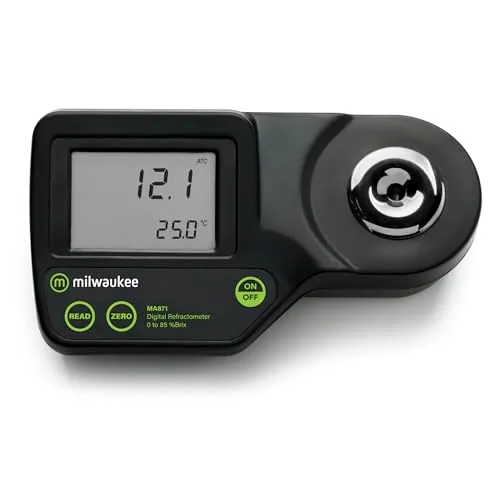
Milwaukee MA871 Digital Brix Refractometer
Milwaukee Instruments
- Range
- 0–85% Brix
- Accuracy
- ±0.2% Brix
- Scale
- Brix
- ATC
- Yes
Milwaukee's MA871 reports % Brix from 0–85% with ±0.2% Brix accuracy and 0.1% resolution, temperature-compensated to the ICUMSA method, in about 1.5 seconds. Two buttons do everything: zero with distilled water, then measure. The range covers thick sugar and honey solutions an optical 0–32% scale can't.
Best for: Mead makers and anyone measuring very sweet musts
Skip if: You only brew standard-gravity beer and an optical meter already does the job
- 0–85% Brix range
- ±0.2% Brix, 0.1% resolution
- ATC per ICUMSA, 1.5 s response
- Brix only, no SG scale
- Needs batteries; optical meters don't
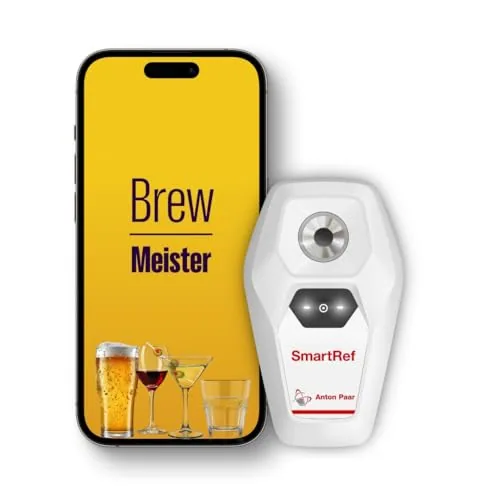
Anton Paar SmartRef Digital Refractometer
Anton Paar
- Accuracy
- ±0.04 °Brix (per maker)
- ATC
- Yes
- Connectivity
- Bluetooth app
Anton Paar's SmartRef is the only pick that lists automatic wort and alcohol correction, an estimated-ABV readout and 40+ units (°Brix, °Plato, SG). The maker states ±0.04 °Brix, a 0.4 mL sample, ATC, an IP66 rating and Bluetooth to its Brew Meister and Wine Meister apps.
Best for: Data-minded brewers who check gravity during fermentation
Skip if: You only need a quick brew-day Brix check
- Automatic wort and alcohol correction
- ±0.04 °Brix stated
- Plato, SG and est. ABV units
- Range not listed on this listing
- Phone app needed for logging
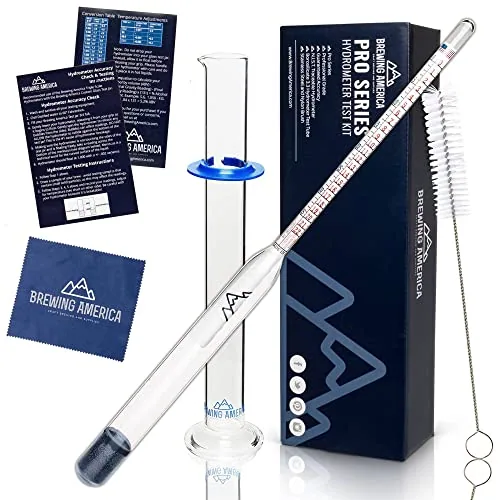
Brewing America Triple Scale Hydrometer & Test Jar (USA-Made)
Brewing America
- Range
- SG 0.990–1.170 (listing)
- Accuracy
- NIST-traceable (per maker)
- Scale
- Triple scale
A refractometer is fast, but a hydrometer is still the reference for final gravity. Brewing America's US-made triple-scale hydrometer (SG 0.990–1.170) comes with a borosilicate test jar and brush, and the maker describes it as NIST-traceable. Use it to work out your own wort correction factor.
Best for: Calibrating your refractometer and reading final gravity
Skip if: You already own a good hydrometer and test jar
- SG 0.990–1.170
- Glass test jar included
- NIST-traceable per maker
- Needs a large sample
- Glass breaks if dropped
Which specs matter in a refractometer for brewing?
Four specs separate a useful brewing refractometer from a fruit-sugar tester. Range decides what you can measure; scale decides whether you read SG directly or convert from Brix; ATC decides whether a warm drop gives a true number; and alcohol correction decides whether the meter is any use after you pitch yeast.
Refractometer specs as listed
| Model | Type | Range | Stated accuracy | ATC | Alcohol correction |
|---|---|---|---|---|---|
| V-Resourcing wort | Optical | Brix 0–32%, SG 1.000–1.130 | ±0.2% Brix, ±0.001 SG | Not listed | ✗ Manual (calculator) |
| Tiaoyeer | Optical | Brix 0–32%, SG 1.000–1.130 | ±0.2% Brix | ✓ 50–86°F (10–30°C) | ✗ Manual (calculator) |
| GYE | Optical | Not listed | Not listed | ✓ Yes | ✗ Manual (calculator) |
| Atago PAL-1 | Digital | Brix 0.0–53.0% | Not listed | Not listed | ✗ Manual (calculator) |
| Milwaukee MA871 | Digital | Brix 0–85% | ±0.2% Brix | ✓ Yes (ICUMSA) | ✗ Manual (calculator) |
| Anton Paar SmartRef | Digital | Not listed | ±0.04 °Brix (maker) | ✓ Yes | ✓ Automatic wort and alcohol |
Source: Maker listings, November 2026
Maximum Brix each refractometer lists
Most beer worts sit well inside 32% Brix; very sweet musts need more headroom
Read the chart the right way round: more range doesn't mean better beer readings. A 32% Brix optical scale already spans SG 1.000–1.130, which covers almost every beer. The wider digital ranges earn their keep with honey and concentrated fruit musts.
Why readings after fermentation need a correction
A refractometer measures how much light bends through the sample. Sugar bends it, and so does alcohol. Before fermentation the only thing in the way is wort sugar, so the reading is good after one small fix: the wort correction factor (WCF), about 1.04 for many meters, because wort isn't pure sucrose. Divide the Brix reading by your WCF, then convert to SG.
Once yeast makes alcohol, the raw reading drifts high and stops tracking gravity. The common fix is Sean Terrill's cubic equation, which takes the original and current Brix and estimates final gravity. It's an approximation, so most brewers confirm the last reading with a hydrometer. The ABV calculator runs both the WCF and the Terrill correction for you; the Anton Paar SmartRef does it on the device.
How to use a brewing refractometer step by step
- Zero it with distilled water
Put a few drops of distilled water at room temperature on the prism, close the cover and turn the calibration screw (optical) or press zero (digital) until it reads 0. Do this at the start of each session.
- Pull a small sample and let it cool
Take wort with a clean pipette or spoon and let the drops cool for a few seconds. ATC covers a range, for example 50–86°F (10–30°C) on the Tiaoyeer, not boiling wort.
- Read in good light
Close the daylight plate, point the optical meter at a window or lamp and read where the blue and white fields meet. Digital meters just show the number.
- Correct for wort
Divide Brix by your wort correction factor (about 1.04 until you measure your own), then convert to SG with the calculator.
- Find your own WCF
On two or three brew days, read the same cooled wort with the refractometer and a hydrometer. Your WCF is the refractometer Brix divided by the Brix that matches the hydrometer's SG.
- Correct for alcohol after pitching
During and after fermentation, enter original and current Brix into the ABV calculator's refractometer mode, or use a meter with built-in correction.
- Rinse and dry the prism
Wipe with a soft damp cloth and dry it. Don't submerge an optical meter unless the maker says it's waterproof; the Atago is IP65 and the SmartRef IP66.
Mistakes to avoid
- Reading final gravity straight off the scale. Alcohol skews the reading; always correct it, and confirm with a hydrometer before bottling.
- Skipping the zero. A meter that reads 0.5% Brix on water is wrong on every wort sample by about the same amount.
- Measuring a hot drop. ATC has a range. Let the sample cool for a few seconds.
- Assuming the WCF is exactly 1.04. It's a starting value; measure your own against a hydrometer.
- Using a 0–32% Brix meter for straight honey. Thick honey solutions can run off the optical scale; dilute the must first or use a wide-range digital meter.
- Trusting a listing with no numbers. If range and accuracy aren't listed, check the meter against distilled water and a hydrometer before you rely on it.
Who should choose which refractometer?
Pick by how you brew
| You brew… | Start with | Why |
|---|---|---|
| All-grain or BIAB beer, 5 gal (19 L) | V-Resourcing or Tiaoyeer | Wort SG scale, small sample, no batteries |
| Beer, and you track fermentation daily | Anton Paar SmartRef | Automatic alcohol correction and logging |
| Wine from fresh fruit or juice | Atago PAL-1 | Digital Brix to 53%, water-resistant body |
| Mead and very sweet musts | Milwaukee MA871 | 0–85% Brix range with ATC |
| On a tight budget | GYE plus a hydrometer | Cheap backup; the hydrometer keeps it honest |
If you're just moving to all-grain, the refractometer pays off on brew day: you can check pre-boil gravity in seconds and use the dilution and boil-off calculator to decide whether to boil longer or top up. Browse the full hydrometers and meters hub, or the going all-grain gear list. For hands-off fermentation logging, compare the best digital hydrometers; for mead, see the mead kit picks.
For most beer brewers, a dual-scale optical refractometer such as the V-Resourcing (wort SG scale, ±0.001 SG listed) or the Tiaoyeer (ATC 50–86°F, 10–30°C, stated) is all the brew-day meter you need, backed by a hydrometer for final gravity. Choose the Milwaukee MA871 for mead and sweet musts, the Atago PAL-1 for a compact digital Brix reading, and the Anton Paar SmartRef if you want the alcohol correction done on the device.
Before you buy, read how to use a hydrometer and calculate ABV. For a closer look, see Hydrometer vs refractometer.
We compared maker listings and published sources: listed Brix and SG ranges, stated accuracy, ATC range, sample size, water resistance and any built-in correction, plus the refractometer formulas behind our ABV calculator (Brix-to-SG conversion, wort correction factor and Sean Terrill's alcohol correction). We did not brew with these meters, and specs we couldn't find are marked "not listed". No scores, star ratings or prices.