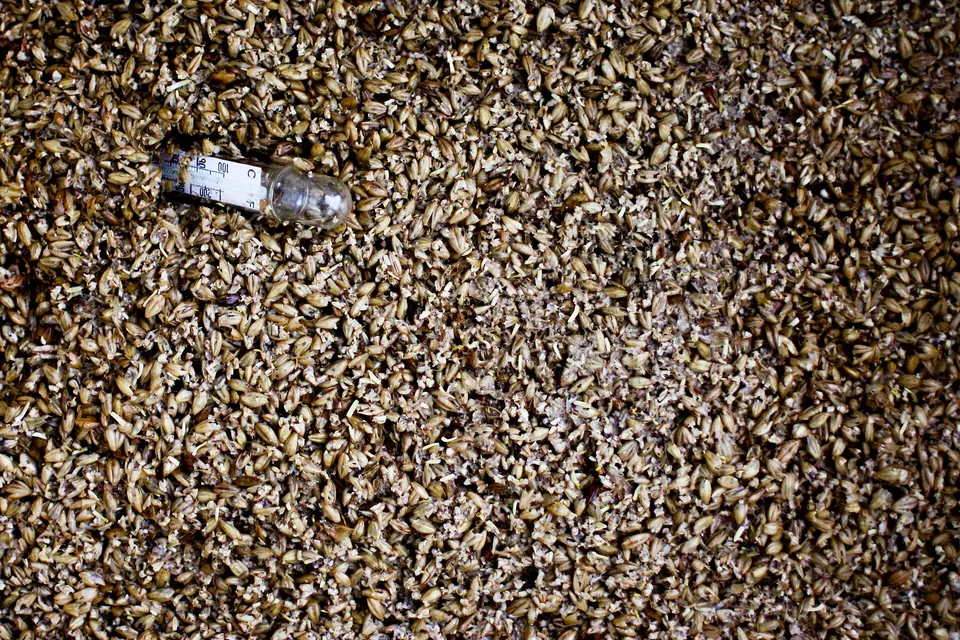
- Every manual mill in our catalogue is a two-roller design with an adjustable gap of 0.025–0.1 in; the differences are hopper size, roller material, base and drive.
- The FERRODAY lists the biggest hopper (7.7 lb) and 5-inch, 12 TPI knurled rollers; the MaltMuncher lists 5 × 1.25 in cold-rolled steel rollers and a 200 rpm drill speed.
- A drill turns a hand-crank mill into a fast one; keep it at low speed, as the makers say.
- Well-known US mill brands such as Monster Mill and Barley Crusher aren't in our current catalogue, so they aren't ranked here.
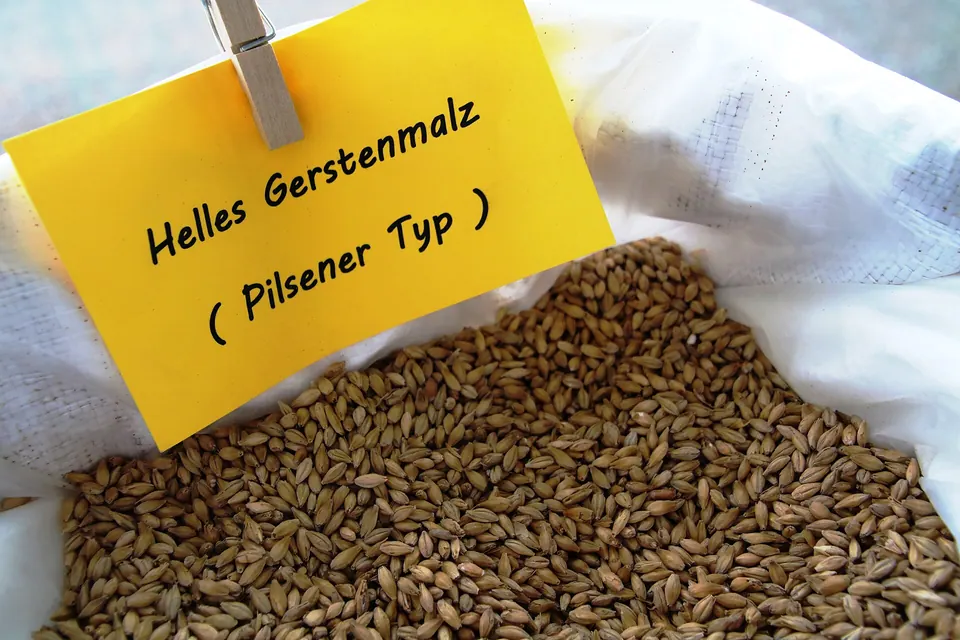
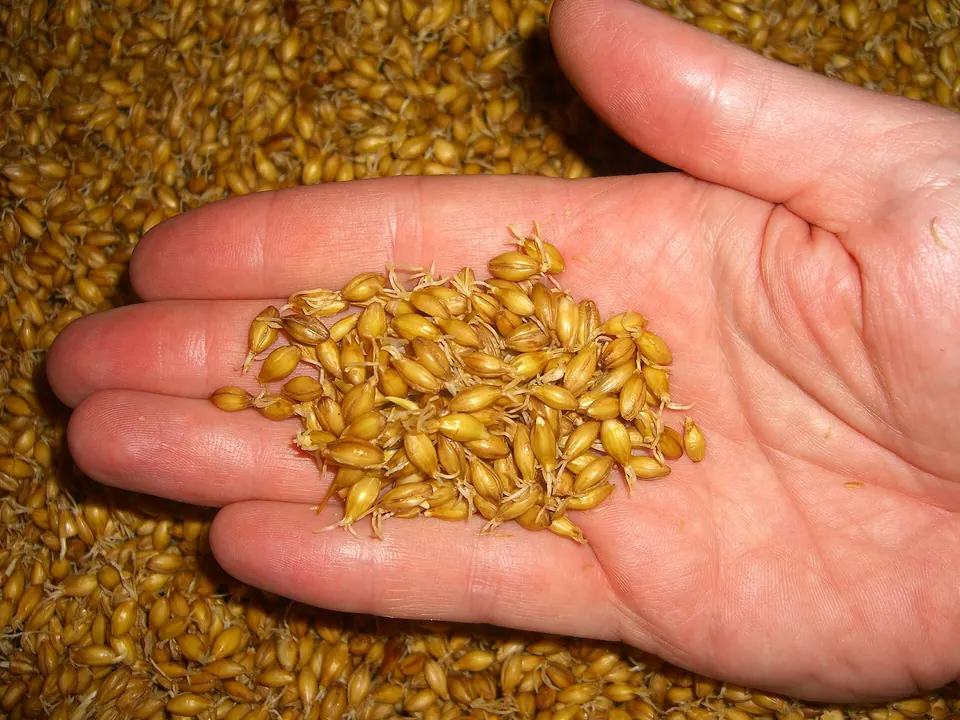
The best grain mill for homebrewing cracks malt kernels open while leaving the husks mostly whole, so your mash converts well and still drains. Milling at home also lets you buy whole malt, which keeps better than pre-crushed grain, and dial in the crush for your own system.
This list compares five mills from five brands, four two-roller manual mills and one small 110V electric unit, plus the scale you'll weigh the grist on. Honest note: well-known US mills such as Monster Mill and Barley Crusher weren't in our catalogue when we checked, so we compare what is. All specs are as each maker lists them.
Our picks
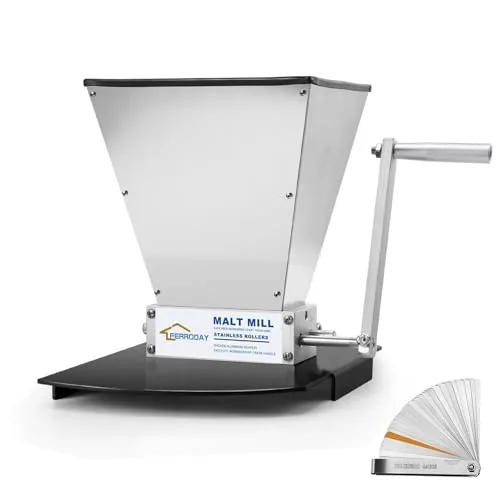
FERRODAY 2-Roller Stainless Grain Mill
FERRODAY
- Type
- 2-roller grain mill
- Hopper
- 7.7 lb
- Drive
- Hand crank or low-speed drill
FERRODAY lists two 5-inch stainless rollers with a 12 TPI knurl, a gap adjustable from 0.025 to 0.1 in, a 7.7 lb hopper and a metal base plate. It takes a hand crank or a 3/8-inch drill at low speed, and the maker claims about 7 lb per minute in drill mode. It's for malted barley and wheat, not corn, soybeans, flakes or flour.
Best for: 5-gallon (19 L) all-grain batches milled with a drill
Skip if: You want to mill corn or make flour
- 7.7 lb hopper
- 5 in rollers, 12 TPI knurl
- 0.025–0.1 in gap
- Low-speed drill only
- Malt only per maker
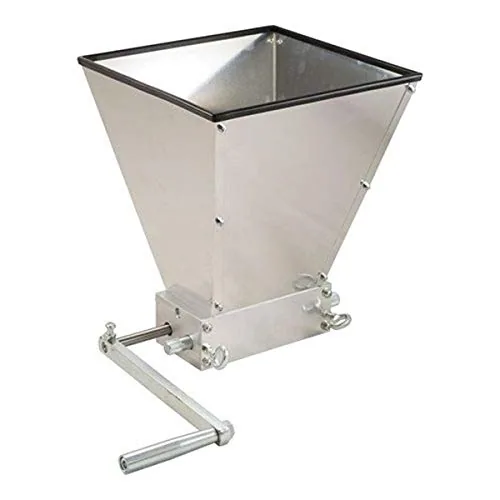
MaltMuncher MILL700 2-Roller Grain Mill
Homebrewers Outpost
- Type
- 2-roller grain mill
- Hopper
- 6 lb
- Drive
- Crank or drill (200 rpm recommended)
The MaltMuncher MILL700, sold by Homebrewers Outpost, lists adjustable cold-rolled steel rollers 5 in long and 1.25 in across, a 6 lb hopper and a 6061 aluminum body for rust-free use. It comes with a crank and can run on a drill; the maker recommends about 200 rpm.
Best for: Brewers who want a stated drill speed and a rust-free body
Skip if: You need a hopper above 6 lb
- 5 × 1.25 in steel rollers
- Aluminum body
- 200 rpm drill guidance
- Smaller 6 lb hopper
- Steel rollers need to stay dry
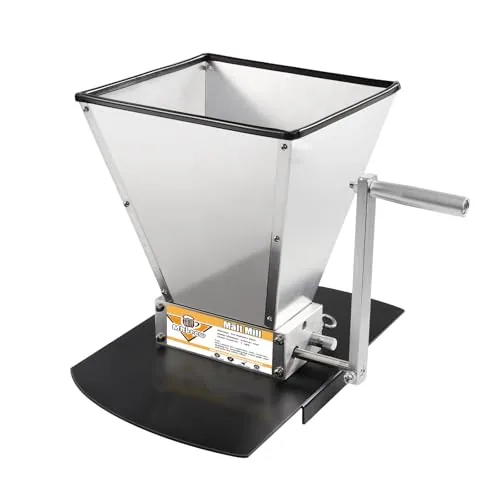
MRbrew 2-Roller Adjustable Malt Mill
MRbrew
- Type
- 2-roller grain mill
- Gap
- 0.025–0.1 in adjustable
- Drive
- Hand crank or low-speed drill
MRbrew's two-roller stainless mill lists a 0.025–0.1 in adjustable gap and a heavy metal base with an edge that sits on a bucket, so you can watch the crush as it falls. It runs on the included crank or a low-speed drill.
Best for: Milling straight into a bucket on a budget
Skip if: You want a stated hopper capacity
- Bucket-edge metal base
- Stainless rollers
- Crank or drill
- Hopper size not listed
- Roller size not listed
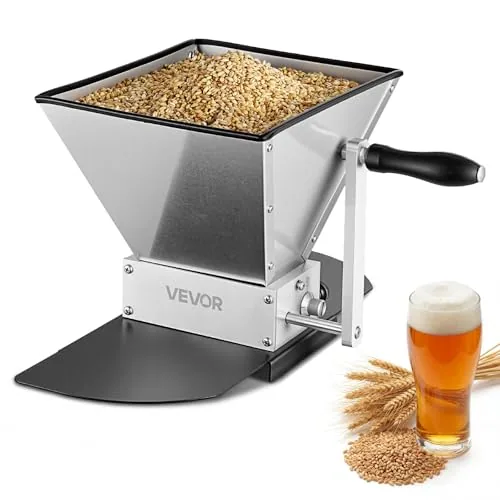
VEVOR Manual 2-Roller Grain Mill
VEVOR
- Type
- 2-roller grain mill
- Hopper
- 1.06 gal (4 L)
- Drive
- Manual crank
VEVOR's manual mill lists two stainless rollers with an 8-level gap from 0.025 to 0.1 in, a 1.06 gal (4 L) aluminum hopper and a metal base that mounts on a bucket. It's sold as a manual crank mill; the maker says it isn't recommended for corn.
Best for: Small grain bills, 1-gallon batches and specialty grains
Skip if: You want to drive it with a drill (not stated on this listing)
- 8 click-stop gap settings
- 4 L hopper
- Bucket mount
- Manual crank only per listing
- Not for corn
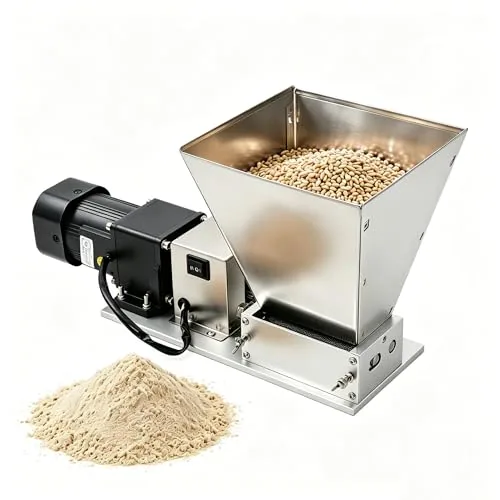
SHZICMY 110V Electric Grain Mill, 75 W
SHZICMY
- Type
- Electric roller mill
- Power
- 110V, 75 W
- Capacity
- 44 lb/h (per maker)
SHZICMY's small electric roller mill runs on 110V with a 75 W motor and lists 44 lb per hour, a 0–0.1 in adjustable roller gap, a 12 TPI knurl, a 4.23 qt hopper and stainless rollers. One button starts it, with no drill to hold. It's sold for grain, feed and flour as well as homebrew malt.
Best for: Brewers who don't own a drill or want hands-free milling
Skip if: You mill big grain bills in a hurry (44 lb/h is slow next to a drill-driven mill)
- 110V, 75 W, one-button
- 0–0.1 in gap
- Stainless rollers
- 44 lb/h per maker
- General-purpose grinder, not brewing-specific
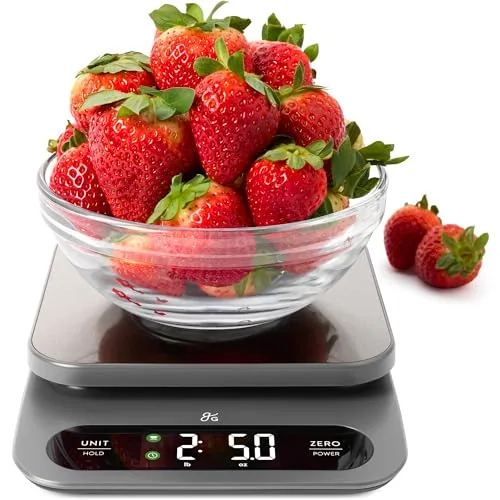
Greater Goods Digital Scale, 22 lb
Greater Goods
- Range
- Up to 22 lb (10 kg)
- Accuracy
- 1 g increments
Milling only helps if the grain bill is right. Greater Goods' kitchen scale weighs up to 22 lb (10 kg) in 1 g steps, with a tare and a hold function that keeps the reading on screen for up to 5 minutes under a large bucket.
Best for: Weighing base and specialty malt before milling
Skip if: You only weigh hops and salts (a 0.01 g pocket scale is better)
- 22 lb (10 kg) capacity
- 1 g increments
- Hold function
- Not for sub-gram additions
- Big bills need several weighings
What to look for in a grain mill for homebrewing
With every manual mill here using two rollers and the same 0.025–0.1 in gap range, look at the things that do change: roller length and knurl (how well they grab), hopper size (how often you refill), the base (how it sits on a bucket) and the drive (crank, drill or motor).
Grain mills: listed specs
| Mill | Rollers | Gap range | Hopper | Drive | Notes |
|---|---|---|---|---|---|
| FERRODAY | 2 stainless, 5 in, 12 TPI | 0.025–0.1 in | 7.7 lb | Crank or low-speed 3/8 in drill | Malt only per maker |
| MaltMuncher MILL700 | 2 cold-rolled steel, 5 × 1.25 in | Adjustable (range not listed) | 6 lb | Crank or drill at ~200 rpm | 6061 aluminum body |
| MRbrew | 2 stainless | 0.025–0.1 in | Not listed | Crank or low-speed drill | Bucket-edge metal base |
| VEVOR manual | 2 stainless | 0.025–0.1 in, 8 levels | 1.06 gal (4 L) | Manual crank | Not for corn |
| SHZICMY electric | Stainless, 12 TPI | 0–0.1 in | 4.23 qt | 110V, 75 W motor | 44 lb/h per maker |
Source: Maker listings, November 2026
Minutes to mill a 10 lb grain bill at maker-stated throughput
FERRODAY drill-mode claim (7 lb per minute) vs SHZICMY electric (44 lb per hour)
Neither figure is a lab number, but the gap is real: a drill-driven roller mill moves grain several times faster than a small 75 W motor. The electric mill wins on convenience, not speed.
How fine should you crush?
The goal is cracked kernels with the starchy inside exposed and husks largely intact. Too coarse and your efficiency drops; too fine and a traditional mash tun can stick. Bags and baskets change the picture: brew-in-a-bag and many all-in-one systems are often run with a finer crush, because the bag or basket does the filtering. Your system's manual is the best starting point.
Change one thing at a time. Mill at a setting, brew, record your efficiency in the brew-day log, then tighten or open the gap a step. Once your crush is steady, your mash numbers in the strike water calculator and your color estimates in the SRM calculator become far more predictable.
How to set up and use a grain mill step by step
- Mount it on a bucket
Seat the base on a sturdy food-grade bucket so crushed grain falls straight in. A bucket-edge base such as MRbrew's or VEVOR's helps.
- Weigh the grain bill first
Weigh each malt and keep specialty grains separate if your recipe adds them late.
- Set the gap with a feeler gauge
Start where your system's manual suggests and check both ends of the rollers so they're parallel.
- Mill a test handful
Run a small amount and look: kernels should be cracked open, husks mostly in large pieces, little flour.
- Drive it slowly
Use the crank, or a drill on its low-speed setting (FERRODAY: 3/8 in, low speed; MaltMuncher: about 200 rpm). Fast drills strip husks and heat the motor.
- Mill outside the brewing area
Grain dust drifts. Mill away from the fermenter and the kitchen, and wipe surfaces before you handle cooled wort.
- Brush, don't wash
Brush dust off the rollers after use and keep the mill dry, especially plain steel rollers. Store whole malt sealed and cool.
Mistakes to avoid
- Running a drill flat out. Both drill-ready mills say low speed; high rpm shreds husks.
- Changing the gap and the recipe at once. You won't know which one moved your efficiency.
- Milling corn or flakes in a malt mill. FERRODAY and VEVOR say not to; flaked grains don't need milling anyway.
- Fingers near the rollers. Keep hands out of the hopper while it turns, and unplug the electric mill before clearing a jam.
- Milling days ahead. Whole malt keeps better than crushed; mill close to brew day.
- Washing steel rollers and leaving them wet. Brush them clean and keep them dry.
Who should choose which mill?
Pick by setup
| You… | Choose | Why |
|---|---|---|
| Brew 5-gallon all-grain and own a drill | FERRODAY | Biggest listed hopper, 5 in knurled rollers |
| Want a known design with a stated drill speed | MaltMuncher MILL700 | Steel rollers, aluminum body, 200 rpm |
| Mill into a bucket on a budget | MRbrew | Bucket-edge base, stainless rollers |
| Brew 1-gallon batches by hand | VEVOR manual | Click-stop gap, crank only |
| Don't own a drill | SHZICMY electric | 110V one-button, slower but hands-free |
A mill is part of the move to all-grain, so budget it with everything else in the startup budget builder and the going all-grain list. Whole malt, flaked grains and hops are in ingredients and milling, and the kettles and all-in-ones you'll mash in are in brewing systems. A brewing refractometer is the quickest way to see what a crush change did to your pre-boil gravity.
The FERRODAY is the best all-round pick from our catalogue: the largest listed hopper (7.7 lb), 5-inch 12 TPI rollers and a 0.025–0.1 in gap, run by crank or a low-speed drill. Choose the MaltMuncher MILL700 if you want steel rollers in an aluminum body with a stated 200 rpm drill speed, the VEVOR for small hand-milled batches, and the SHZICMY 110V electric mill only if you have no drill and don't mind slower milling. Weigh everything on a scale before it goes in the hopper.
Before you buy, read how to brew all-grain: BIAB and all-in-one and mash pH and how to adjust it. For a closer look, see Extract vs all-grain brewing.
We compared maker listings for roller count, material, length and knurl, gap range, hopper size, base and drive, and used each maker's own throughput claim for the time comparison. Monster Mill and Barley Crusher weren't in our current catalogue and aren't ranked. We did not mill grain with these products; specs missing from a listing are marked "not listed". No scores or prices.