- The best plate chiller for most home brewers is a 30-plate brazed unit with threads that match your hoses, fed by a pump through a hop filter.
- KegLand's Chillout MKIV (30 plates, 1/2-inch BSP posts) is the pick for KegLand and BrewZilla setups; FERRODAY's 30-plate is the compact NPT-threaded choice.
- FERRODAY's 40-plate model adds surface area and both 1/2- and 3/4-inch NPT ports.
- Plate chillers can't be opened. Filter hops on the way in and flush with hot water and cleaner every time.
The best plate chiller cools wort in a single pass on its way to the fermenter: hot wort runs one way through thin channels between stacked plates while cold water runs the other way. That makes plate chillers small and fast. It also makes them unforgiving, since the channels clog with hop debris and can't be taken apart to clean. We compared seven brazed plate chillers from six brands using the plate count, ports, dimensions, pressure figures and cleaning notes each listing gives.
An honest note on the catalogue: brazed plate chillers sold to home brewers come mostly from a handful of small brands, and several listings are thin on detail. Where a figure isn't stated, we say not listed. If you don't own a pump yet, an immersion chiller is simpler; our wort chiller roundup compares all three types.
Our picks
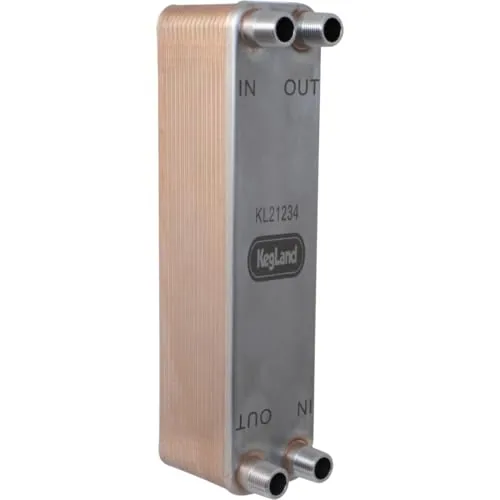
KegLand Chillout MKIV 30-Plate Wort Chiller
KegLand
- Volume
- 30 plates, 1/2 in. BSP posts, 12.4 × 2.9 × 2 in.
- Material
- Copper and stainless
- Type
- Brazed plate chiller
KegLand's Chillout MKIV has 30 copper-and-stainless plates, male 1/2-inch BSP threaded posts and measures 12.4 × 2.9 × 2 inches. KegLand says it cools wort to pitching temperature on the first pass. It pairs naturally with BrewZilla systems and KegLand's pumps and fittings.
Best for: BrewZilla and other KegLand systems with a pump
Skip if: Your hoses and valves are all NPT and you don't want adapters
- Single pass per the maker
- Established brewing brand
- Compact 30-plate body
- BSP threads, not NPT
- Can't be opened to clean
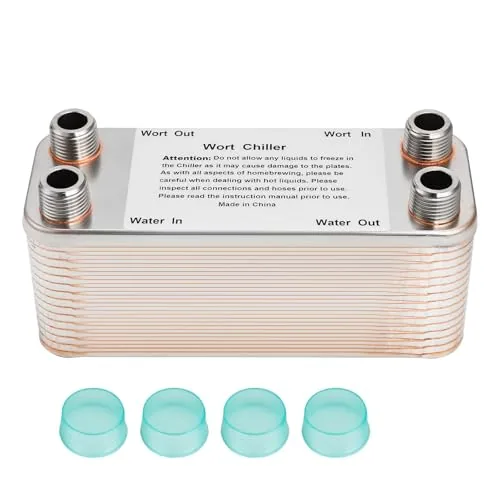
FERRODAY 30-Plate Brazed Plate Wort Chiller, 1/2 in.
FERRODAY
- Volume
- 30 plates, 7.3 × 2.8 in.
- Material
- 304 stainless plates, copper brazed
- Type
- Brazed plate chiller
FERRODAY's 30-plate chiller uses 304 stainless plates brazed with 99.9% copper, measures 7.3 × 2.8 inches and has 1/2-inch threads. FERRODAY says to clean it by running 5 gallons of cleaning solution through, then clean water, then drying it before storage, and to move wort with a pump.
Best for: 5-gallon batches with a pump and hop filter
Skip if: You drain by gravity from a low kettle
- Very small footprint
- Clear cleaning instructions
- 304 plates
- Thread type not specified beyond 1/2 in.
- Can't be opened
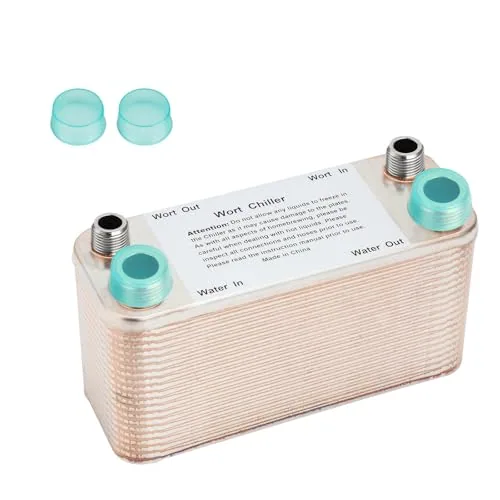
FERRODAY 40-Plate Brazed Plate Wort Chiller
FERRODAY
- Volume
- 40 plates, 7.5 × 3.8 in., 1/2 and 3/4 in. NPT
- Material
- 304 stainless plates, copper brazed
- Type
- Brazed plate chiller
FERRODAY's 40-plate model, 7.5 × 3.8 inches, has standard 1/2-inch and 3/4-inch NPT thread ports and the same 304 stainless and copper-braze construction. More plates mean more surface area for a given flow.
Best for: 10-gallon batches or warmer cooling water
Skip if: You want the lightest, smallest chiller
- 40 plates
- 1/2 and 3/4 in. NPT
- Same cleaning routine as the 30-plate
- Larger and heavier
- More channels to flush
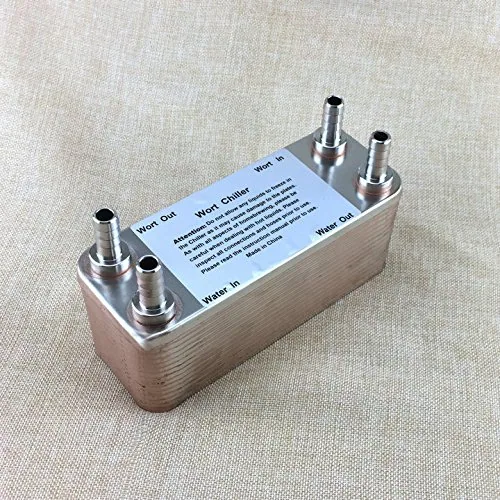
CC-STAR 30-Plate Stainless Wort Chiller
CC-STAR
- Volume
- 30 plates, 4 × 1/2 in. barbs; 100 L in 20 min (maker)
- Material
- 304 stainless steel
- Type
- Brazed plate chiller
CC-STAR's 30-plate 304 stainless chiller lists four 1/2-inch (12.7 mm) OD barb fittings, 0.336 m² (3.6 sq ft) of heat-transfer area, a 3.0 MPa design pressure and a size of about 191 × 73 × 74 mm (7.5 × 2.9 × 2.9 in). The maker says it can chill 100 liters (26 gal) in 20 minutes.
Best for: Brewers who like to see the engineering numbers
Skip if: You want threaded ports instead of barbs
- Heat-transfer area listed
- Barbs take tubing directly
- Design pressure listed
- Barbs need hose clamps
- Brazing material not listed
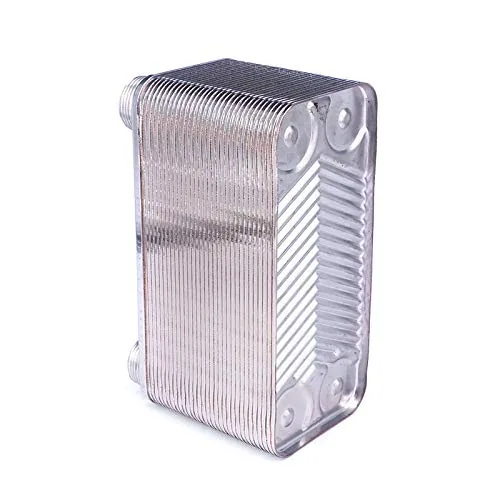
Sorekarain 32-Plate Wort Chiller Heat Exchanger
Sorekarain
- Volume
- 32 plates; max pressure 1.6 MPa (228 PSI)
- Material
- SUS 304 stainless
- Type
- Brazed plate chiller
Sorekarain's 32-plate SUS 304 stainless heat exchanger lists a maximum pressure of 1.6 MPa (228 psi per the listing). The working temperature line is garbled on the listing, so treat it as not listed, and confirm the port type before ordering.
Best for: Brewers who want two more plates than a 30-plate unit
Skip if: You need clear port and temperature specs
- 32 plates
- Maximum pressure stated
- Stainless
- Port type not clearly listed
- Temperature figure unreadable
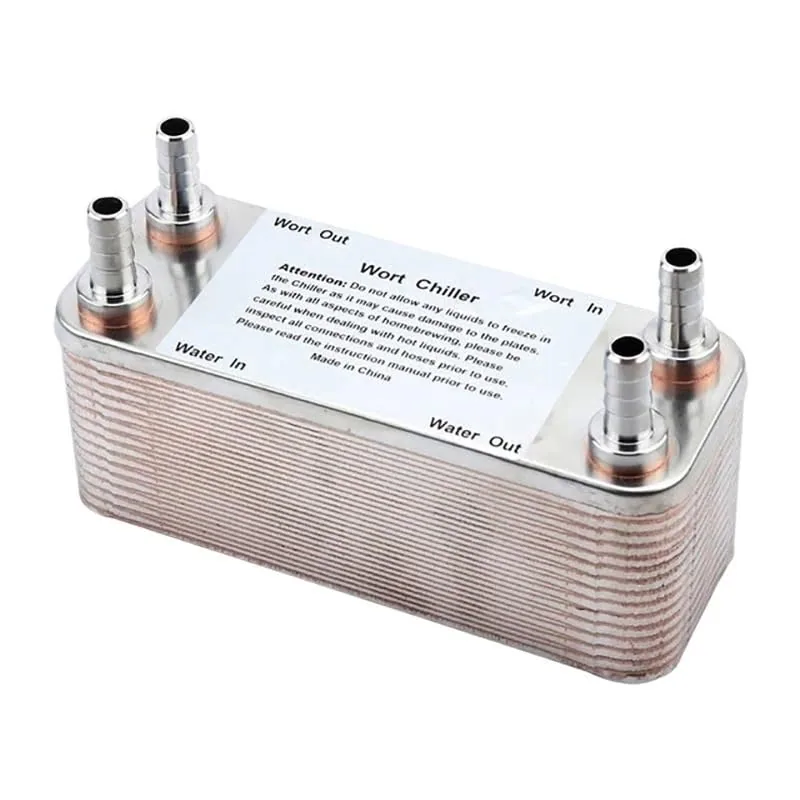
Orinthia 30-Plate Wort Chiller with 1/2 in. Barbs
Orinthia
- Volume
- 30 plates, 1/2 in. barbs
- Material
- Stainless plates
- Type
- Brazed plate chiller
Orinthia's 30-plate brazed exchanger has stainless plates, 1/2-inch barbs and no gaskets or seals, which the maker says reduces leak points. The listing gives few brewing-specific details.
Best for: A simple barb-and-clamp setup
Skip if: You want dimensions and materials spelled out
- Gasket-free
- 1/2 in. barbs
- Compact
- Few dimensions listed
- Generic industrial description
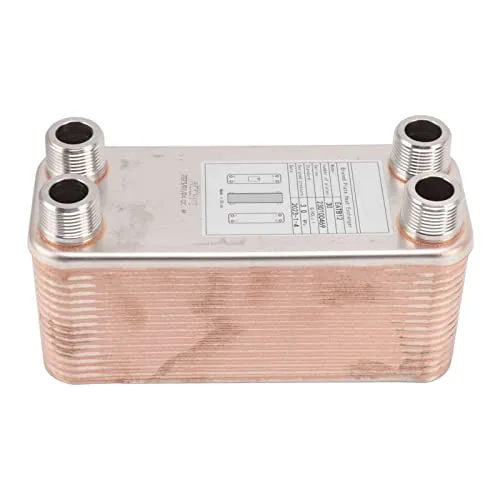
Xcello Brazed Plate Wort Chiller
Xcello
- Volume
- Flush to clean (cannot be disassembled)
- Material
- 304 stainless plates, copper brazed
- Type
- Brazed plate chiller
Xcello's brazed plate chiller uses 304 stainless plates with 99.9% copper brazing. The listing says it can't be disassembled and is cleaned by running a solution through and flushing with water, then drying fully; it recommends a wort pump. Plate count and port size are not listed.
Best for: A backup or second chiller
Skip if: You need plate count and port size before buying
- 304 plates, copper brazed
- Clear cleaning steps
- Compact
- Plate count not listed
- Port size not listed
Plate chillers compared by plates, ports and size
Listed specs
| Chiller | Plates | Ports | Size | Pressure | Notes |
|---|---|---|---|---|---|
| KegLand Chillout MKIV | 30 | 1/2 in. BSP male | 12.4 × 2.9 × 2 in. | Not listed | Single pass per maker |
| FERRODAY 30-plate | 30 | 1/2 in. thread | 7.3 × 2.8 in. | Not listed | Flush with 5 gal cleaner |
| FERRODAY 40-plate | 40 | 1/2 and 3/4 in. NPT | 7.5 × 3.8 in. | Not listed | Same routine |
| CC-STAR 30-plate | 30 | 4 × 1/2 in. barbs | 7.5 × 2.9 × 2.9 in. | 3.0 MPa design | 0.336 m² area; 100 L in 20 min (maker) |
| Sorekarain 32-plate | 32 | Not clearly listed | Not listed | 1.6 MPa max | Temperature line garbled |
| Orinthia 30-plate | 30 | 1/2 in. barbs | Not listed | Not listed | Gasket-free |
| Xcello | Not listed | Not listed | Not listed | Not listed | Flush to clean |
Source: Product listings, November 2026
Plate count
Xcello not listed
When does a plate chiller make sense?
A plate chiller is the right tool when you already move wort with a pump, filter hops well and want a compact chiller that cools on the way to the fermenter. It is the wrong tool for a first brew day on a stove, a kettle without a valve, or heavily hopped beers with no filter. The table sets the three chiller types side by side.
Plate vs counterflow vs immersion
| Need | Plate | Counterflow | Immersion |
|---|---|---|---|
| Works without a pump | ~ gravity only with height | ~ gravity only with height | ✓ |
| Smallest to store | ✓ | ~ | ✗ |
| Tolerates hop debris | ✗ | ~ | ✓ |
| Can inspect inside | ✗ | ✗ | ✓ |
| Chills in a single pass | ✓ | ✓ | ✗ |
| Kettle needs a valve | ✓ | ✓ | ✗ |
Source: Chiller construction as described on the listings; Palmer, How to Brew
If two or more of the ✗ rows describe your setup, start with an immersion chiller and come back to plate chilling when you add a pump.
What you need besides the plate chiller
A plate chiller is one part of a small system. Most makers recommend a pump for steady flow; gravity can work if the kettle sits well above the chiller and fermenter. You also need a way to keep hop debris out, matching hoses or tubing, and a thermometer on the outflow so you can adjust flow to hit pitching temperature.
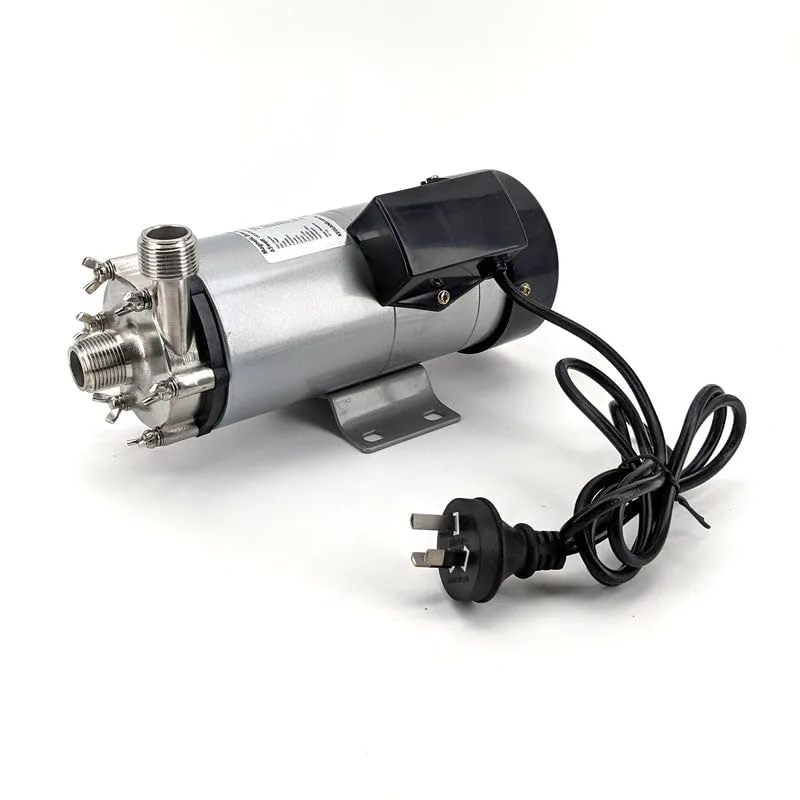
KegLand MKII Magnetic Drive Pump, 13.5 GPM, 110V
- Volume
- 13.5 GPM peak, 15–21 ft head
- Power
- 110V / 60 Hz, 65 W
- Material
- 304 stainless pump head
Best for Recirculating or transferring hot wort
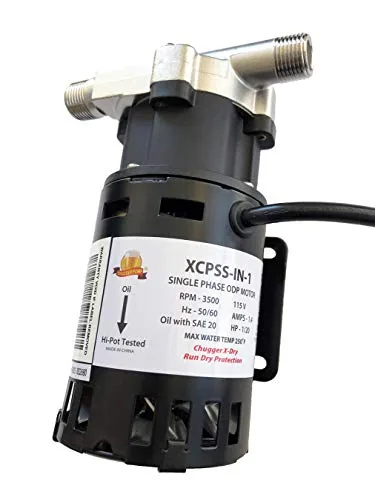
Chugger X-Dry Inline Stainless Pump, 115V, 1/2 in. MPT
- Power
- 115V, 1.9 A (motor and pump)
- Material
- Stainless steel, food-compliant materials
- Type
- Brewing pump
Best for Certified pump for a brew rig
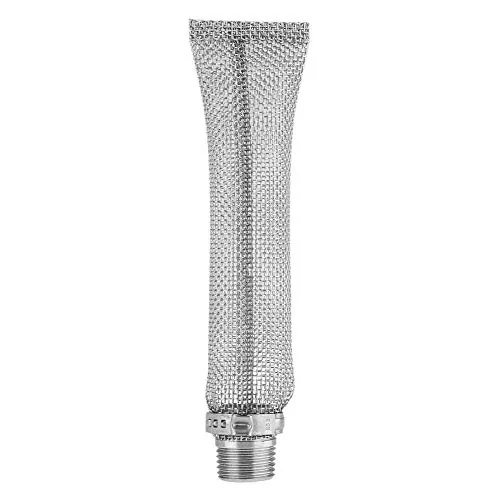
Fdit 6 in. Stainless Hop Filter, 1/2 in. NPT
- Volume
- 6 in.
- Material
- 304 stainless mesh, 1/2 in. NPT
- Type
- Kettle hop filter
Best for Kettle valve screen
KegLand's MKII magnetic-drive pump lists 110V and 65 W; the Chugger X-Dry lists 115V and 1.9 A. Both plug into a household outlet; use a GFCI-protected one and keep cords and plugs off a wet floor.
How to use and clean a plate chiller
- Filter the wort
Use a hop spider in the boil or a valve-side filter in the kettle, and whirlpool so trub settles away from the outlet. See our hop spiders.
- Sanitize before chilling
Recirculate a few minutes of boiling wort through the chiller back into the kettle, or run sanitizer through it per the label.
- Run water against the wort
Cold water enters where wort leaves (counterflow). Start the water first, then open the wort valve slowly.
- Adjust flow to hit temperature
If the outflow is too warm, slow the wort or speed the water. A thermometer on the wort outlet makes this easy.
- Flush immediately
Back-flush with hot water against the wort direction, then circulate a brewing cleaner per the label, rinse and drain fully.
Plate chiller mistakes to avoid
- Skipping hop filtration. Pellet debris and trub clog channels you can't open.
- Letting wort dry inside. Flush right after use, every time.
- Mixing thread standards. BSP and NPT look alike but don't seal together without the right adapter.
- Running a pump dry. Prime it and keep the kettle outlet below the wort line.
- Storing it wet. Drain and dry it to avoid off-flavors on the next brew day.
- Expecting it to beat warm water. No chiller cools wort below your water temperature.
Which plate chiller should you buy?
- KegLand or BrewZilla setup: KegLand Chillout MKIV.
- Compact with NPT-style threads: FERRODAY 30-plate.
- 10-gallon batches or warm water: FERRODAY 40-plate.
- Barb fittings and published specs: CC-STAR 30-plate.
- A few extra plates: Sorekarain 32-plate, after confirming the ports.
- A simple spare: Orinthia or Xcello.
Not ready for a pump and filters? A counterflow chiller clogs less, and an immersion chiller needs no pump at all; our wort chiller roundup compares them.
The KegLand Chillout MKIV is the best plate chiller for brewers already on KegLand gear, and the FERRODAY 30-plate is the compact pick for everyone else; step up to the FERRODAY 40-plate for bigger batches. Whatever you choose, budget for a pump and a hop filter, and flush the chiller every brew day.
Before you buy, read how to brew all-grain: BIAB and all-in-one and cleaning vs sanitizing brewing gear. For a closer look, see Immersion vs plate vs counterflow chillers.
We compared plate count, ports and thread types, dimensions, pressure figures and cleaning instructions from current listings, recorded chill-time claims as claims, and noted listings with missing or garbled data (Sorekarain, Xcello). Process guidance follows Palmer's How to Brew and the AHA. We did not brew with these chillers, and we don't show scores, star ratings or prices.