- The best pressure fermenter is the one whose listed rating sits comfortably above the pressure you plan to hold. Ratings here run from 15 psi (VEVOR) to 36 psi (FermZilla) to 130 psi (corny kegs).
- KegLand dominates true pressure fermenters in this catalogue, so this list adds a VEVOR stainless tank, corny kegs and three spunding valves from other brands, and says so.
- A spunding valve sets the pressure; the vessel’s rating sets the ceiling. Never set a valve higher than the vessel can take.
- Use the keg carbonation chart to pick a target pressure once the beer is cold.
The best pressure fermenter lets you ferment with a sealed lid and a spunding valve, so CO2 from the yeast builds up to a set pressure and the beer is partly or fully carbonated by the time fermentation ends. Pressure also lets you transfer beer to a keg with CO2 instead of air, which keeps hoppy beers fresher.
Honest note on brands: true pressure-rated fermenters in our catalogue come mostly from KegLand (FermZilla and Kegmenter), with one stainless VEVOR tank. To give you a real choice, this list widens to corny kegs used as small pressure fermenters and to spunding valves from Keg King, DERNORD and QiiMii. KegLand holds four of nine spots, no more than half. Ratings below are exactly as the makers list them.
Our picks
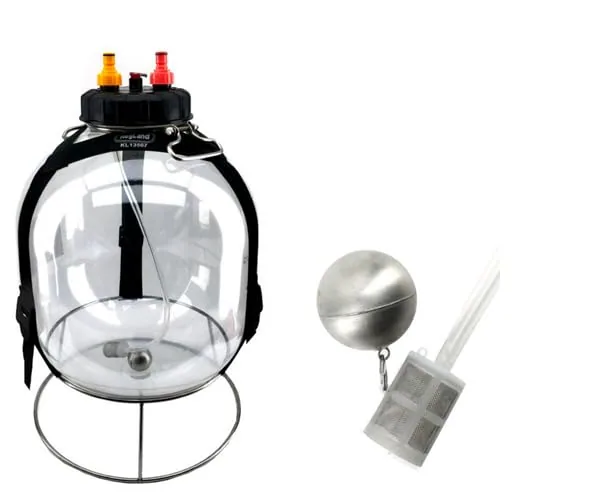
KegLand FermZilla All Rounder 30L Pressure Brewing Kit
KegLand
- Volume
- 30 L (7.9 gal)
- Material
- PET
- Pressure
- 2.5 bar (36.2 psi)
- Outputs
- 4.75 in. lid opening
The FermZilla All Rounder 30L Pressure Brewing Kit lists 30 L (7.9 gal) of PET with a pressure-rated lid, rated to 2.5 bar (36.2 psi), and a 4.75 in. lid opening. KegLand says PET is a better oxygen barrier than HDPE. That makes it the simplest way to ferment, carbonate and do closed transfers in one vessel.
Best for: 5-gallon batches fermented and carbonated under pressure
Skip if: You want stainless or need to clean with very hot water
- Rated 2.5 bar (36.2 psi)
- 30 L leaves headroom for 5 gal
- Wide 4.75 in. lid opening
- PET has temperature limits under pressure; follow the manual
- Light enough to tip when full: set it on a level surface
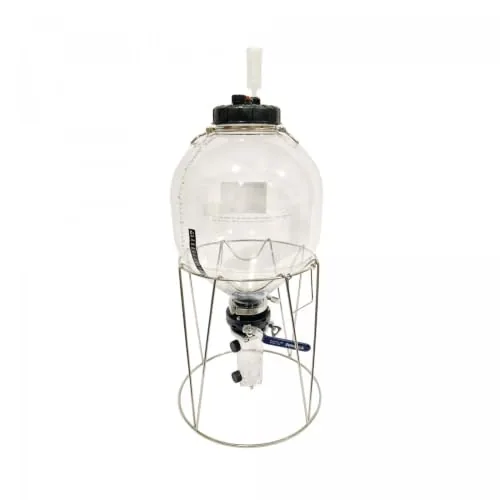
KegLand FermZilla Tri-Conical 27L Gen3
KegLand
- Volume
- 27 L
- Material
- Clear PET
- Pressure
- Up to 2.4 bar
- Outputs
- 3 in. TC butterfly dump valve, 600 mL collection jar
The FermZilla Tri-Conical 27L Gen3 is designed to ferment at up to 2.4 bar (about 35 psi) and adds a 3 in. tri-clamp butterfly dump valve and a 600 mL collection jar, so you can dump trub or save yeast under pressure.
Best for: Brewers who reuse yeast
Skip if: You want the widest lid for dry hopping by hand
- Up to 2.4 bar (KegLand)
- Dump valve and collection jar
- Clear PET
- 27 L total (about 7.1 gal)
- More gaskets to clean than the All Rounder
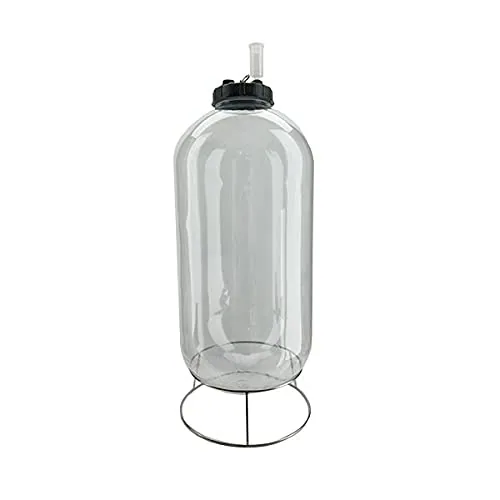
KegLand FermZilla All Rounder, 60L
KegLand
- Volume
- 60 L (15.9 gal)
- Outputs
- Ferment, carbonate or dispense
- Type
- Pressure fermenter
The 60 L (15.9 gal) FermZilla All Rounder ferments under pressure, carbonates or dispenses. The listing doesn’t print a rating; KegLand rates the 60L at 2.5 bar (36 psi), so set any spunding valve below that.
Best for: 10-gallon batches in a chest freezer
Skip if: Your chamber can’t fit a 15.9 gal vessel
- 60 L capacity
- Ferment, carbonate and serve
- Same lid system as the 30L
- Rating not on this listing (2.5 bar per KegLand)
- Heavy when full
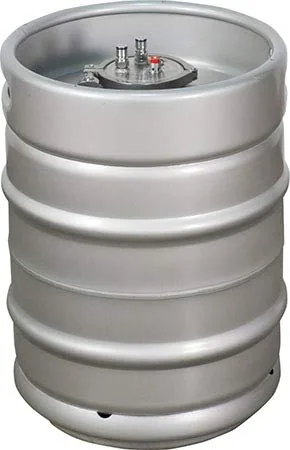
KegLand Kegmenter Fermenting Keg, 50L
KegLand
- Volume
- 50 L (13.2 gal)
- Material
- Keg-style fermenter (details not listed)
- Type
- Fermenting keg
KegLand’s Kegmenter is a 50 L (13.2 gal) keg-shaped stainless fermenter. The listing gives no other specs, so confirm the pressure rating, lid and fittings in KegLand’s documentation before you buy.
Best for: Brewers who want stainless at 10-gallon scale
Skip if: You need the rating printed on the listing
- 50 L stainless
- Keg-style, opaque body
- Fits KegLand accessories
- Specs not listed on this listing
- Can’t see the beer through the wall
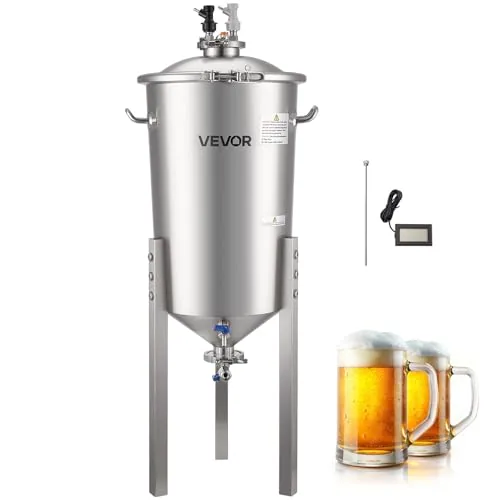
VEVOR 30L Stainless Pressure Fermenter, 15 PSI
VEVOR
- Volume
- 8 gal (30 L)
- Material
- Stainless steel
- Pressure
- 15 PSI
- Range
- Thermometer 32–104°F (0–40°C)
VEVOR lists an 8 gal (30 L) stainless conical in 0.5 mm 304 stainless, rated to 15 PSI, with pressure monitoring and a built-in electronic thermometer reading 32–104°F (0–40°C). A yeast collection bottle can be attached but is sold separately.
Best for: Low-pressure fermenting in stainless
Skip if: You want to fully carbonate during fermentation at higher pressure
- Listed 15 PSI rating
- Built-in thermometer
- Conical bottom
- Lowest rating on this list
- 0.5 mm wall is thin compared with premium conicals
- Yeast bottle not included
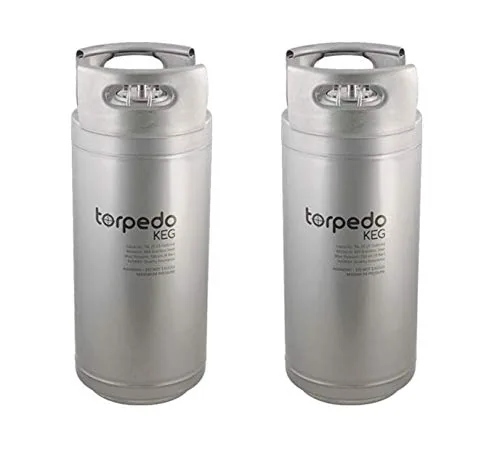
Torpedo Kegs 5 Gal Stackable Ball Lock Kegs, 2-Pack
Torpedo Kegs
- Kegs
- 2 × 5 gal ball lock
- Material
- 304 stainless, laser-welded
- Size
- 130 PSI max
A 5-gallon ball lock keg is a pressure vessel already: Torpedo lists these 304 stainless, laser-welded kegs at 130 PSI max, in a stackable 2-pack. Ferment a smaller batch in one with a spunding valve on the gas post, then serve from the other.
Best for: 3.5–4 gallon batches and closed keg-to-keg transfers
Skip if: You brew full 5-gallon batches; a 5 gal keg leaves no krausen room
- 130 PSI max (listed)
- Stackable
- Doubles as serving kegs
- Small headspace: blow-off risk with vigorous yeast
- Dip tube can pick up trub unless you trim or float it
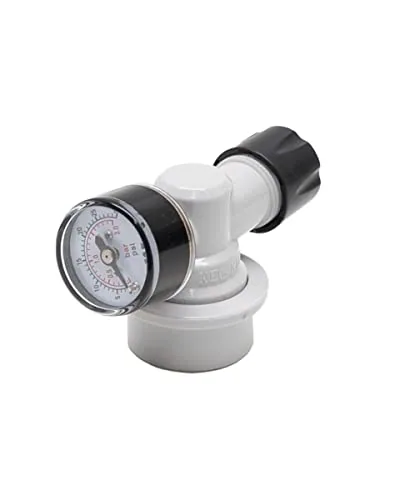
Keg King Spundy Compact Spunding Valve, Ball Lock
Keg King
- Pressure
- Adjustable, accurate at low pressure (maker)
- Outputs
- Ball lock clip-on spunding valve
- Type
- Spunding valve
Keg King’s Spundy is a pre-assembled spunding valve that clips onto a ball lock gas post. The maker says it is more accurate at low pressure than spring-and-poppet styles and can vent a receiving keg during pressure transfers.
Best for: Corny kegs and FermZilla lids with ball lock posts
Skip if: Your vessel uses tri-clamp ports only
- Clip-on ball lock fit
- Adjustable pressure
- Compact
- Adjustment range not listed
- No gauge mentioned on the listing
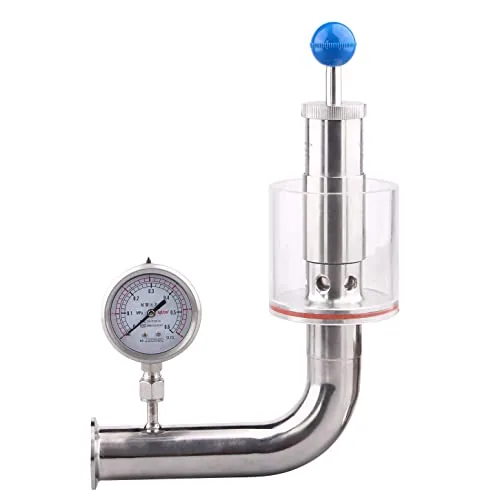
DERNORD 1.5 in. Tri-Clamp Spunding Valve with Gauge
DERNORD
- Material
- SS304, 1.5 in. tri-clamp
- Pressure
- Adjustable 0.5–3.5 bar
- Type
- Spunding valve
DERNORD’s 1.5 in. tri-clamp valve is SS304, adjustable from 0.5 to 3.5 bar (about 7–51 psi), with a pressure gauge and a pull-to-release spindle. The top of that range is above every PET fermenter here, so set it with care.
Best for: Stainless conicals with a 1.5 in. TC port and a known rating
Skip if: Your fermenter is rated below 3.5 bar and you might over-tighten it
- 0.5–3.5 bar range
- Built-in gauge
- Manual release
- Range exceeds FermZilla and VEVOR ratings
- Needs a 1.5 in. TC port
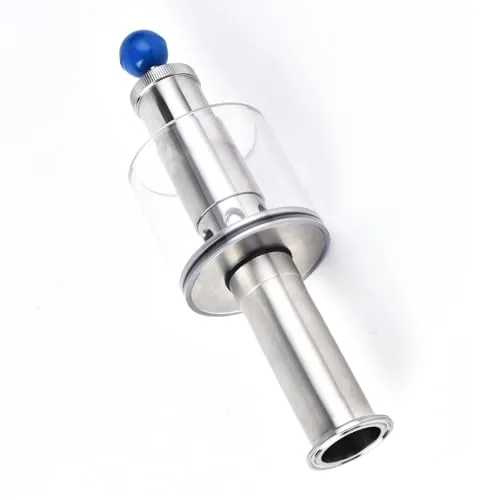
QiiMii 1.5 in. Tri-Clamp Spunding Valve, 0.2–2.2 Bar
QiiMii
- Material
- 304 stainless, 1.5 in. tri-clamp
- Pressure
- Adjustable 0.2–2.2 bar
- Type
- Spunding valve
QiiMii’s 304 stainless valve fits 1.5 in. tri-clamp ports and is scaled 0.2–2.2 bar (about 3–32 psi), a range that stays under the FermZilla ratings at its maximum.
Best for: Gentle spunding on tri-clamp vessels
Skip if: You need a ball lock connection
- 0.2–2.2 bar scale
- Stainless
- Tops out below 2.4 bar
- Still above the VEVOR 15 PSI rating at the top of its scale
- Gauge not mentioned
What pressure rating do you need in a pressure fermenter?
A pressure fermenter is only as safe as its lowest-rated part. The vessel rating comes first, then the lid, the posts and the relief valve. Spunding pressures for fermentation are usually modest; the rating is your hard ceiling, not your target.
Listed maximum pressure by vessel
psi; bar converted at 14.5 psi per bar
Spunding valve range vs vessel rating
| Spunding valve | Listed range | Safe on FermZilla (to 2.4–2.5 bar)? | Safe on VEVOR (15 psi)? |
|---|---|---|---|
| Keg King Spundy | Adjustable (range not listed) | ~ Set and check below the rating | ~ Set and check below 15 psi |
| DERNORD 1.5 in. TC | 0.5–3.5 bar (7–51 psi) | ~ Only if set below 2.4 bar | ~ Only if set below about 1 bar |
| QiiMii 1.5 in. TC | 0.2–2.2 bar (3–32 psi) | ✓ Scale tops out below the rating | ~ Only if set below about 1 bar |
Source: Maker listings; fitment depends on the ports your vessel has
How much pressure carbonates the beer?
Carbonation depends on temperature and pressure together. Once fermentation is done and the beer is cold, read the target pressure off the chart below, or use the keg carbonation chart and PSI calculator. At fermentation temperatures the same carbonation needs more pressure, which is one more reason to keep well under the vessel rating.
Keg pressure (psi, sea level) by beer temperature and target CO2 volumes
| Beer temp | 1.8 vol | 2.0 vol | 2.2 vol | 2.4 vol | 2.6 vol | 2.8 vol | 3.0 vol | 3.2 vol |
|---|---|---|---|---|---|---|---|---|
| 32°F 0°C | 1.6 | 3.5 | 5.4 | 7.3 | 9.2 | 11.0 | 12.9 | 14.8 |
| 34°F 1.1°C | 2.3 | 4.3 | 6.3 | 8.2 | 10.2 | 12.1 | 14.1 | 16.0 |
| 36°F 2.2°C | 3.1 | 5.1 | 7.2 | 9.2 | 11.2 | 13.3 | 15.3 | 17.3 |
| 38°F 3.3°C | 3.9 | 6.0 | 8.1 | 10.2 | 12.3 | 14.4 | 16.5 | 18.6 |
| 40°F 4.4°C | 4.7 | 6.8 | 9.0 | 11.2 | 13.4 | 15.5 | 17.7 | 19.8 |
| 42°F 5.6°C | 5.5 | 7.7 | 10.0 | 12.2 | 14.4 | 16.7 | 18.9 | 21.1 |
| 44°F 6.7°C | 6.3 | 8.6 | 10.9 | 13.2 | 15.5 | 17.8 | 20.1 | 22.4 |
| 46°F 7.8°C | 7.1 | 9.5 | 11.8 | 14.2 | 16.6 | 19.0 | 21.3 | 23.7 |
| 48°F 8.9°C | 7.9 | 10.4 | 12.8 | 15.3 | 17.7 | 20.1 | 22.6 | 25.0 |
| 50°F 10°C | 8.7 | 11.3 | 13.8 | 16.3 | 18.8 | 21.3 | 23.8 | 26.3 |
| 52°F 11.1°C | 9.6 | 12.2 | 14.8 | 17.3 | 19.9 | 22.5 | 25.1 | 27.6 |
| 54°F 12.2°C | 10.4 | 13.1 | 15.7 | 18.4 | 21.1 | 23.7 | 26.3 | 29.0 |
| 56°F 13.3°C | 11.3 | 14.0 | 16.7 | 19.5 | 22.2 | 24.9 | 27.6 | 30.3 |
Formula: PSI = −16.6999 − 0.0101059·T + 0.00116512·T² + 0.173354·T·V + 4.24267·V − 0.0684226·V². Checked against the BYO grid (40°F and 2.4 vol: 11.19 psi by formula, 11.2 psi on the chart). Regulator gauges read relative to local air pressure. BYO notes that Denver needs about 3 psi over the sea-level chart; add roughly 0.5 psi per 1,000 ft. Sources: BYO: Carbonation priming chart; Brewer's Friend: Force carbonation chart; Brewers Association: Draught Beer Quality Manual.
How to set up a pressure fermenter step by step
- Check the rating and the relief valve
Find the maker’s rating for the vessel and lid and confirm a working pressure relief valve. Replace damaged PET, cracked lids or worn O-rings.
- Fill with headspace
Leave room for krausen. In a 5 gal corny keg, a smaller batch avoids foam blowing into the spunding valve.
- Fit the spunding valve and set it low
Start near zero and raise it slowly while you watch the gauge. Never set it above the vessel rating.
- Control temperature
Put the fermenter in a fridge or chamber with a dual-stage controller. See our temperature controller picks.
- Confirm the end of fermentation
Take gravity readings until they stay the same 2–3 days in a row, then crash cool. Work out strength with the ABV calculator.
- Transfer with CO2
Push beer keg to keg with CO2 from a regulator, venting the receiving keg slowly. Keep the push pressure low and within both vessels’ ratings. Our CO2 regulator guide covers the gas side.
Pressure fermenting mistakes to avoid
- Setting a spunding valve higher than the vessel rating. A DERNORD valve goes to 3.5 bar; a FermZilla is rated to 2.4–2.5 bar and the VEVOR to 15 psi.
- Connecting a CO2 cylinder without a regulator. Always go cylinder → regulator → vessel.
- Heating PET under pressure. KegLand lists lower temperature limits under pressure than unpressurized; follow the manual.
- Ignoring blow-off. Krausen can clog a spunding valve. Leave headspace or start with an airlock for the first day.
- Opening a lid under pressure. Vent with the relief valve first.
A sealed fermenter vents CO2 through its spunding valve, and a chamber or closet can fill up. Ventilate the room and consider a CO2 monitor near a closed fermentation chamber or keezer.
Source: Kegco: Everything you need to know about CO2Who should pick which pressure fermenter?
| If you… | Pick |
|---|---|
| Want the simplest 5-gallon pressure setup | FermZilla All Rounder 30L kit |
| Harvest and reuse yeast | FermZilla Tri-Conical 27L |
| Brew 10 gallons | FermZilla 60L or Kegmenter 50L |
| Want stainless and only low pressure | VEVOR 30L (15 PSI) |
| Brew small batches and already keg | Torpedo corny kegs + Keg King Spundy |
| Own a tri-clamp conical with a known rating | QiiMii (low range) or DERNORD (wider range) |
Shop more in fermenters and temperature control or switching to kegs, and record pressures and gravities in the brew-day log.
The FermZilla All Rounder 30L Pressure Brewing Kit is the easiest pressure fermenter for most 5-gallon brewers, and the Tri-Conical adds yeast harvesting. If you already keg, a pair of corny kegs with a Spundy is a stainless route for smaller batches. Whatever you choose, keep the spunding valve below the vessel’s listed rating.
Before you buy, read pressure fermenting and spunding and lager brewing at home. For a closer look, see KegLand FermZilla review.
We compared listed pressure ratings, capacities, materials and ports from maker listings and manuals, checked spunding ranges against each vessel’s rating, and used BYO’s carbonation grid and published CO2 safety guidance. We did not ferment in these vessels. No scores, ratings or prices.