- Lalvin EC-1118 is the workhorse: Lallemand lists 50–86°F (10–30°C), 18% v/v alcohol tolerance and 25 g/hL (about 1 g per gallon), and it ferments dry.
- For fruity whites, fruit wine and mead, look at 71B, D-47 and Red Star Côte des Blancs; for reds, RC212.
- Uvaferm CEG lists slow, steady fermentation with fruity esters and 14.5% tolerance, a fit for off-dry ciders and meads.
- Many wine-yeast listings give almost no numbers; we mark those "not listed" and lean on the strains with maker data.
The best wine yeast depends on what's in the fermenter: a grape kit, a gallon of fruit wine, a honey must or apple juice. Strain choice changes how dry the wine finishes, how fruity it smells and how forgiving the fermentation is when nutrients run low.
This list compares ten dry strains from five brands, using maker technical sheets where they exist and listing data where they don't. Note that Lalvin and Uvaferm are both Lallemand lines, so the field is a little smaller than the label count suggests. Missing numbers are marked "not listed".
Our picks
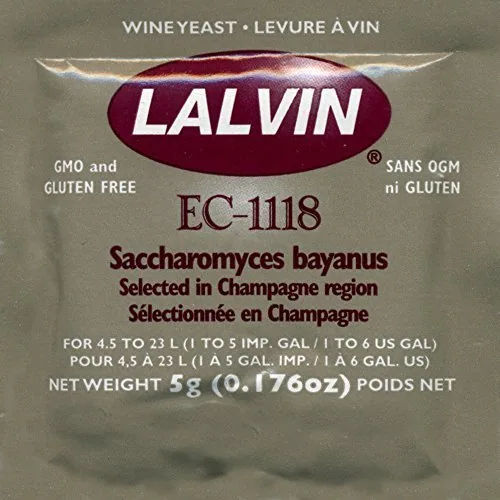
Lalvin EC-1118 Wine Yeast, 5 g
Lalvin
- Type
- Dry wine yeast (S. cerevisiae var. bayanus)
- Dose
- 25 g/hL (about 1 g/gal)
- Temp
- 50–86°F (10–30°C)
- Alcohol tolerance
- 18% (per TDS)
Lalvin EC-1118 is a S. cerevisiae var. bayanus strain. Lallemand's sheet lists 50–86°F (10–30°C), alcohol tolerance of 18% v/v (subject to conditions), low nitrogen demand and a dose of 25 g/hL, about 1 g per gallon, with Go-Ferm Protect Evolution at 30 g/hL during rehydration. It ferments dry and is the usual choice to restart a stuck batch.
Best for: Dry wines, sparkling base wines, dry cider and dry mead
Skip if: You want residual sweetness or a fruit-forward aroma from the yeast
- Full maker data published
- 18% v/v tolerance (subject to conditions)
- Wide 50–86°F range
- Ferments everything dry
- Can produce SO2 up to 50 mg/L under low nutrients, per Lallemand
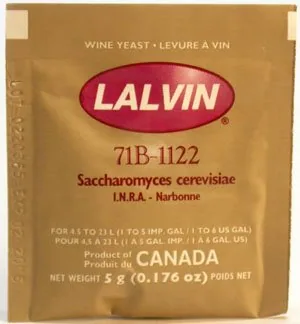
Lalvin 71B-1122 Narbonne Wine Yeast
Lalvin
- Type
- Dry wine yeast
Lalvin 71B-1122 Narbonne is sold for fruity wines with an estery aroma and smooth flavor, and it's widely used for fruit wines and meads. The listing gives no temperature or tolerance figures; check Lallemand's sheet before a high-gravity must.
Best for: Fruit wines, young reds and semi-sweet meads
Skip if: You need listed tolerance figures
- Fruity, estery profile per maker
- Common mead and fruit-wine strain
- Temperature not listed
- Tolerance not listed
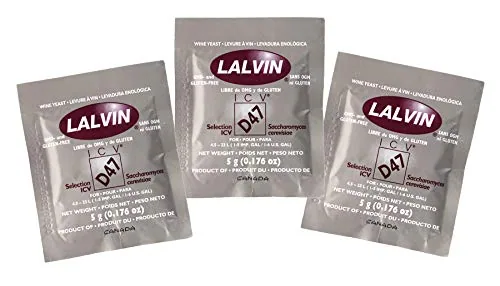
Lalvin ICV D-47 Wine Yeast, 5 g (3-pack)
Lalvin
- Type
- Dry wine yeast
Lalvin ICV D-47 is described as a vigorous fermenter for white wines, chardonnays, rosés and wines that will go through malolactic fermentation, with complex carbohydrates that add mouthfeel. The listing notes it can be used in mead together with yeast nutrients.
Best for: Chardonnay-style whites and traditional meads
Skip if: You ferment warm without control (temperature not on this listing)
- Mouthfeel per maker
- Suits malolactic wines
- Three 5 g packs
- Temperature not listed
- Needs nutrients in mead per listing
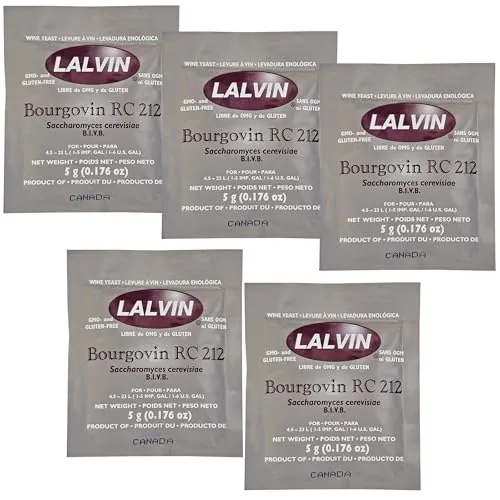
Lalvin Bourgovin RC 212 Wine Yeast, 5 g (5-pack)
Lalvin
- Type
- Dry wine yeast
Lalvin Bourgovin RC 212 comes from Burgundy and is described as a moderately quick, low-foaming yeast that gets full flavor extraction in reds, stabilizes color and tannin through fermentation and aging, and emphasizes ripe berry, peppery and spicy aromas. The maker names Pinot Noir and full-bodied reds.
Best for: Red kits and fresh red grapes
Skip if: You make whites or fruit wines
- Color and tannin stability per maker
- Low foaming
- Five 5 g packs
- Red-wine specialist
- Temperature not listed
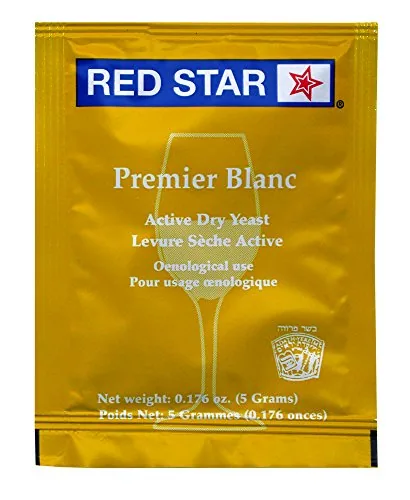
Red Star Premier Blanc Wine Yeast, 5 g
Red Star
- Type
- Active dry wine yeast
- Dose
- 5 g for up to 6 gal
Red Star Premier Blanc is an active dry wine yeast in a 5 g pack that the listing says is good for up to 6 gallons. It's a straightforward neutral strain for dry wines and for kits that ship without a strong yeast preference.
Best for: Dry wines from juice or kits
Skip if: You want yeast-driven fruit character
- One pack treats up to 6 gal
- Neutral profile
- Temperature not listed
- Tolerance not listed
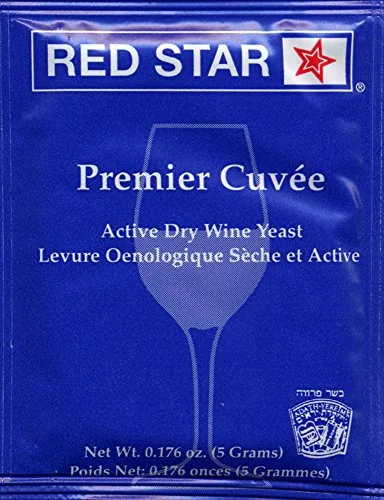
Red Star Premier Cuvée Wine Yeast, 5 g (5-pack)
Red Star
- Type
- Active dry wine yeast
Red Star Premier Cuvée in a five-pack of 5 g sachets covers several 1-gallon or 6-gallon batches. The listing gives no data beyond the pack size, so use Red Star's own sheet for temperature and tolerance.
Best for: Brewers who make a lot of small dry wine and cider batches
Skip if: You want numbers on the listing
- Five 5 g sachets
- Common general-purpose strain
- No data on this listing
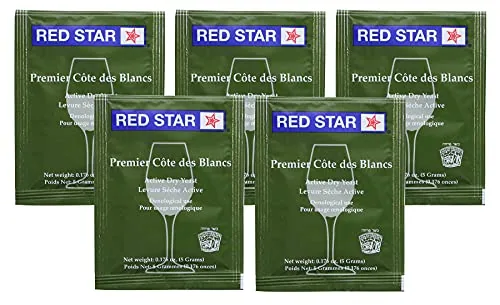
Red Star Côte des Blancs Wine Yeast, 5 g (5-pack)
Red Star
- Type
- Active dry wine yeast
Red Star Côte des Blancs is sold for fruity red, white and sparkling wines and is described as ideal for mead and non-grape wines such as apple, peach and raspberry. The listing notes it can make sweeter wines at cooler fermentation temperatures.
Best for: Apple, peach and berry wines and fruity meads
Skip if: You want a reliably dry finish
- Fruity, floral character per maker
- Mead and fruit wine use
- Five packs
- May leave sweetness when cool, per listing
- Tolerance not listed
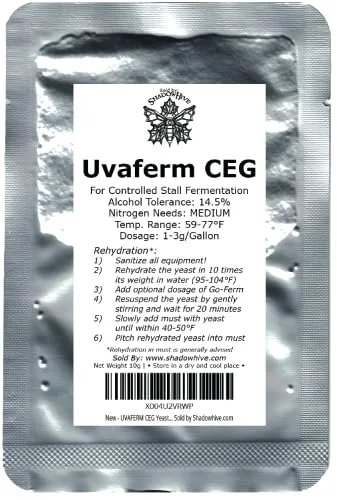
Lallemand Uvaferm CEG Yeast, 10 g
Lallemand (LalBrew)
- Type
- Dry wine yeast
- Temp
- 59–77°F (15–25°C)
- Alcohol tolerance
- 14.5%
Uvaferm CEG (Lallemand) lists a slow but steady fermentation with fruity esters, 14.5% alcohol tolerance, medium nitrogen needs, 59–77°F (15–25°C), a short lag, low foam and good sedimentation. It's listed as sensitive to killer strains, so don't co-pitch it with other yeasts.
Best for: Rosés, whites and off-dry ciders and meads
Skip if: You ferment above 77°F
- 14.5% tolerance listed
- Fruity esters
- Good sedimentation
- Killer-factor sensitive
- Narrower 59–77°F range
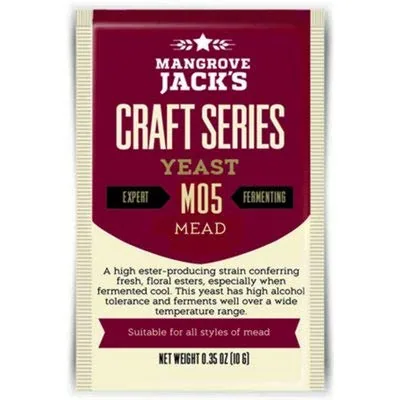
Mangrove Jack's M05 Mead Yeast
Mangrove Jack's
- Type
- Dry mead yeast
- Temp
- 59–86°F
- Attenuation
- High (apparent)
Mangrove Jack's M05 is a mead yeast listed at 59–86°F with high apparent attenuation, high flocculation and medium alcohol tolerance. High flocculation helps meads clear without much help.
Best for: Dry and semi-sweet traditional meads
Skip if: You're making a very strong sack mead (tolerance listed as medium)
- Mead-specific strain
- 59–86°F listed
- High flocculation
- Tolerance given only as 'medium'
- Dose not on this listing
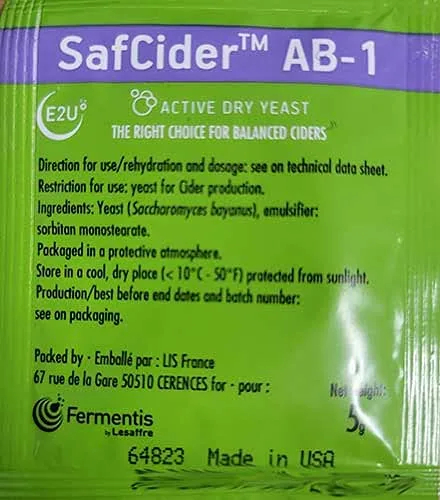
Fermentis SafCider AB-1 Dry Cider Yeast, 5 g (3-pack)
Fermentis
- Type
- Dry cider yeast
- Size
- 3 x 5 g
Fermentis SafCider AB-1 is a dry cider yeast sold as three 5 g sachets. The listing has no fermentation data, so read the Fermentis sheet, but it's the cider-specific strain in this list from a maker that publishes technical data.
Best for: Hard cider from juice
Skip if: You want listing numbers before you buy
- Cider-specific strain
- Three 5 g sachets
- No data on this listing
Wine yeast strains compared
The strains split into four jobs: finish dry and tough (EC-1118, Premier Blanc), fruit and aroma (71B, Côte des Blancs, CEG), whites and mouthfeel (D-47) and reds (RC212). Mead and cider strains (M05, AB-1) are specialists.
Wine, mead and cider yeasts: listed data
| Strain | Best for (maker) | Temperature | Alcohol tolerance | Notes |
|---|---|---|---|---|
| Lalvin EC-1118 | Dry wine, cider, mead, restarts | 50–86°F (10–30°C) | 18% v/v (subject to conditions) | 25 g/hL; low nitrogen demand |
| Lalvin 71B | Fruity, estery wines | Not listed | Not listed | Common for fruit wine and mead |
| Lalvin D-47 | Whites, rosés, MLF wines, mead | Not listed | Not listed | Adds mouthfeel per maker |
| Lalvin RC 212 | Reds, Pinot Noir | Not listed | Not listed | Color and tannin stability |
| Red Star Premier Blanc | Dry wines | Not listed | Not listed | 5 g for up to 6 gal |
| Red Star Premier Cuvée | General purpose | Not listed | Not listed | No data on listing |
| Red Star Côte des Blancs | Fruit wines, mead | Not listed | Not listed | Sweeter when cool, per listing |
| Uvaferm CEG | Rosés, whites, off-dry cider/mead | 59–77°F (15–25°C) | 14.5% | Killer-sensitive, medium N |
| Mangrove Jack's M05 | Mead | 59–86°F | Medium | High attenuation and flocculation |
| Fermentis SafCider AB-1 | Cider | Not listed | Not listed | 3 × 5 g |
Source: Lallemand EC-1118 TDS and product listings, November 2026
Warm limit of the listed temperature range
°F, for strains whose listing or sheet gives a range
The maker data for the beer yeasts and EC-1118 sits in the table below; only the EC-1118 row applies to wine.
Dry yeast by the maker’s numbers
| Yeast | Use | Fermentation temp | Dose | Attenuation / tolerance | Rehydration |
|---|---|---|---|---|---|
| SafAle US-05 Fermentis | Ale (American) | 18–26°C (64.4–78.8°F) | 50–80 g/hL | 78–82%; not listed on the product page | Optional: ≥10× its weight of sterile water or boiled, hopped wort at 25–29°C (77–84°F), 15–30 min; or direct pitch at or above fermentation temperature |
| SafAle S-04 Fermentis | Ale (English) | 18–26°C (64.4–78.8°F) | 50–80 g/hL | 74–82%; 9–11% ABV | Optional: ≥10× its weight of sterile water or boiled, hopped wort at 25–29°C (77–84°F), 15–30 min; or direct pitch at or above fermentation temperature |
| SafLager W-34/70 Fermentis | Lager | 12–18°C (53.6–64.4°F) | 80–120 g/hL | 80–84%; 9–11% ABV | Optional: ≥10× its weight of sterile water or boiled, hopped wort at 15–25°C (59–77°F), 15–30 min; or direct pitch at or above fermentation temperature |
| LalBrew Nottingham Lallemand | Ale (English) | 10–25°C (50–77°F) | 50–100 g/hL | 78–84%; 14% ABV | Dry pitching is the maker's preferred method (no significant difference vs rehydration, per Lallemand) |
| LalBrew Voss (kveik) Lallemand | Ale (kveik) | 25–40°C (77–104°F) Optimum 35–40°C (95–104°F) per Lallemand | 50–100 g/hL | 76–82%; 12% ABV | Per the sachet |
| Lalvin EC-1118 Lallemand | Wine, cider, mead | 10–30°C (50–86°F) | 25 g/hL | Ferments dry; 18% v/v (subject to conditions) | 35–40°C (95–104°F) water for 20 min with Go-Ferm Protect Evolution (30 g/hL), then temper to within 5–10°C of the must |
Sources: Fermentis: SafAle US-05 product page; Fermentis: SafAle S-04 product page; Fermentis: SafLager W-34/70 product page; Lallemand: LalBrew Nottingham technical data sheet; Lallemand Brewing: LalBrew Voss Kveik Ale Yeast product page; Lallemand: Lalvin EC-1118 technical data sheet. 1 hL = 26.4 US gal, so 50 g/hL ≈ 1.9 g per gallon. Follow the sachet you buy; makers update their sheets.
How much wine yeast per gallon?
Lallemand doses EC-1118 at 25 g/hL, which works out to about 1 g per US gallon, so one 5 g sachet treats roughly 5 gallons (19 L). Red Star says one 5 g Premier Blanc pack is good for up to 6 gallons. For a 1-gallon batch, a 5 g sachet is more than the maker dose; follow your recipe on whether to use all of it.
How to rehydrate and pitch wine yeast step by step
- Prepare the must first
Mix the kit or juice, take an original gravity reading and bring the must into the yeast's range. Lallemand says to inoculate EC-1118 into must no colder than about 64°F (18°C).
- Warm the rehydration water
For EC-1118, use water at 95–104°F (35–40°C). If you use Go-Ferm Protect Evolution, stir it into that water first (30 g/hL of must), never with DAP.
- Sprinkle and wait 20 minutes
Sprinkle the yeast on the surface, wait about 20 minutes, then stir gently.
- Temper before pitching
Add small amounts of must to the yeast until it's within 9–18°F (5–10°C) of the must temperature. Lallemand says the whole process should finish within about 30 minutes.
- Pitch and feed
Add the yeast, then nutrients per your plan. Low-nitrogen musts such as mead and some fruit wines need help; see the nutrient picks.
- Track gravity
Log gravity and temperature in the brew-day log, then work out strength in the ABV calculator.
Sulfites, methanol and what's safe to know
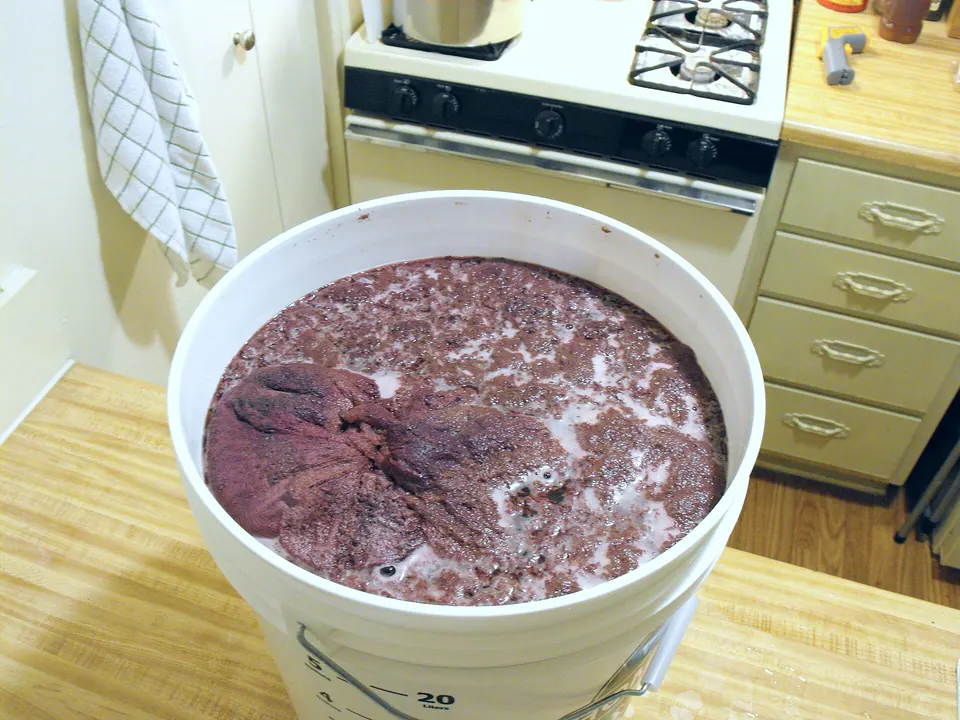
Most wine kits and recipes add potassium or sodium metabisulfite (Campden tablets) to protect the wine, so home wine usually contains sulfites. Commercial wine at 10 ppm or more must say "Contains sulfites" on the label; your bottles won't, so tell guests who are sensitive.
Mistakes to avoid
- Rehydrating in water that's too hot or too cold. Follow the sheet: 95–104°F (35–40°C) for EC-1118.
- Adding DAP to the rehydration water. Go-Ferm goes in the water; DAP goes in the must later.
- Mixing CEG with a killer strain. CEG is listed as killer-factor sensitive, so pitch it on its own.
- Expecting sweetness from EC-1118. It ferments dry. Stabilize and backsweeten if you want sweetness.
- Starving a mead. Honey is low in nitrogen; plan staggered nutrients.
- Fermenting fruit wine too warm. Aroma strains like CEG list a 77°F upper limit.
Who should choose which wine yeast?
Pick by what's in the fermenter
| You're making… | Choose | Why |
|---|---|---|
| A dry red or white kit | EC-1118 or the kit's yeast | Tough, dry, full maker data |
| Red from grapes or a premium red kit | RC 212 | Color and tannin stability per maker |
| White, rosé or chardonnay-style | D-47 | Mouthfeel; suits malolactic wines |
| Fruit wine from berries or peaches | 71B or Côte des Blancs | Fruity, estery profiles |
| Off-dry cider or mead | Uvaferm CEG | Slow, fruity, 14.5% tolerance |
| Traditional mead | M05, D-47 or 71B | Mead-specific strains or strains the maker lists for mead |
| Hard cider from juice | SafCider AB-1 or EC-1118 | Cider strain, or dry and dependable |
Browse every strain in wine, cider, mead and kombucha and yeast and nutrients, or start from beyond beer. Pair your yeast with the best yeast nutrients, and see the wine kits, mead kits and hard cider kits they go into.
Lalvin EC-1118 is the wine yeast to keep in the fridge: Lallemand publishes its 50–86°F range, 18% v/v tolerance and 25 g/hL dose, and it finishes dry and restarts stuck batches. Choose RC 212 for reds, D-47 for whites and traditional meads, 71B or Côte des Blancs for fruit wines, and Uvaferm CEG for off-dry cider and mead. M05 and SafCider AB-1 are the mead and cider specialists.
Before you buy, read how to make wine from a kit and how to make mead.
We compared the Lallemand EC-1118 technical data sheet and product listings for each strain's intended use, temperature range, alcohol tolerance, dose and nitrogen needs. Many listings give little data; we mark those figures "not listed" rather than borrow numbers from elsewhere. Sulfite and methanol notes follow TTB and published research. We did not ferment with these strains. No scores or prices.