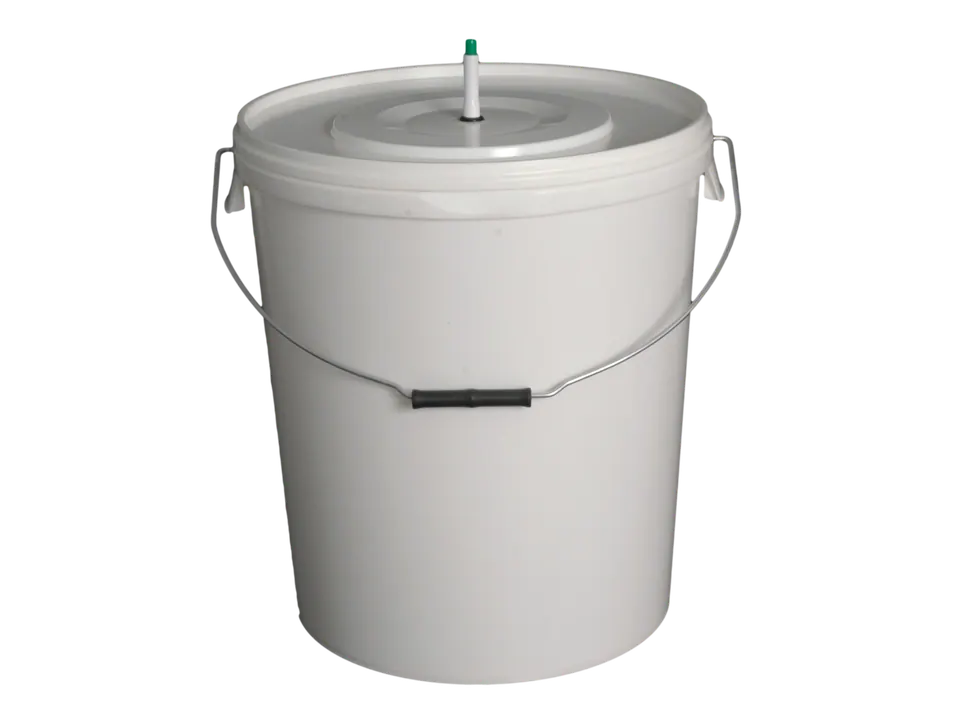
- The best fermenter for homebrew holds your batch plus headspace for foam: about 6–6.5 gallons for a 5-gallon batch.
- A 6.5-gallon bucket (Home Brew Ohio, FastRack, U.S. Solid) is the simplest and most forgiving start.
- FerMonster PET is light, clear and won't shatter; glass (North Mountain Supply) suits long aging but needs careful handling.
- For pressure fermenting, the FermZilla All Rounder kit is rated to 2.5 bar (36.2 psi); for stainless, the Ss Brewtech, Northern Brewer Reactor and Spike conicals step up in size and fittings.
The best fermenter for homebrew keeps oxygen and microbes out, leaves room for the foam (krausen) of active fermentation, and is easy to clean and fill from. We compared ten fermenters from ten brands across four materials, plastic buckets, PET, glass and stainless, plus a pressure-rated PET kit, using the volume, material, ports and pressure rating each listing gives.
Material matters less for flavor than cleaning and temperature do. Pick the one you'll clean well and can keep in the yeast's range. Starting from scratch? Our beginner kits include a fermenter.
Our picks
Home Brew Ohio 6.5 Gal Fermenting Bucket with Lid and Airlock
Home Brew Ohio
- Volume
- 6.5 gal
- Material
- Plastic bucket
- Outputs
- Grommeted lid, 3-piece airlock
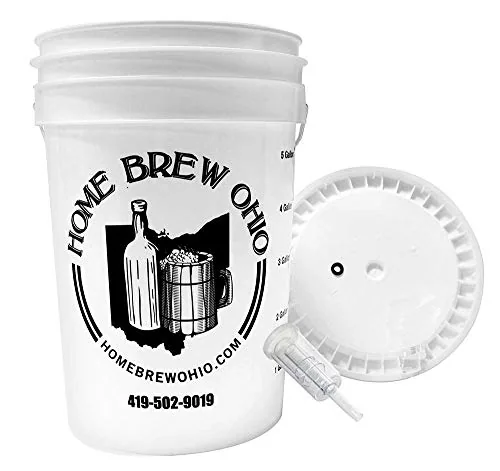
Home Brew Ohio's 6.5-gallon bucket comes with a grommeted lid and a three-piece airlock, which is all you need to ferment a 5-gallon batch of beer, wine or cider. The wide opening makes cleaning easy.
Best for: 5-gallon primary fermentation on a first or second batch
Skip if: You want to watch fermentation through the wall
- 6.5 gal leaves room for krausen
- Airlock included
- Easy to clean by hand
- Opaque plastic
- Scratches harbor bacteria if scrubbed hard
FastRack 6.5 Gal Fermenting Bucket with Lid
FastRack
- Volume
- 6.5 gal
- Material
- Food-grade HDPE, BPA free
- Outputs
- Drilled lid with grommet
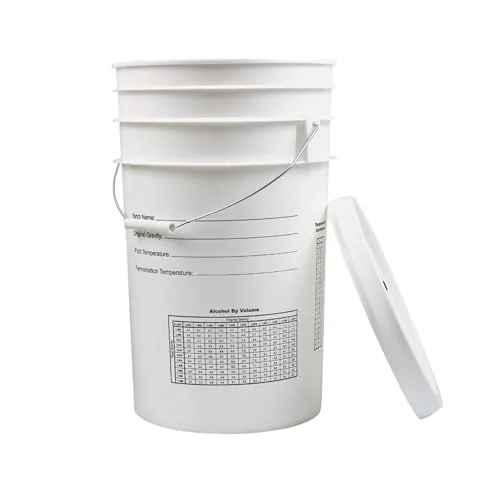
FastRack's 6.5-gallon bucket is food-grade, BPA-free HDPE with a drilled lid and grommet for an airlock. FastRack notes the ample headspace suits high-krausen beers, and the same bucket works as a bottling bucket.
Best for: A spare primary or a bottling bucket
Skip if: You need an airlock in the box
- Food-grade HDPE, BPA-free
- Grommeted lid
- Doubles as a bottling bucket
- Airlock not listed
- No spigot
U.S. Solid 6.5 Gal Fermenting Bucket with Spigot and Airlock, 2-Pack
U.S. Solid
- Volume
- 6.5 gal each (2-pack)
- Material
- Food-grade polypropylene, BPA free
- Outputs
- Spigot and airlock
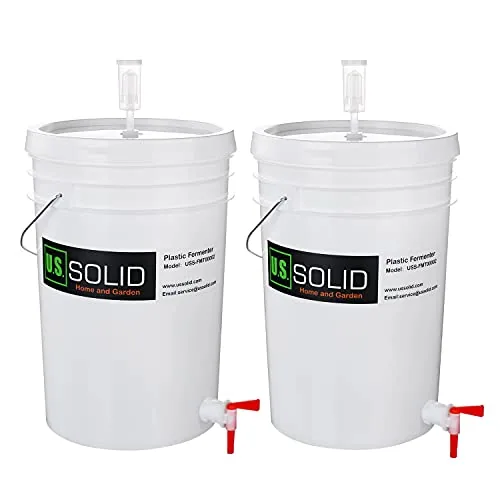
U.S. Solid sells two 6.5-gallon translucent polypropylene buckets, each with a spigot and airlock, so you can ferment two batches or stagger brew days. The spigot removes the need to siphon.
Best for: Running two batches or keeping one as a bottling bucket
Skip if: You don't want spigots to clean
- Two buckets
- Spigots included
- Translucent body
- Spigots need disassembly to clean
- Polypropylene scratches
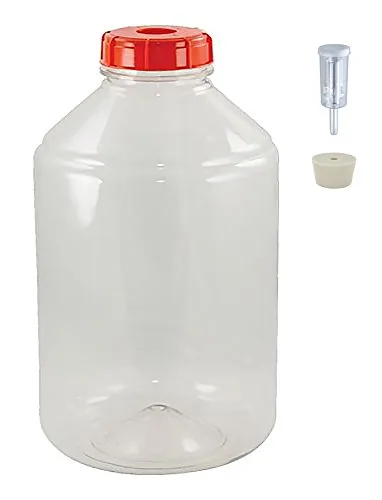
FerMonster 6 Gal Fermenter with Econolock and #10 Stopper
FerMonster
- Volume
- 6 gal
- Material
- PET plastic
- Outputs
- Drilled lid, Econolock, #10 drilled stopper
The 6-gallon FerMonster is a wide-mouth PET carboy with a drilled lid, an Econolock airlock and a #10 drilled rubber stopper included. It is lightweight, stain-resistant and the wide mouth lets you clean it by hand.
Best for: Brewers who want to see the beer without glass
Skip if: You often ferment big, foamy beers in 5.5-gallon batches
- Clear and light
- Wide mouth
- Airlock and stopper included
- Only 1 gal of headspace for 5 gal
- PET scratches if scrubbed with abrasives
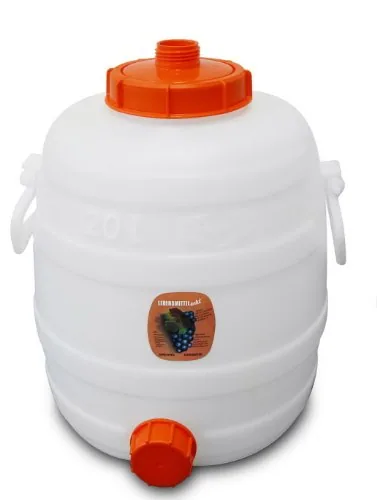
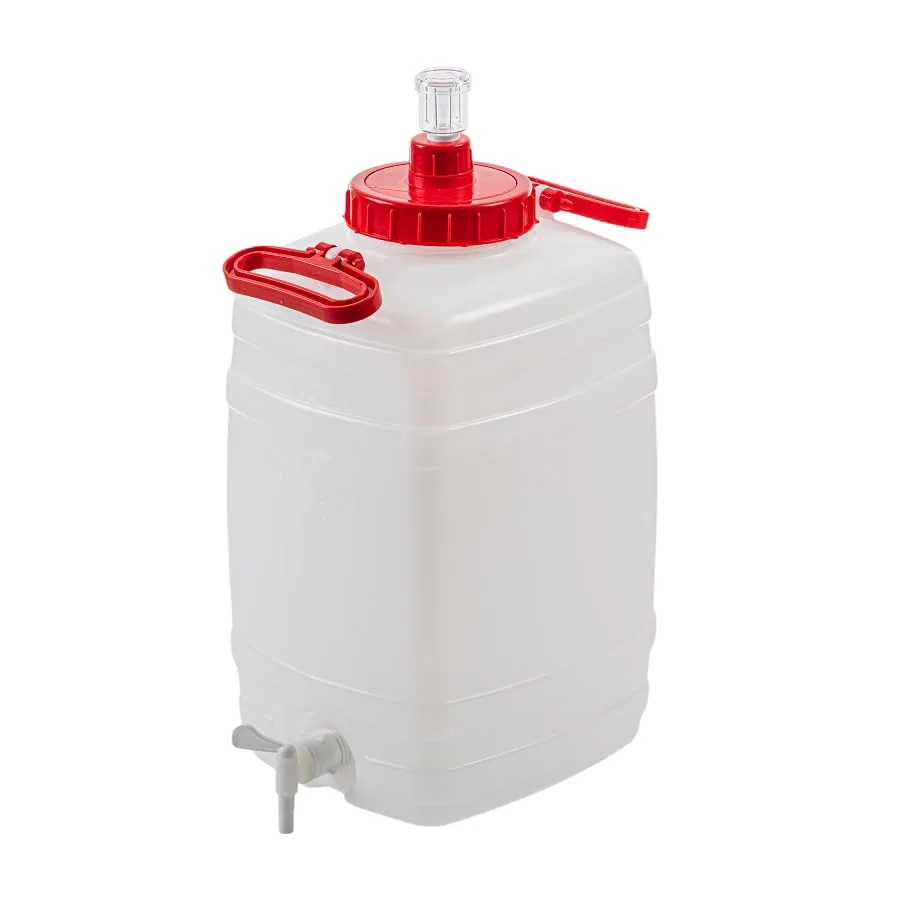
Speidel 20L HDPE Fermenter
Speidel
- Volume
- 20 L (5.3 gal)
- Material
- HDPE
- Outputs
- 4.75 in. wide-mouth lid, built-in handles
Speidel's German-made 20 L (5.3 gal) fermenter is HDPE with built-in handles, a 4.75-inch wide-mouth lid and gasket-sealed ports. Speidel says HDPE resists oxygen transfer and the vessel withstands temperatures up to 140°F (60°C).
Best for: 4-gallon batches, wine and cider, and long-term aging
Skip if: You ferment full 5-gallon beer batches (headspace is tight)
- Built-in handles
- Wide 4.75 in. mouth
- Gasket-sealed ports
- 5.3 gal leaves little headspace for 5 gal
- Opaque
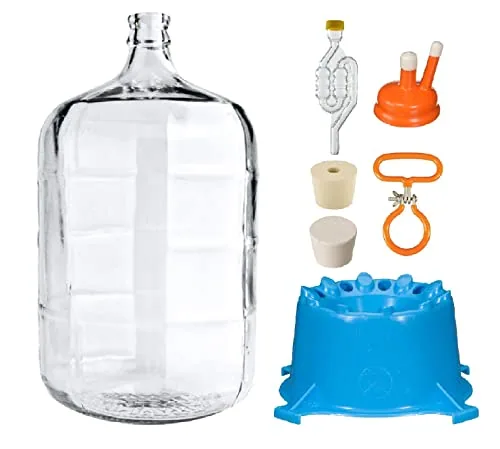
North Mountain Supply 5 Gal Italian Glass Carboy Set
North Mountain Supply
- Volume
- 5 gal
- Material
- Italian glass
North Mountain Supply's 5-gallon Italian glass carboy set includes drilled and undrilled stoppers, a six-bubble airlock, a carboy dryer, a handle and a cap. Glass doesn't scratch or hold odors, which suits wine, mead and long secondary aging.
Best for: Wine, mead and aging beer after primary
Skip if: You have a slippery floor, kids or pets near the fermenting spot
- Scratch- and odor-resistant
- Two stoppers and airlock
- Carboy dryer included
- Heavy and breakable
- No headspace for a 5-gal primary
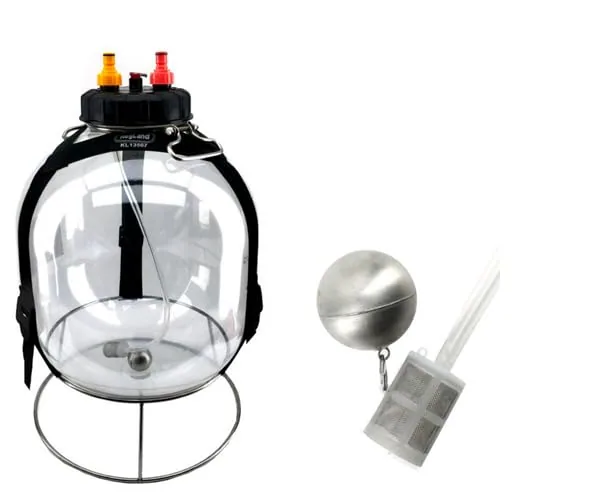
KegLand FermZilla All Rounder 30L Pressure Brewing Kit
KegLand
- Volume
- 30 L (7.9 gal)
- Material
- PET
- Pressure
- 2.5 bar (36.2 psi)
- Outputs
- 4.75 in. lid opening
The FermZilla All Rounder 30 L (7.9 gal) pressure kit is smooth PET with a pressure-rated lid; KegLand rates it to 2.5 bar (36.2 psi) and says PET is a better oxygen barrier than HDPE. The lid opening is 4.75 inches. Our research notes the kit includes a BlowTie spunding valve, a stand and a pressure relief valve.
Best for: Pressure fermenting, closed transfers and carbonating in the fermenter
Skip if: You want the simplest possible first fermenter
- Rated to 2.5 bar (36.2 psi)
- 7.9 gal leaves room for krausen
- Clear PET
- More seals and fittings to clean
- Pressure rating drops with heat; check KegLand's limits
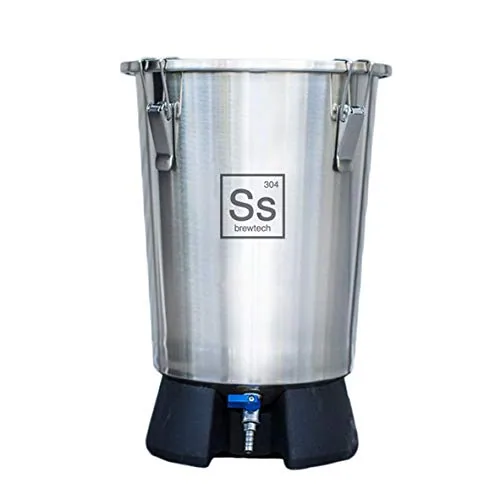
Ss Brewtech Mini Brew Bucket, 3.5 Gal
Ss Brewtech
- Volume
- 3.5 gal
- Material
- Stainless steel
- Outputs
- Rotatable racking arm, LCD thermometer
Ss Brewtech's 3.5-gallon Mini Brew Bucket is stainless with a conical base that keeps trub away from the beer, a rotatable racking arm, and an LCD thermometer in a weldless thermowell that the maker says reads to within 1 degree.
Best for: 2.5–3 gallon batches in stainless
Skip if: You brew 5-gallon batches
- Rotating racking arm
- Thermowell with LCD thermometer
- Stainless
- Small batch size
- Not pressure-rated
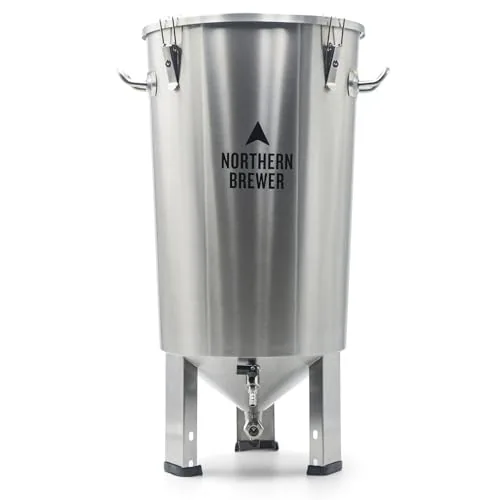
Northern Brewer Reactor Stainless Conical Fermentor, 8.5 Gal
Northern Brewer
- Volume
- 8.5 gal max; marks 4–8 gal (15–30 L)
- Material
- 304 stainless steel
- Outputs
- 1/2 in. NPT bottom-drain ball valve, racking arm
Northern Brewer's Reactor is a 304 stainless conical with an 8.5-gallon maximum volume, embossed graduations from 4 to 8 gallons (15–30 L), an adjustable racking arm and a 1/2-inch male NPT bottom-drain ball valve for dumping trub.
Best for: 5-gallon batches with trub dumps and racking from the side
Skip if: You want to see the beer during fermentation
- Bottom drain valve
- Adjustable racking arm
- Embossed graduations
- Not pressure-rated per the listing
- Valve and arm add parts to clean
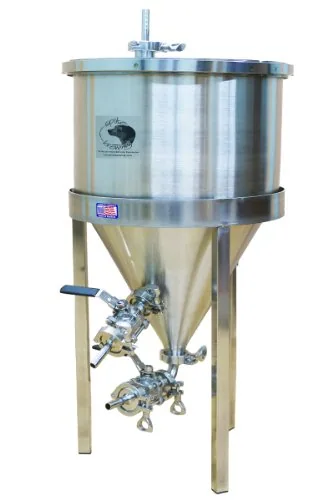
Spike Brewing CF-125 Stainless Conical Fermenter
Spike Brewing
- Volume
- 5 and 10 gal batch capability
- Material
- 304 stainless, 2 mm thick, made in USA
- Outputs
- 18 in. diameter × 31 in. tall
Spike's CF-125 is a made-in-USA conical of 304 stainless, 2 mm thick, 18 inches in diameter and 31 inches tall, sized for 5- and 10-gallon batches. Spike describes its wall as twice as thick as most competitors'.
Best for: Brewers committed to 5–10 gallon batches in stainless
Skip if: Your fermentation chamber is a standard fridge (check the 31 in. height)
- 2 mm 304 stainless
- Made in USA
- 5 or 10 gal batches
- Tall: needs a big chamber
- Total volume not listed on the listing
Plastic, PET, glass or stainless: which fermenter material?
Fermenter materials at a glance
| Material | Breaks? | See the beer? | Scratch risk | Pressure | Best for |
|---|---|---|---|---|---|
| HDPE or PP bucket | ✓ won't shatter | ✗ (PP translucent) | ~ avoid abrasives | ✗ | First batches, primaries |
| PET carboy | ✓ won't shatter | ✓ | ~ avoid abrasives | ~ only rated PET (FermZilla) | Clear view, light weight |
| Glass carboy | ✗ can shatter | ✓ | ✓ resists | ✗ | Wine, mead, long aging |
| Stainless | ✓ won't shatter | ✗ | ✓ resists | ~ only rated models | Long-term use, conicals |
Source: Listing materials; Craft Beer & Brewing homebrew safety
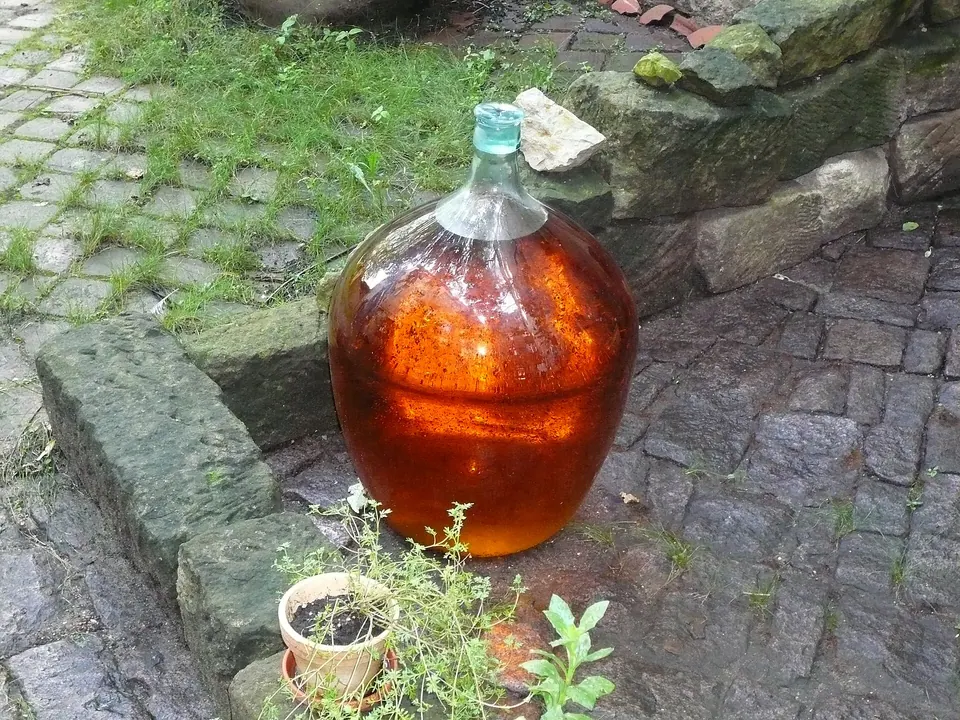
Plastic buckets are the most forgiving and the easiest to replace. PET gives you the view of glass without the weight. Glass resists scratches and odors but needs a carrier and gentle handling. Stainless lasts for years and blocks light, and conical stainless adds trub dumps and racking arms.
Fermenter volume and headspace compared
A fermenter needs space above the beer for krausen, which can rise several inches on vigorous ales. For a 5-gallon batch, 6–6.5 gallons of fermenter is the usual minimum; less than that calls for a blow-off tube.
Fermenter volume (gallons)
Listed volume; Spike CF-125 total volume not listed
Ports, extras and pressure (listing data)
| Fermenter | Volume | Material | Pressure rating | Included |
|---|---|---|---|---|
| Home Brew Ohio bucket | 6.5 gal | Plastic | ✗ | Grommeted lid, 3-piece airlock |
| FastRack bucket | 6.5 gal | HDPE, BPA-free | ✗ | Drilled lid with grommet |
| U.S. Solid 2-pack | 6.5 gal each | Polypropylene, BPA-free | ✗ | Spigot and airlock |
| FerMonster 6 gal | 6 gal | PET | ✗ | Drilled lid, Econolock, #10 stopper |
| Speidel 20 L | 5.3 gal | HDPE | ✗ | Wide-mouth lid, handles |
| North Mountain glass | 5 gal | Italian glass | ✗ | Two stoppers, airlock, dryer, handle |
| FermZilla All Rounder kit | 7.9 gal (30 L) | PET | 2.5 bar (36.2 psi) | Pressure-rated lid; spunding valve per research notes |
| Ss Brewtech Mini Brew Bucket | 3.5 gal | Stainless | ✗ | Racking arm, LCD thermometer |
| Northern Brewer Reactor | 8.5 gal max | 304 stainless | Not listed | Bottom drain valve, racking arm |
| Spike CF-125 | 5 and 10 gal batches | 304 stainless, 2 mm | Not listed | 18 × 31 in. |
Source: Product listings, November 2026
How to choose a fermenter
- Size it to the batch
6–6.5 gallons for 5-gallon batches, 3.5 gallons for 2.5–3 gallons, 1 gallon jugs for 1-gallon kits.
- Check where it will live
Measure your closet, fridge or fermentation chamber, height included. A square fermenter fits tight spaces.
- Decide how you'll transfer
A spigot or racking arm means no siphon; a bottom drain lets you dump trub; pressure-rated vessels allow closed transfers with CO2.
- Plan temperature control
Most ales want about 64–72°F (18–22°C). A controller with a fridge or heat wrap matters more than the vessel; the yeast maker's sheet gives the range.
- Pick a material you'll clean well
Soft cloths and a brewing cleaner per the label for plastic and PET; brushes are fine on glass and stainless.
Fermenter mistakes to avoid
- Filling to the brim. Leave headspace or fit a blow-off tube; a clogged airlock can blow the lid.
- Carrying glass by the neck. Use a carrier and lift from the base.
- Pressurizing a vessel that isn't rated. Only pressure-rated fermenters with a relief valve, like the FermZilla kit, belong under pressure; never exceed the rating.
- Scrubbing plastic with abrasives. Scratches hide bacteria. Soak in cleaner instead.
- Bottling on a schedule instead of a reading. Wait for the same gravity 2–3 days in a row.
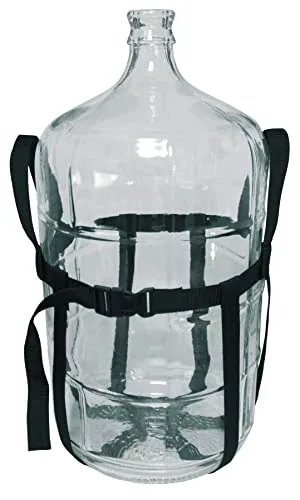
Brew Hauler FE338 Nylon Carboy Carrier
- Volume
- Fits glass carboys (carboy not included)
- Material
- Nylon webbing, made in USA
- Type
- Carboy carrier
Best for Carrying full glass carboys
Which fermenter should you buy?
- First batch: Home Brew Ohio 6.5 gal bucket with airlock.
- A spare or bottling bucket: FastRack 6.5 gal.
- Two batches at once, no siphon: U.S. Solid 2-pack.
- Clear and light: FerMonster 6 gal.
- Wine, cider or 4-gallon batches: Speidel 20 L.
- Long aging, mead and wine: North Mountain Supply glass carboy.
- Pressure fermenting: FermZilla All Rounder 30 L kit.
- Small stainless: Ss Brewtech Mini Brew Bucket.
- Stainless conical for 5 gallons: Northern Brewer Reactor; Spike CF-125 for 5–10 gallons.
Bottling once fermentation finishes? The priming sugar calculator sets the dose for your batch. Moving up to all-grain? A faster wort chiller gets wort into the fermenter at pitching temperature sooner.
A 6.5-gallon bucket from Home Brew Ohio or FastRack is the best fermenter for most first batches. Choose the FerMonster for a clear view without glass, the North Mountain Supply glass carboy for long aging, the FermZilla All Rounder kit for pressure fermenting within its 2.5 bar rating, and the Northern Brewer Reactor or Spike CF-125 when you're ready for stainless.
Before you buy, read fermentation temperature guide and cleaning vs sanitizing brewing gear. For a closer look, see KegLand FermZilla review and Plastic vs glass vs stainless fermenters.
We compared volume, material, pressure rating, ports and included parts from current listings and our research notes, and checked handling and pressure guidance against Craft Beer & Brewing, CPSC (glass carboy recall) and maker figures. We did not brew with these fermenters, and we don't show scores, star ratings or prices.