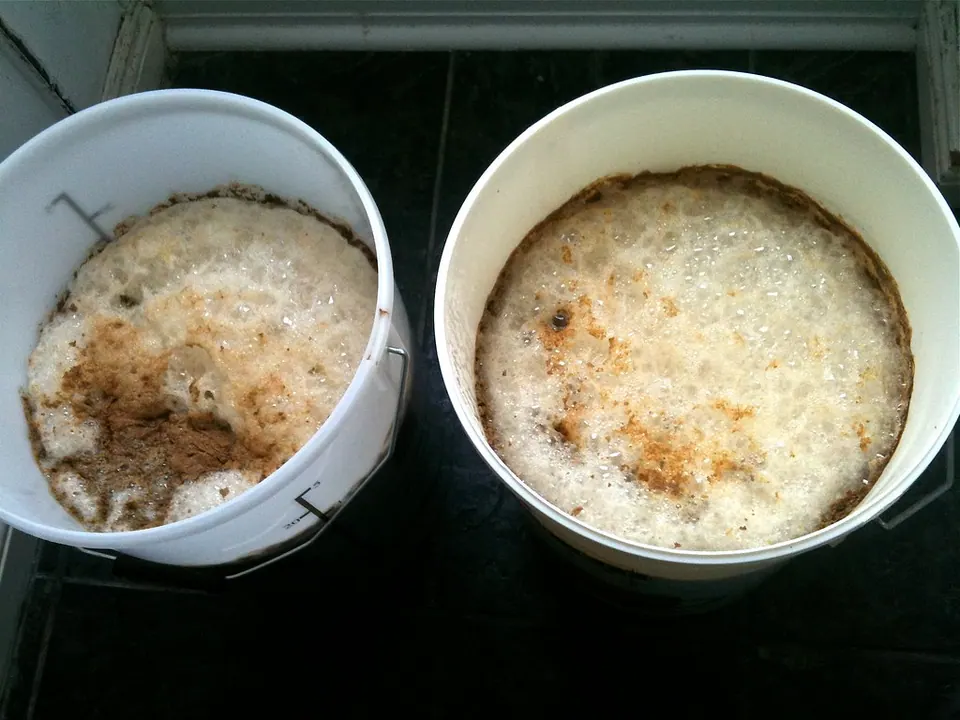
- Ferment at the temperature the yeast maker lists, measured in the beer, not the room. Clean ales usually sit around 64–68°F (18–20°C).
- Active fermentation makes heat. In the first 2–4 days the beer can run several degrees above the air around it.
- Pitch at the low end of the range, hold steady through the peak, then let it rise a few degrees to finish clean.
- Lagers need about 48–59°F (9–15°C); kveik is happy from the 70s to around 100°F, per the makers.
- A dual-stage controller in a fridge or chamber, with the probe taped to the fermenter under insulation, is the most reliable fix.
This fermentation temperature guide answers the question that decides more beer quality than any recipe tweak: how warm should the beer be while yeast works? Too warm, and ale yeast throws fruity esters and hot, solvent-like fusel alcohols. Too cold, and fermentation stalls before it finishes. Steady is as important as the number itself.
The ranges below come from the yeast makers’ technical sheets (Fermentis and Lallemand), and the off-flavor causes come from BYO and Palmer’s How to Brew. Temperatures are given in °F with °C in brackets.
What temperature should beer ferment at?
Start with the yeast sheet. Each strain has a working range set by its maker. Within it, cooler fermentation gives cleaner flavor and warmer gives more fruit and spice, which some styles want (Belgian ales, hefeweizen) and most don’t.
Maker temperature ranges for common dry yeasts
| Yeast | Type | Maker range | Notes |
|---|---|---|---|
| Fermentis SafAle US-05 | American ale | 64.4–78.8°F (18–26°C) | Clean at the low end |
| Fermentis SafAle S-04 | English ale | 64.4–78.8°F (18–26°C) | Fast, flocculent |
| Lallemand LalBrew Nottingham | English ale | 50–77°F (10–25°C) | Tolerates cool fermentation |
| Fermentis SafLager W-34/70 | Lager | 53.6–64.4°F (12–18°C) ideal | The classic dry lager strain |
| Lallemand LalBrew Voss | Kveik | 77–104°F (25–40°C); optimum 95–104°F | Full attenuation in 2–3 days at optimum, per Lallemand |
| Lalvin EC-1118 | Wine, cider, mead | 50–86°F (10–30°C) | Not a beer yeast |
Source: Fermentis product pages; Lallemand technical data
Dry yeast by the maker’s numbers
| Yeast | Use | Fermentation temp | Dose | Attenuation / tolerance | Rehydration |
|---|---|---|---|---|---|
| SafAle US-05 Fermentis | Ale (American) | 18–26°C (64.4–78.8°F) | 50–80 g/hL | 78–82%; not listed on the product page | Optional: ≥10× its weight of sterile water or boiled, hopped wort at 25–29°C (77–84°F), 15–30 min; or direct pitch at or above fermentation temperature |
| SafAle S-04 Fermentis | Ale (English) | 18–26°C (64.4–78.8°F) | 50–80 g/hL | 74–82%; 9–11% ABV | Optional: ≥10× its weight of sterile water or boiled, hopped wort at 25–29°C (77–84°F), 15–30 min; or direct pitch at or above fermentation temperature |
| SafLager W-34/70 Fermentis | Lager | 12–18°C (53.6–64.4°F) | 80–120 g/hL | 80–84%; 9–11% ABV | Optional: ≥10× its weight of sterile water or boiled, hopped wort at 15–25°C (59–77°F), 15–30 min; or direct pitch at or above fermentation temperature |
| LalBrew Nottingham Lallemand | Ale (English) | 10–25°C (50–77°F) | 50–100 g/hL | 78–84%; 14% ABV | Dry pitching is the maker's preferred method (no significant difference vs rehydration, per Lallemand) |
| LalBrew Voss (kveik) Lallemand | Ale (kveik) | 25–40°C (77–104°F) Optimum 35–40°C (95–104°F) per Lallemand | 50–100 g/hL | 76–82%; 12% ABV | Per the sachet |
| Lalvin EC-1118 Lallemand | Wine, cider, mead | 10–30°C (50–86°F) | 25 g/hL | Ferments dry; 18% v/v (subject to conditions) | 35–40°C (95–104°F) water for 20 min with Go-Ferm Protect Evolution (30 g/hL), then temper to within 5–10°C of the must |
Sources: Fermentis: SafAle US-05 product page; Fermentis: SafAle S-04 product page; Fermentis: SafLager W-34/70 product page; Lallemand: LalBrew Nottingham technical data sheet; Lallemand Brewing: LalBrew Voss Kveik Ale Yeast product page; Lallemand: Lalvin EC-1118 technical data sheet. 1 hL = 26.4 US gal, so 50 g/hL ≈ 1.9 g per gallon. Follow the sachet you buy; makers update their sheets.
A maker’s full range is the span where the yeast will ferment, not where it tastes best. For clean American and British ales, most brewers aim a few degrees above the bottom of the range, then let it rise near the end.
Why the beer is warmer than the room
Fermentation is exothermic: yeast releases heat as it converts sugar. A 5 gal (19 L) batch at peak activity can run several degrees warmer than the air, and the difference is largest in the first 2–4 days, exactly when most flavor compounds form. BYO notes that fermenter temperatures run higher than ambient, which is why a 70°F room can mean a beer well into the mid-70s.
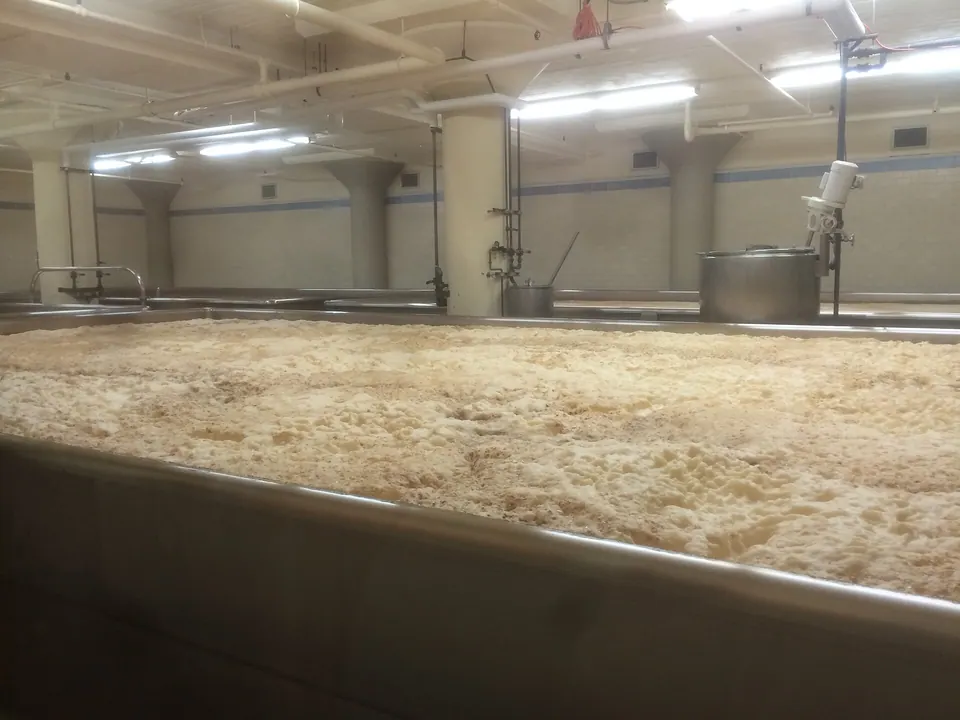
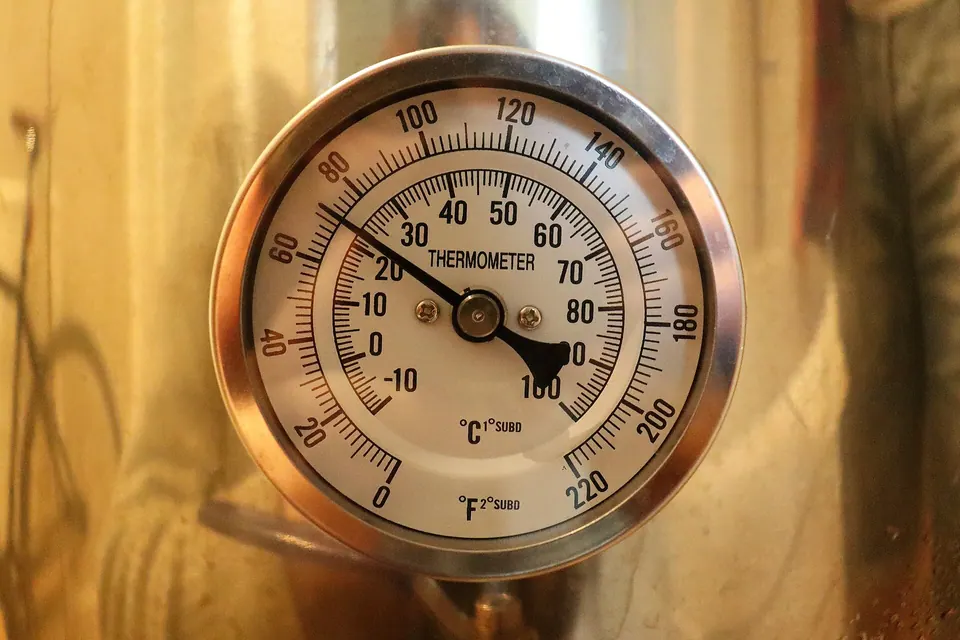
That is the main reason to measure the beer itself. A stick-on strip on the fermenter wall, a thermowell, or a controller probe taped to the side and covered with a folded towel or foam all read much closer to the beer than an air thermometer.
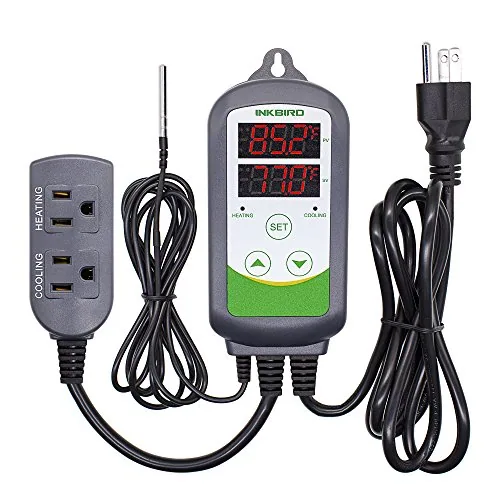
Inkbird ITC-308 Dual-Stage Temperature Controller, 110V
- Outputs
- 2 outlets: heating and cooling
- Range
- °C/°F display, high/low alarms
- Power
- 110V, 10A, 1100 W max (listing)
Best for Fridge or heat-wrap fermentation control
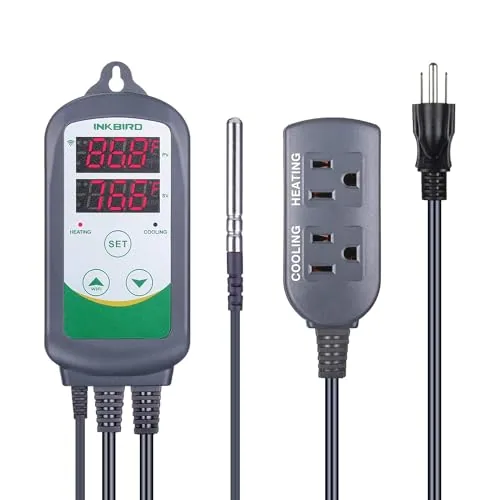
Inkbird ITC-308 Wi-Fi Dual-Stage Temperature Controller, 110V
- Outputs
- 2 outlets: heating and cooling
- Range
- °C/°F, calibration, high/low alarms
- Power
- 110V, 1100 W max (listing)
Best for Remote fermentation monitoring
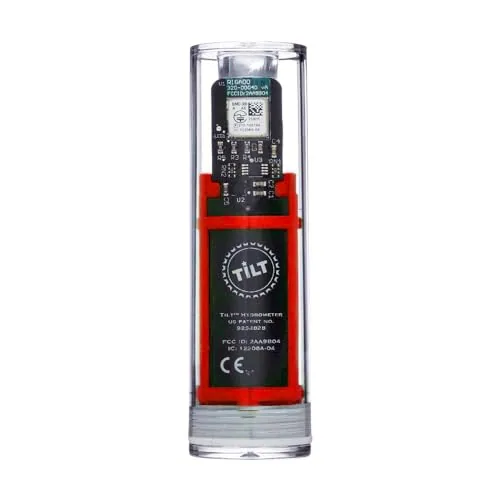
Tilt Wireless Hydrometer & Thermometer (Red)
- Range
- SG 0.990–1.120
- Accuracy
- ±0.002 SG (per Tilt)
- Connectivity
- Bluetooth to app or Tilt Pi
Best for A second fermenter alongside a black Tilt
A temperature schedule for clean ales
- Chill to pitching temperature
Pitch at or slightly below your target. Fermentis allows direct pitching of US-05 onto wort at or above fermentation temperature; pitching into warm wort and cooling later means the first, most important hours happen too warm.
- Hold through the peak (days 1–4)
Keep the beer near the low-to-middle part of the range, for example 64–66°F (18–19°C) for US-05. This is when esters and fusels form.
- Free-rise to finish (days 4–7)
As activity slows, let the beer warm 3–5°F (2–3°C). Warmer, still-active yeast cleans up diacetyl and acetaldehyde and finishes attenuation.
- Confirm final gravity
Take readings 2–3 days apart. When they match, fermentation is finished; see how to use a hydrometer.
- Cold crash (optional)
Chill to near freezing for 1–3 days to drop yeast and haze before packaging. Expect suck-back of airlock liquid as the headspace cools; a sanitized blow-off or a CO2-pressurized vessel avoids it.
- Record what happened
Log the set point, the peak beer temperature and the days. The brew-day log has a fermentation temperature table.
Lagers, Belgians and kveik
Lagers
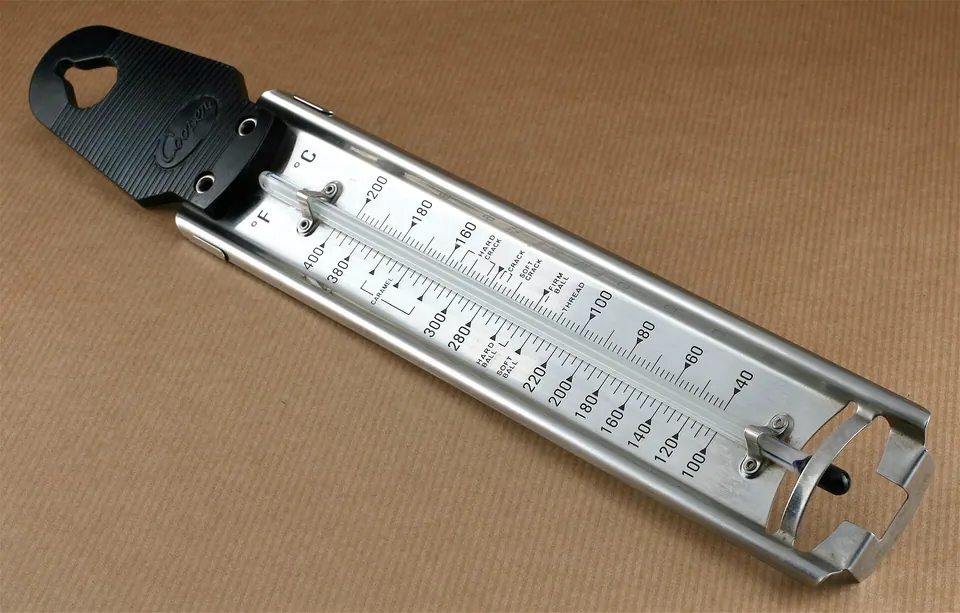
Lager yeasts ferment cold, typically 48–59°F (9–15°C); Fermentis lists 53.6–64.4°F (12–18°C) as ideal for W-34/70. After most of the sugar is gone, a diacetyl rest at about 60–65°F (16–18°C) for 2–3 days lets yeast reabsorb buttery diacetyl, then the beer is cooled for weeks of cold conditioning (lagering). Winter garages and basements at 48–55°F help, but a fridge with a controller is the reliable route.
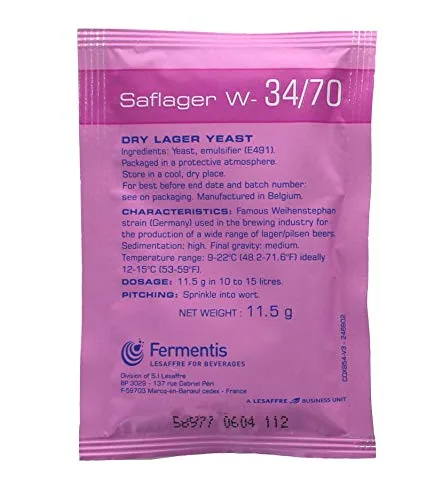
Fermentis SafLager W-34/70 Dry Lager Yeast, 11.5 g
- Type
- Dry lager yeast
- Temp
- 48–68°F (9–20°C)
Best for Lagers in a cool basement or fridge
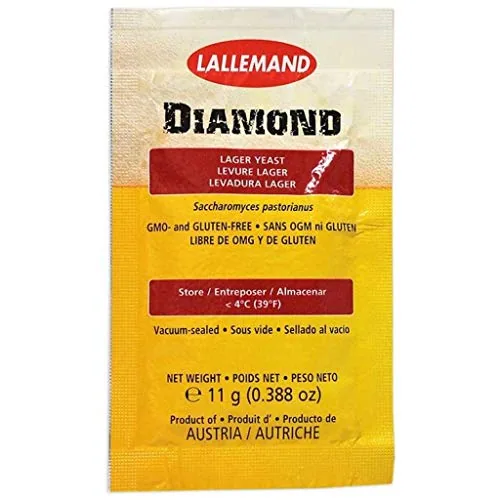
Lallemand LalBrew Diamond Lager Yeast, 11 g
- Type
- Dry lager yeast
Best for Clean lagers
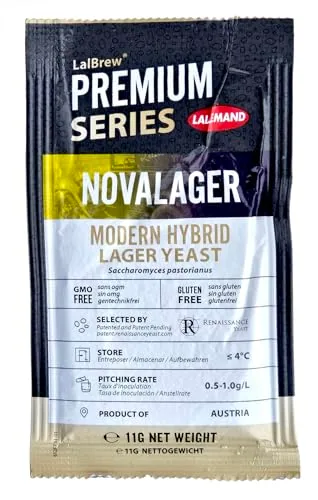
Lallemand LalBrew NovaLager Hybrid Yeast, 11 g
- Type
- Dry hybrid lager yeast
Best for Lagers without a dedicated lager fridge
Belgian and wheat ales
Saison, Belgian and hefeweizen strains are chosen for their esters and phenols, and many brewers let them run warmer by design. Follow the strain’s sheet and the recipe; there is no single right number.
Kveik
Norwegian farmhouse kveik strains ferment fast and clean at temperatures that would ruin most ale yeasts. Lallemand lists 77–104°F (25–40°C) for LalBrew Voss, with 95–104°F optimal. That makes kveik the summer option for brewers without temperature control. See the kveik yeast guide.
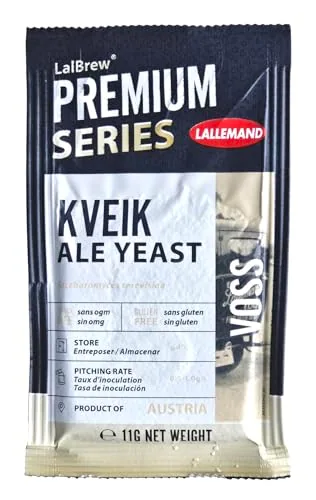
Lallemand LalBrew Voss Kveik Ale Yeast, 11 g
- Type
- Dry kveik ale yeast
- Temp
- 95–104°F (35–40°C) optimal
Best for Summer brewing without temp control
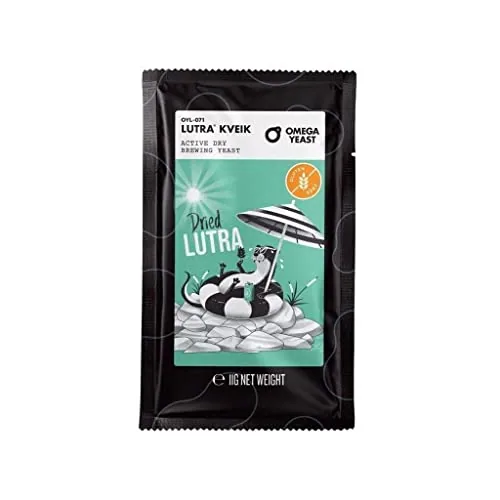
Omega Yeast Lutra Kveik Dry Yeast, 11 g
- Type
- Dry kveik yeast
- Temp
- 68–95°F (20–35°C)
- Attenuation
- 75–82%
Best for Pseudo-lagers in summer
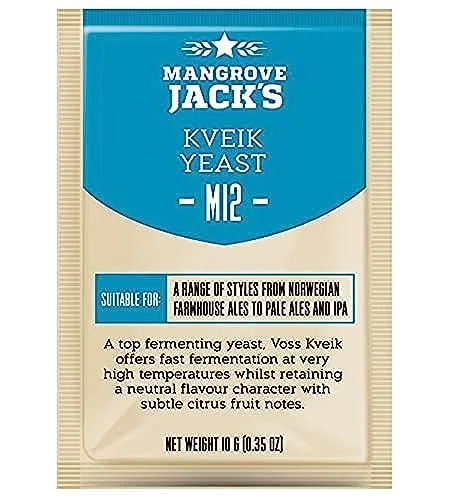
Mangrove Jack's M12 Kveik Yeast, 10 g
- Type
- Dry kveik ale yeast
Best for Warm fermentation
How to control fermentation temperature
Options from cheapest to most precise
| Method | Cools | Heats | Precision | Best for |
|---|---|---|---|---|
| Interior closet or basement | ~ Only as cool as the room | ✗ | ~ Swings with the house | Ales in spring and fall |
| Swamp cooler (tub of water, wet towel, frozen bottles) | ✓ Several degrees | ✗ | ~ Needs daily attention | Summer ales on a budget |
| Insulated fermentation bag with ice packs | ✓ | ✗ | ~ | Small spaces |
| Heat wrap or belt with a controller | ✗ | ✓ | ✓ With a probe | Cold garages, winter |
| Fridge or chest freezer + dual-stage controller | ✓ | ✓ With a heat wrap | ✓ ±1–2°F | Ales and lagers year-round |
| Glycol chiller with coil or jacket | ✓ | ~ With a heater | ✓ | Conicals, several fermenters |
Source: Maker manuals (Inkbird, BrewBuilt); Palmer, How to Brew
The fridge-plus-controller setup is the standard because it handles both seasons. A dual-stage controller has one outlet for cooling (the fridge) and one for heating (a wrap or small heater). Set a differential of 1–2°F so the compressor doesn’t short-cycle, and use the controller’s compressor delay if it has one.
Inkbird ITC-308 Dual-Stage Temperature Controller, 110V
- Outputs
- 2 outlets: heating and cooling
- Range
- °C/°F display, high/low alarms
- Power
- 110V, 10A, 1100 W max (listing)
Best for Fridge or heat-wrap fermentation control
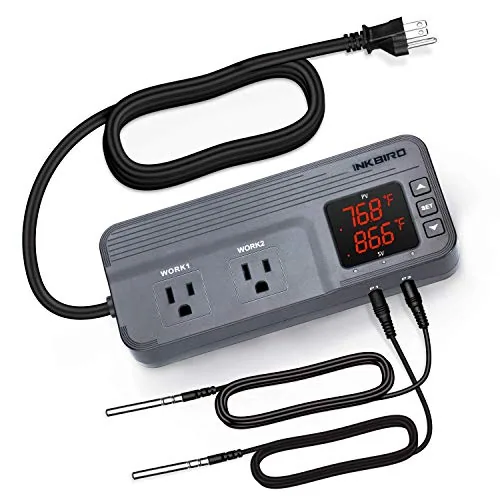
Inkbird ITC-608T Dual-Probe Temperature Controller, 1800W
- Material
- ETL listed, up to 1800 W
- Outputs
- Dual stage outlets
- Range
- °C/°F, 12 time periods
Best for Scheduled temperature ramps
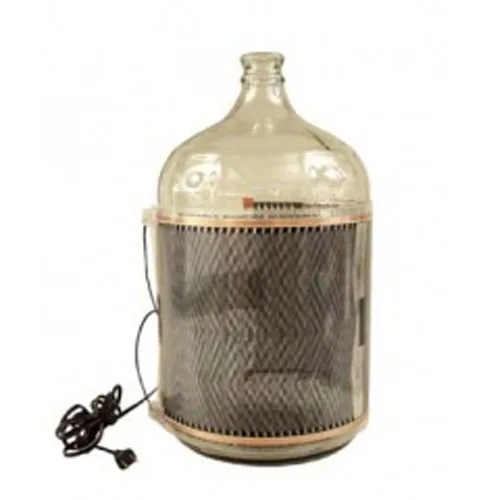
Eagle Brewing FE650 FermWrap Heater, 40W
- Material
- Flexible wrap, tape-on
- Outputs
- Flexible heating wrap, 40 W
- Type
- Fermentation heater
Best for Warming ales in a cold garage
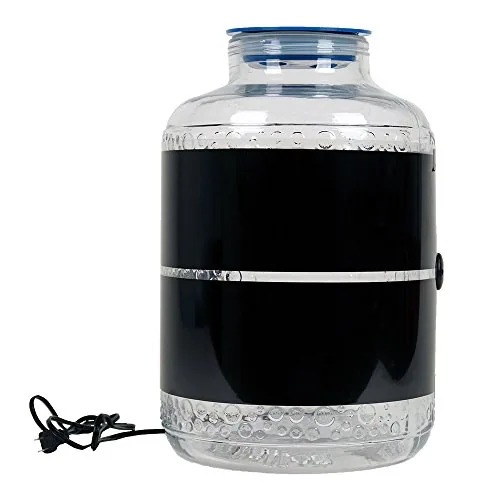
Northern Brewer FermoTemp Electric Fermentation Heater
- Material
- Flexible, extra-thick construction
- Outputs
- Wrap heater, 110V 35 W
- Type
- Fermentation heater
Best for Gentle heat for any fermenter
Probe placement
Tape the probe to the side of the fermenter at mid-height and cover it with a small square of foam or a folded towel, so it reads the beer rather than the fridge air. A thermowell (a tube that dips into the beer) is even better. Never leave the probe dangling in air; the controller will chase the wrong temperature.
Small-space and budget options
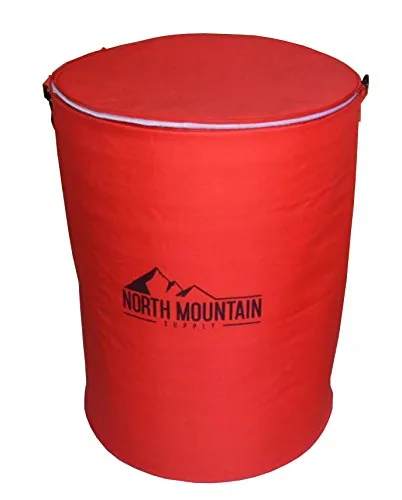
North Mountain Supply Fermentation Cooler Bag, up to 8 Gal
- Volume
- Carboys to 6.5 gal or fermenters to 8 gal with airlock
- Material
- Insulated bag
- Type
- Insulated fermentation bag
Best for Hot garages and apartments
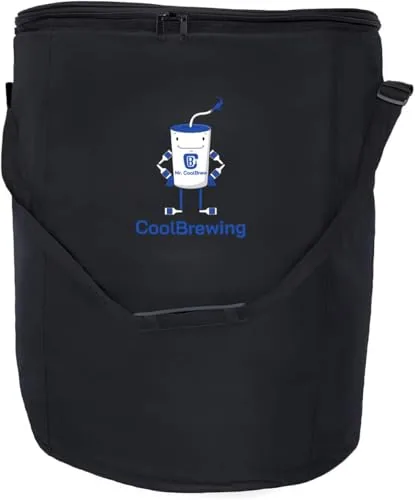
Cool Brewing Fermentation Cooler Bag
- Volume
- Fits a 5 gal fermenter
- Outputs
- Insulated bag for ice bottles or packs
- Type
- Insulated fermentation bag
Best for Summer ales without a fridge
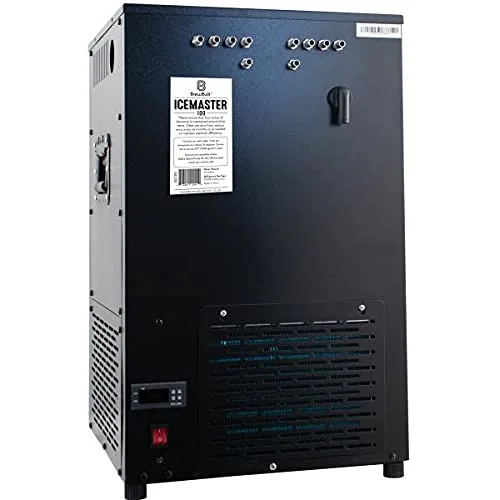
BrewBuilt IceMaster 100 Glycol Chiller
- Volume
- 30 L (8 gal) water tank
- Outputs
- 10 stainless bulkheads, 3/8 in. barbs
- Range
- 950 W / 3200 BTU cooling, 110V 3.6 A
Best for Cooling stainless conicals
The temperature control and summer situation page collects controllers, chambers and heat wraps in one place.
Garage brewing through the seasons
Garages swing hard: cold nights in winter, heat that can pass 90°F (32°C) in summer, and big daily swings in between. That is fine for storage and terrible for fermentation without control.
- Winter (cold garage around 48–55°F): lager season. Ales need a heat wrap and controller, or move indoors.
- Spring and fall: ales in an insulated chamber; watch overnight drops.
- Summer: ales only in a fridge or chamber; otherwise brew kveik.
- Any season: keep fermenters off bare concrete in winter and out of direct sun always.
Electric gear in a garage belongs on a GFCI-protected outlet. Controllers have load ratings; the Inkbird ITC-308 listing gives 1100 W at 110V. Check that the fridge and heater together stay under the controller’s rating.
Mistakes to avoid
- Measuring air, not beer. The beer runs warmer at peak fermentation.
- Pitching warm and cooling later. The first day sets much of the ester profile.
- Big swings. A drop of 10°F overnight can make yeast drop out and stall; a spike drives fusels.
- Crashing before fermentation is finished. You lock in diacetyl and leave sugar for bottle bombs.
- Skipping the diacetyl rest on lagers. Buttery flavor is the usual result.
- Overloading a controller. Check the wattage rating against the fridge and heater.
- Fermenting in sunlight. Light and heat both damage beer.
Tasting something off? Match the flavor to its cause in beer off-flavors.
Who needs what
- Brewing in a stable basement: a stick-on thermometer and patience may be enough for ales.
- Garage or attic, or any lager plans: a fridge or chest freezer, a dual-stage controller and a heat wrap.
- Hot climate, no fridge: kveik strains or a swamp cooler.
- Several fermenters at once: a glycol chiller with coils or jacketed conicals.
Gear picks for this guide: best fermentation temperature controllers and best fermentation chamber setups.