- Brew-day safety starts with the burner: propane jet burners go outdoors only: CPSC says to keep them out of the garage, off the deck and away from the house, and a garage, porch or carport with the door open is still not outdoors.
- Burns are the most common serious homebrewing injury, per BYO. Gloves, closed shoes, a watched boil and help lifting a 40+ lb kettle prevent most of them.
- Electric systems need a GFCI-protected circuit, no extension cords, and a licensed electrician for any 240V circuit.
- Glass carboys break: carry them by the base, never pour hot liquid into cold glass. CPSC recalled Saxco carboys in 2023 after 30 breakage reports.
- CO2 cylinders stay upright and secured behind a regulator; CO2 collects low, so ventilate. Chemicals go at label dilution with eye protection.
Brew-day safety rarely gets a page of its own, but a home brewery combines open flame or high-amp electricity, gallons of near-boiling liquid, heavy glass, compressed gas and concentrated acids and alkalis. Most accidents come from a few predictable situations, and each has a simple fix.
This guide collects the published guidance: CPSC on outdoor burners and carboy recalls, CDC on carbon monoxide, BYO’s and Craft Beer & Brewing’s homebrew safety articles, Kegco on CO2, and the EPA label for Star San. It is general safety information; your equipment manuals come first.
Brew-day hazards at a glance
Common home brewery hazards and fixes
| Hazard | What goes wrong | Prevention | Source |
|---|---|---|---|
| Propane burner | Fire, carbon monoxide, tip-overs | Outdoors only, away from the house; leak-check; never unattended | CPSC; CDC |
| Hot wort and steam | Scalds, boilovers | Gloves, closed boots, watch the boil, antifoam, two people to lift | BYO; Beer & Brewing |
| Electric systems | Shock near water, overloaded circuits | GFCI, the circuit the manual requires, no extension cords, electrician for 240V | Beer & Brewing; maker manuals |
| Glass carboys | Deep cuts when glass breaks | Carry by the base in a crate; no thermal shock; consider PET or stainless | BYO; CPSC recall |
| CO2 cylinders and fermentation gas | Asphyxiation in low, closed spaces; valve damage | Upright and secured; regulator; ventilate; leave if headache and breathlessness | Kegco; BYO |
| Chemicals | Eye burns, skin burns, fumes | Label dilution only, safety glasses, add acid to water, know where the eyewash is | BYO; EPA label |
| Bottles | Bottle bombs | Stable gravity, measured priming sugar, closed box | BYO priming chart |
Source: CPSC; CDC; BYO; Craft Beer & Brewing; Kegco; EPA
Propane and carbon monoxide: outdoors only
The jet burners sold for brewing are the same type used for turkey fryers, and the CPSC’s advice for those is blunt: keep the fryer out of the garage, off the deck and away from the house. Burning propane makes carbon monoxide, an odorless gas. The CDC says never to run a generator inside a home or garage even with doors and windows open, and the same logic applies to any fuel-burning appliance. An open garage door is not outdoors.
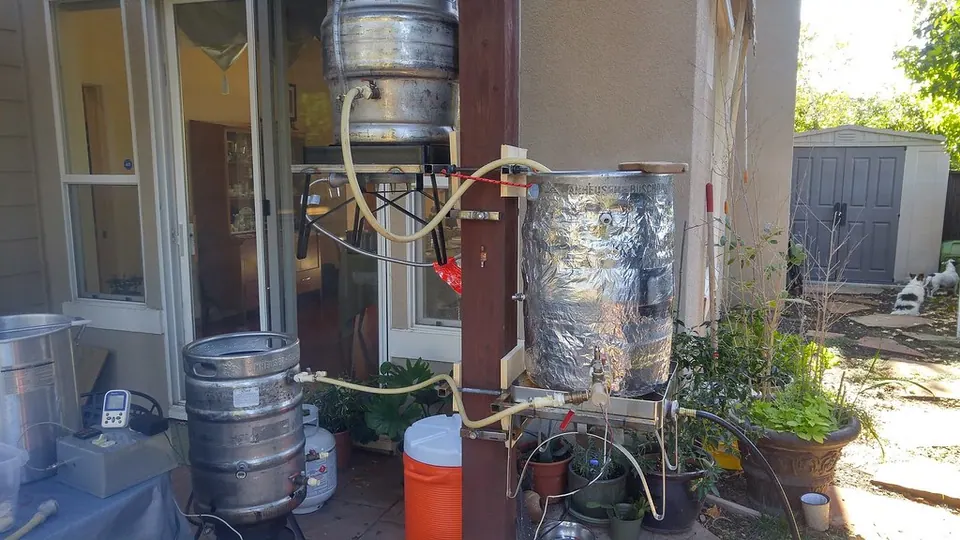
- Set the burner on a level, non-combustible surface in open air, well away from walls, eaves and anything that can burn.
- Leak-check the regulator and hose with soapy water before lighting; bubbles mean a leak.
- Light the burner before you put the kettle on, keep your face away, and stay with it: never leave a burner unattended.
- Keep the propane cylinder upright, outside, away from the flame and out of the sun when not in use.
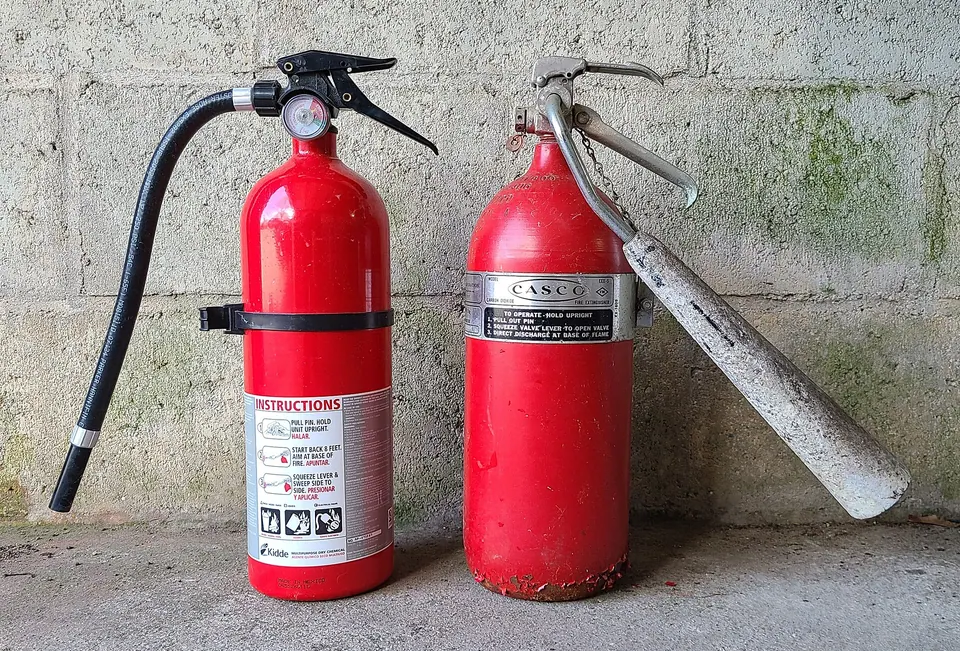
- Keep a fire extinguisher rated for the job within reach, and know how to shut the cylinder valve.
- Install CO alarms in the house, as the CDC recommends near sleeping areas.
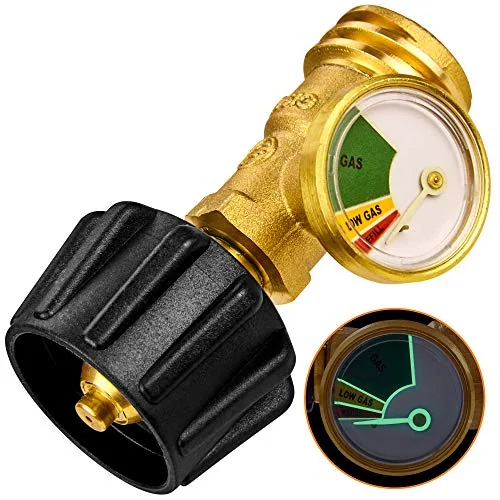
Flame King Propane Tank Gauge and Leak Detector
- Power
- Propane tank gauge (outdoor use)
- Material
- Brass, excess-flow shutoff
- Type
- Propane tank gauge
Best for Not running out mid-boil
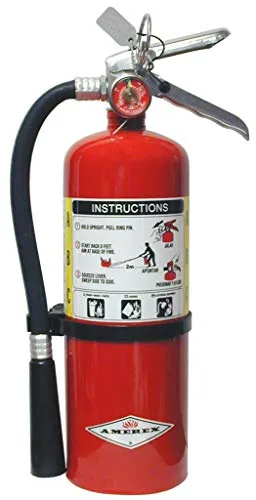
Amerex B500 5 lb ABC Fire Extinguisher
- Volume
- Class A, B, C; 14 sec discharge
- Material
- 5 lb ABC dry chemical, metal valve
- Type
- Fire extinguisher
Best for Garage and brew-day fire safety
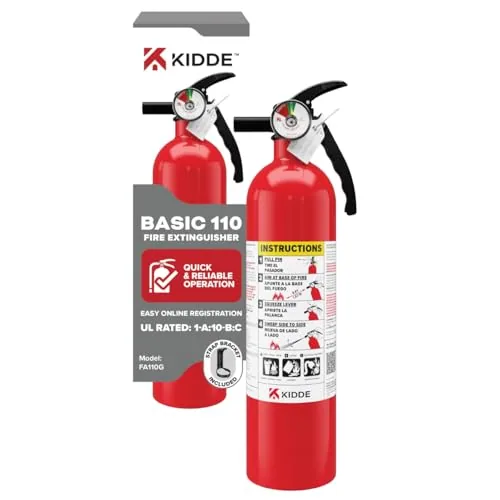
Kidde Basic 110 Fire Extinguisher, 1-A:10-B:C
- Volume
- Rated 1-A:10-B:C
- Material
- 2.5 lb dry chemical, UL listed
- Type
- Fire extinguisher
Best for Brew-day fire safety
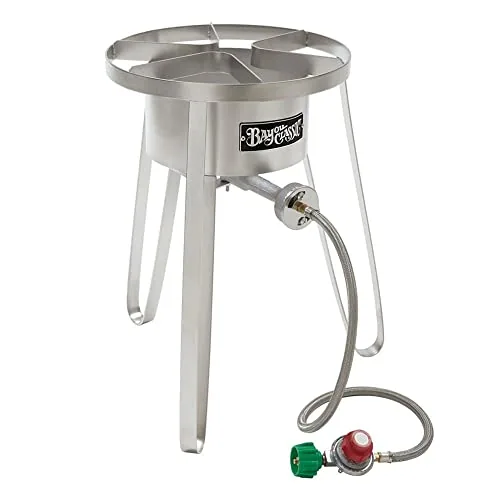
Bayou Classic SS50 Stainless Single Burner
- Power
- Propane, 41,000 BTU (outdoor use)
- Material
- 21 in. welded stainless frame
- Type
- Outdoor propane burner
Best for Rust-resistant outdoor boils
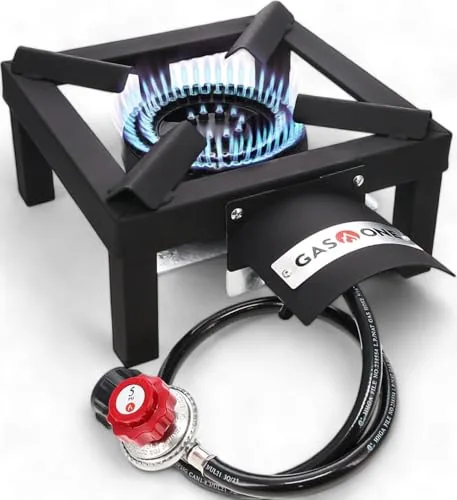
Gas One B-5120 High Pressure Propane Burner with Heat Shield
- Power
- Propane, high-output (outdoor use)
- Material
- Heat shield and guard
- Type
- Outdoor propane burner
Best for Outdoor boils
Brewing in a garage? Electric all-in-one systems avoid combustion entirely; see electric brewing safety and the brewing systems category.
Electric brewing basics
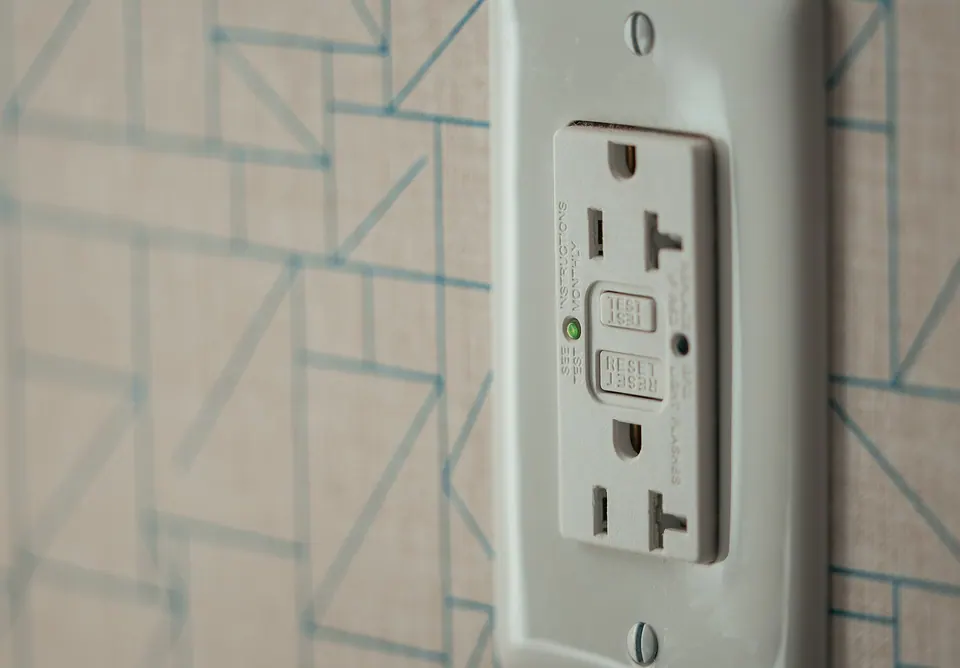
Water and electricity share every brew day on an electric system. Craft Beer & Brewing recommends plugging pumps, heaters and controls into GFCI outlets when working with liquids. Use the circuit your system’s manual specifies, avoid extension cords, and keep cords off the floor where wort spills. A 1600 W system on 120V draws about 13.3 A (watts divided by volts), close to a 15 A circuit’s limit, which is why a dedicated 20 A circuit is a common recommendation; follow your manual. Any 240V circuit is a job for a licensed electrician.
Burns, hot wort and heavy lifting
BYO calls burns the most common serious homebrewing injury, usually from hot kettles, boiling wort and steam. Its advice: wear gloves when handling hot equipment, watch the boil because boilovers happen fast (an antifoam such as Fermcap helps), add hops and extract carefully to avoid splashback, and wear closed rubber boots. Craft Beer & Brewing adds that a 5 gal batch weighs over 40 pounds, so move wort with gravity or a pump and get help when lifting.
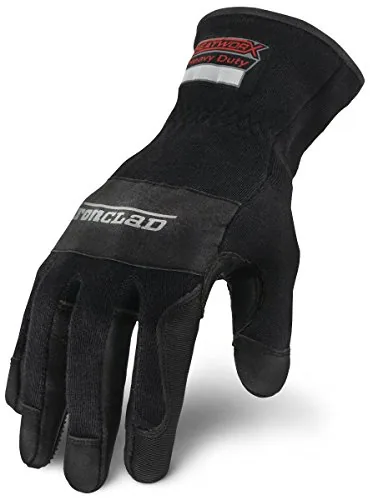
Ironclad Heatworx Heavy Duty Heat Resistant Gloves
- Volume
- Rated to 600°F (315°C)
- Material
- Silicone palm, Kevlar liner
- Type
- Heat-resistant gloves
Best for Lifting hot grain baskets
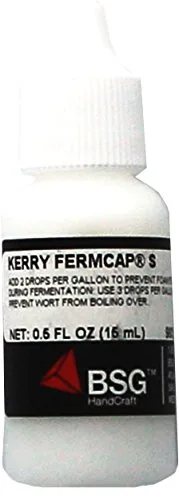
Fermcap-S Foam Inhibitor, 2 oz
- Use
- 2 drops per gallon
- Type
- Silicone antifoam
- Size
- 2 oz
Best for Small kettles and full fermenters
Plan the brew so you never carry a full, hot kettle: chill in place, then drain or pump to the fermenter. Keep children and pets out of the brewing area entirely.
Glass carboys and pressure
Glass is heavy, slippery when wet, and breaks into deep cuts on fingers, hands and forearms, per BYO. Thermal shock from pouring hot liquid into cold glass can shatter it. Craft Beer & Brewing says to use a good handle and always support the bottom. The CPSC’s 2023 recall of about 8,370 Saxco carboys followed 30 reports of glass breaking due to improper cooling during manufacture.
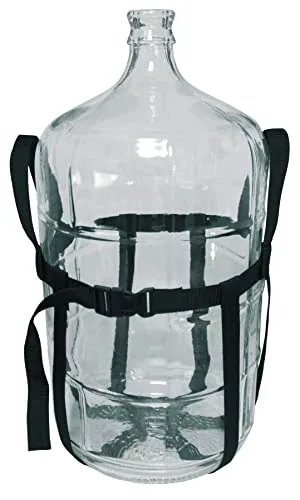
Brew Hauler FE338 Nylon Carboy Carrier
- Volume
- Fits glass carboys (carboy not included)
- Material
- Nylon webbing, made in USA
- Type
- Carboy carrier
Best for Carrying full glass carboys
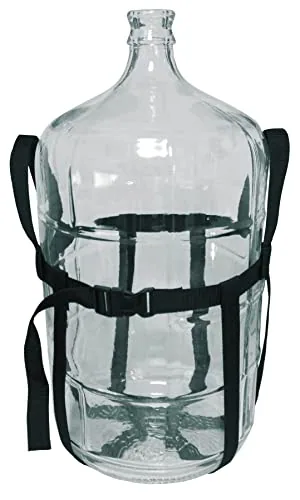
HomeBrewStuff 5307 Carboy Carrier
- Volume
- Moves between carboys
- Material
- Polypropylene webbing
- Type
- Carboy carrier
Best for Carrying full carboys
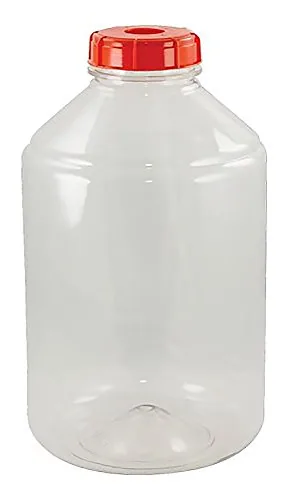
FerMonster 6 Gal Wide Mouth PET Fermenter
- Volume
- 6 gal
- Material
- PET plastic
- Outputs
- Drilled lid
Best for Unbreakable carboy alternative
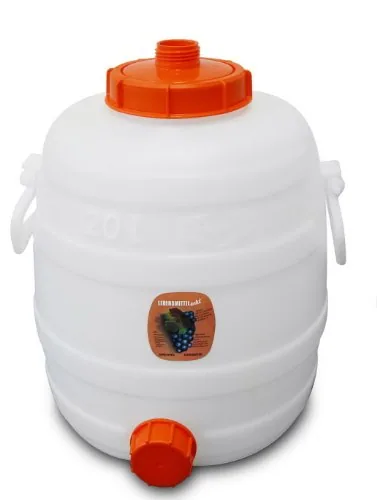
Speidel 20L HDPE Fermenter
- Volume
- 20 L (5.3 gal)
- Material
- HDPE
- Outputs
- 4.75 in. wide-mouth lid, built-in handles
Best for Durable glass alternative
Pressure is the other glass hazard. Bottles fail when they are primed too much or filled before fermentation finishes. Pressure fermenters and kegs have rated limits and relief valves; never exceed them. See how to bottle homebrew and pressure fermenting.
CO2: cylinders and fermentation gas
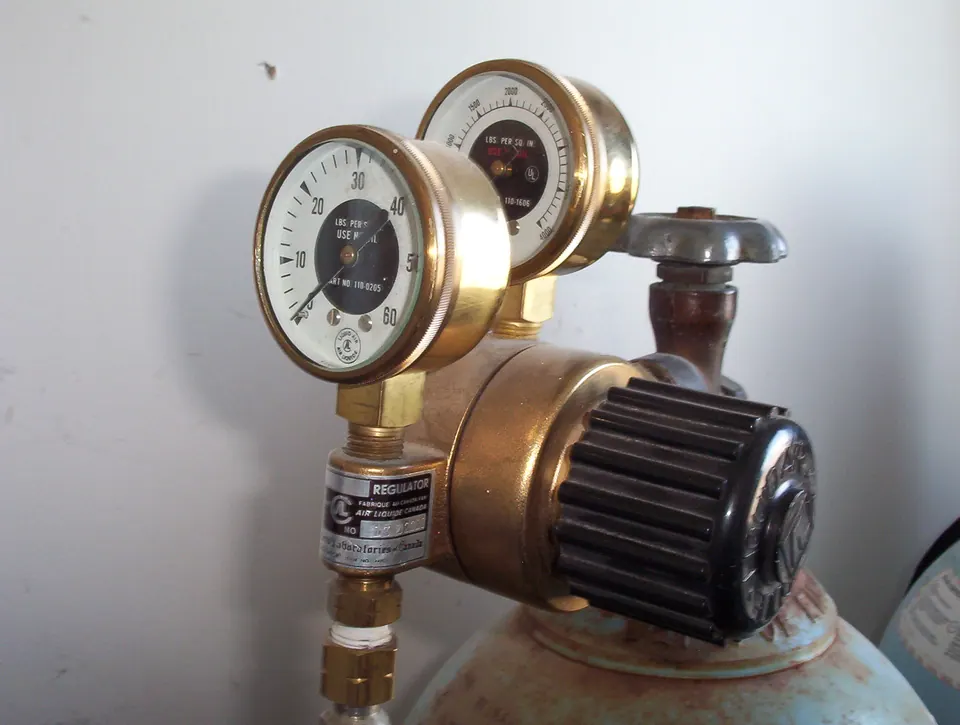
Kegco’s CO2 guidance: keep the cylinder upright and fastened, store it cool (around 70°F) away from heat, never drop it, always connect it through a regulator and never straight to a keg, and check the DOT test date on the neck. If you have trouble breathing and a headache, close the cylinder valve and leave the room. BYO adds that CO2 from fermentation is heavier than air and collects in low, enclosed areas: don’t ferment in confined spaces without ventilation, and if someone collapses, call for help and ventilate before going in.
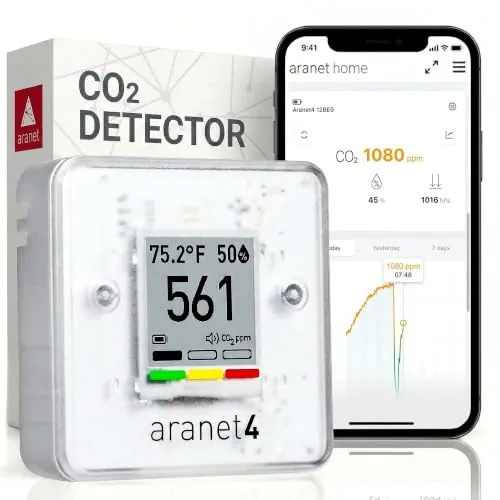
Aranet4 Wireless CO2 Monitor
- Range
- CO2, temperature, humidity, pressure
- Accuracy
- NDIR sensor
- Battery
- Up to 4 years (maker)
Best for CO2 awareness in a garage or basement
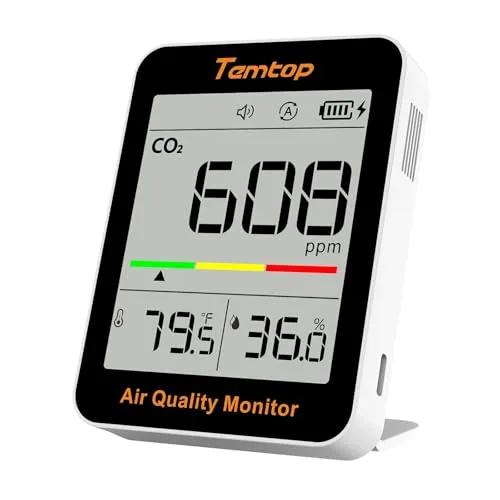
Temtop Portable CO2 Monitor
- Type
- CO2 monitor
- Range
- CO2 400–5000 ppm; 14–140°F; 0–99% RH
- Accuracy
- ±40 ppm + 5% (400–2500 ppm)
Best for Checking CO2 near kegging gear
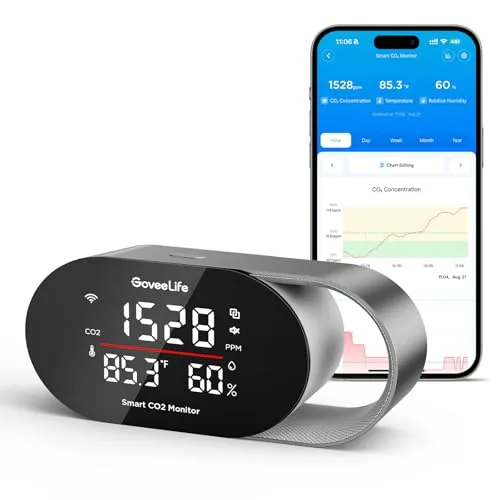
GoveeLife H5140 Smart CO2 Monitor with Alarm
- Range
- CO2, temperature, humidity
- Accuracy
- ±(40 ppm + 5%)
- Connectivity
- App with alarm
Best for CO2 alarm for a keezer room
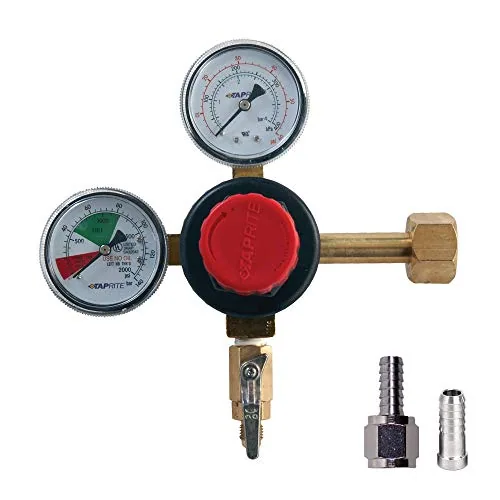
Taprite Dual Gauge CO2 Regulator with MFL Check Valve
- Couplers
- MFL check valve; 1/4 and 5/16 in. barbs
- Gauges
- Dual gauge
- Pressure
- Safety blow-off at 55–60 PSI
Best for First kegging regulator
Chemicals: label directions only
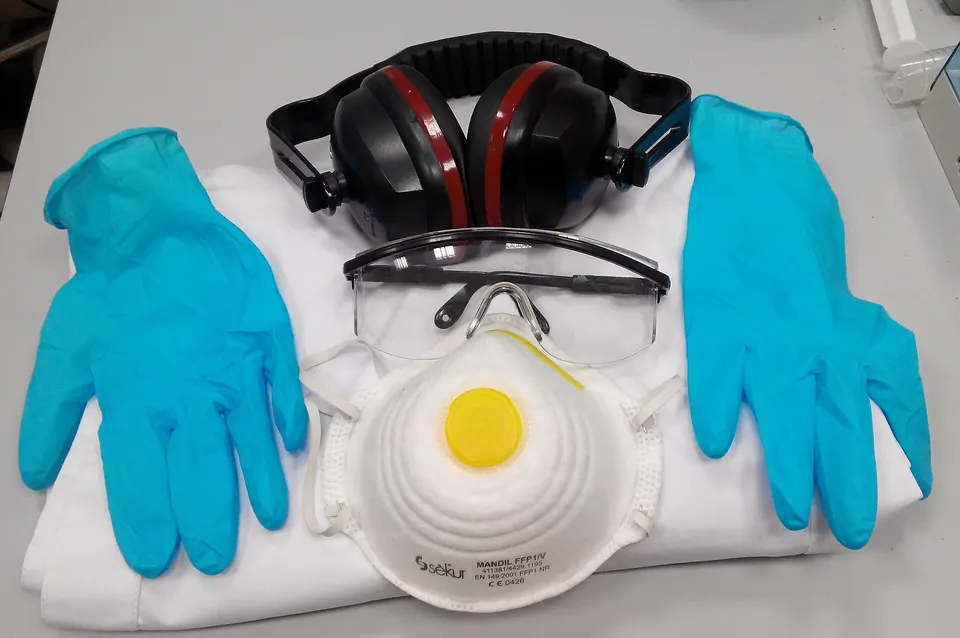
BYO notes that eye burns are the most common chemical injury in home brewing, so wear safety glasses when mixing powders and acids, flush immediately with water if anything splashes, and know where your eyewash source is before you need it. If someone swallows a chemical, call Poison Control at 1-800-222-1222. Use sanitizers and cleaners only at the label dilution: Star San is EPA-registered (Reg. No. 65001-1) as a no-rinse sanitizer at label dilution. PBW and OneStep are cleaners. Always add acid to water, never the reverse, and store chemicals away from food and out of reach of children.

Five Star Star San Acid Sanitizer, 32 oz
- Type
- Acid sanitizer, high-foaming
- Use
- Sanitizer; no-rinse at label dilution
- Size
- 32 fl oz
Best for Sanitizing everything that touches cooled wort
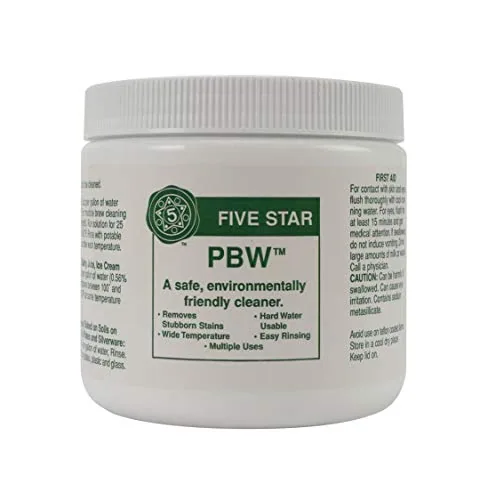
Five Star PBW Alkaline Cleaner, 1 lb
- Type
- Non-caustic alkaline powder
- Use
- Cleaner (not a sanitizer)
- Size
- 1 lb
Best for Soaking dirty fermenters and kettles

Logic OneStep No-Rinse Cleanser, 2.5 oz
- Type
- Oxygen-based powder
- Use
- No-rinse cleanser; 2-minute contact time
- Size
- 2.5 oz
Best for A first small batch
More on the difference in cleaning vs sanitizing.
A brew-day safety checklist
- Before you start
Burner outdoors on a level surface, or electric system on the right GFCI circuit. Extinguisher, gloves and safety glasses within reach. Children and pets elsewhere.
- Gas and fittings
Soapy-water leak check on propane and CO2 fittings. Cylinders upright and secured.
- During the boil
Stay with the kettle. Antifoam if needed. No reaching over the pot.
- Chilling and transfer
Chill in place. Pump or gravity-drain; get help with anything heavy. No hot wort into glass.
- Cleaning
Chemicals at label dilution, eye protection on, add acid to water.
- Fermentation and packaging
Ventilated space; stable gravity before bottling; never exceed vessel ratings.
- After
Burner and cylinder valves off. Note anything that went wrong in the brew-day log.
And the last safety rule: brewing and drinking are for adults 21 and over. Keep brewing and drinking separate on brew day, especially around a burner or a hot kettle, and never drink and drive.
Gear picks for this guide: best propane burners for brewing (outdoors) and best CO2 regulators for kegging.
Homebrew startup budget builderAdd up what it costs to start homebrewing with your own prices: 1-gallon kit, 5-gallon extract or a 120V or…Printable brew-day log and recipe sheetFree brew-day log: record recipe, water and salts, mash, gravities, yeast, fermentation temperatures,…Questions
Can I use a propane burner in my garage?
What is the most common homebrewing injury?
Do electric brewing systems need GFCI?
Are glass carboys safe?
Is CO2 from fermentation dangerous?
What should I do if sanitizer gets in my eye?
Sources
- CPSC: Safe cooking tips for the holiday season (turkey fryers outdoors)
- CDC: Carbon monoxide poisoning basics
- BYO: Caution, homebrewers at work
- Craft Beer & Brewing: Homebrew safety
- CPSC: Saxco International recalls carboys due to laceration hazard (2023)
- Kegco: Everything you need to know about CO2
- EPA: Star San label (Reg. No. 65001-1, PDF)
- NIAAA: What is a standard drink?