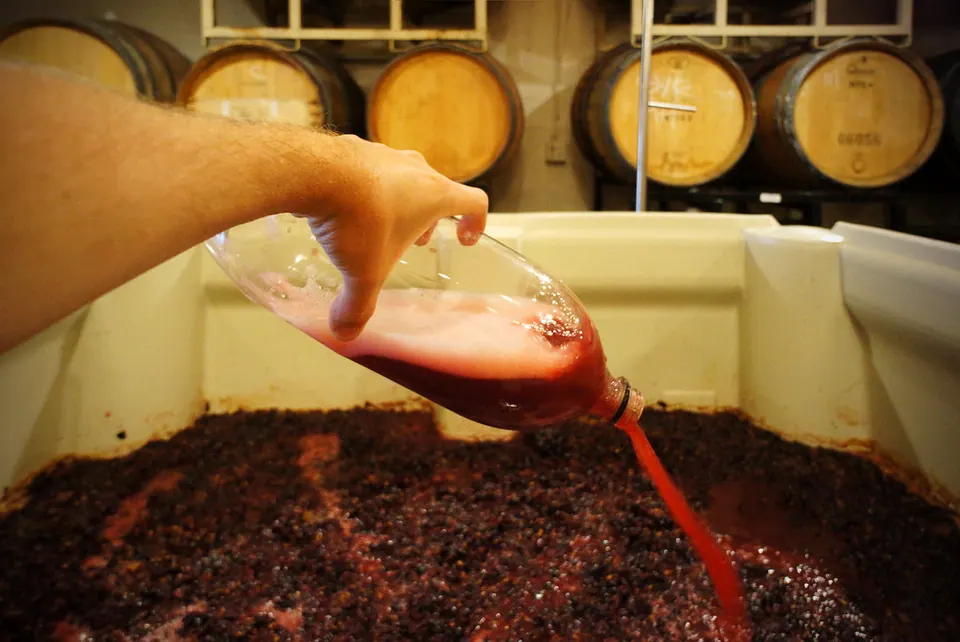
- For most beer yeasts, makers now say direct pitching works. Fermentis found no significant difference in fermentation performance between rehydrating and direct pitching its tested ale and lager yeasts.
- Lallemand lists dry pitching as the preferred method for LalBrew Nottingham.
- If you rehydrate, follow the sheet: Fermentis uses at least 10× the yeast’s weight in sterile water or boiled, hopped wort at 77–84°F (25–29°C) for US-05.
- Wine and mead yeasts such as EC-1118 are a different case: Lallemand specifies rehydration in 95–104°F (35–40°C) water with Go-Ferm.
- Direct pitch at or above fermentation temperature, sprinkled over the surface; don’t pitch dry yeast into near-freezing wort.
To rehydrate dry yeast or simply sprinkle it on the wort used to be a heated forum debate. Today the makers have mostly settled it for beer: their modern dry yeasts are built to be pitched straight from the sachet, and their own trials show no meaningful difference in fermentation or flavor. Rehydration still has a place, and when you do it, the details on the maker’s sheet matter.
This guide quotes the Fermentis product pages and E2U study, the Lallemand Nottingham technical data sheet and the Lalvin EC-1118 sheet. For dose (how many sachets), see the yeast starter and pitch rate guide.
What do the yeast makers say?
Maker pitching instructions for common dry yeasts
| Yeast | Direct pitch | Rehydration (if used) |
|---|---|---|
| Fermentis SafAle US-05 | ✓ Onto the wort surface at or above fermentation temperature | ≥10× its weight of sterile water or boiled, hopped wort at 77–84°F (25–29°C); 15–30 min; stir and pitch |
| Fermentis SafLager W-34/70 | ✓ Sprinkle evenly over the whole surface, early in filling | ≥10× its weight at 59–77°F (15–25°C); 15–30 min |
| LalBrew Nottingham | ✓ Dry pitching is the maker’s preferred method | Older sheet: 10× weight sterile water at 86–95°F (30–35°C) |
| Lalvin EC-1118 (wine, cider, mead) | ~ Not the maker’s method | Water at 95–104°F (35–40°C) for 20 min with Go-Ferm Protect Evolution; temper to within 9–18°F (5–10°C) of the must |
Source: Fermentis product pages; Lallemand technical data sheets
Fermentis concludes that “the direct pitching procedure is adequate for fermentation.” Keep in mind these are the makers’ own studies; independent peer-reviewed comparisons of these specific products are scarce. Still, the makers have every reason to give instructions that produce good fermentations, and they now print direct pitching first.
Why the old advice said “always rehydrate”
Older brewing books told you to rehydrate every packet, and the reasoning was sound for the yeast of the time. A dried yeast cell has a dry, leaky membrane. In the first minutes of rehydration it takes in water fast, and if the surrounding liquid is full of sugar and acids, as wort is, cells can be damaged before the membrane recovers. Rehydrating in plain warm water first was the safe route, and early sheets reflected that.
According to the makers, drying processes and strain selection have improved so that cells survive direct contact with wort, and they test that claim: Fermentis brands such yeasts “E2U” only when cell viability, fermentation kinetics and flavor show no significant difference between methods. That is why the same companies that once insisted on rehydration now print direct pitching first. Wine yeasts going into very high-sugar must are the main exception, which is why their sheets still call for warm rehydration with a protective nutrient.
How to direct pitch dry yeast
- Chill the wort into the yeast’s range
Direct pitching works at or above fermentation temperature. Very cold wort is harder on dry yeast cells as they rehydrate.
- Sanitize the sachet and scissors
Spray the packet and scissors with sanitizer and cut the corner.
- Sprinkle evenly over the surface
Fermentis advises covering the whole surface to avoid clumps. Some brewers sprinkle while the fermenter is still filling so the yeast mixes in.
- Seal and leave it
No stirring needed. Fit the lid and airlock and hold the fermentation temperature.
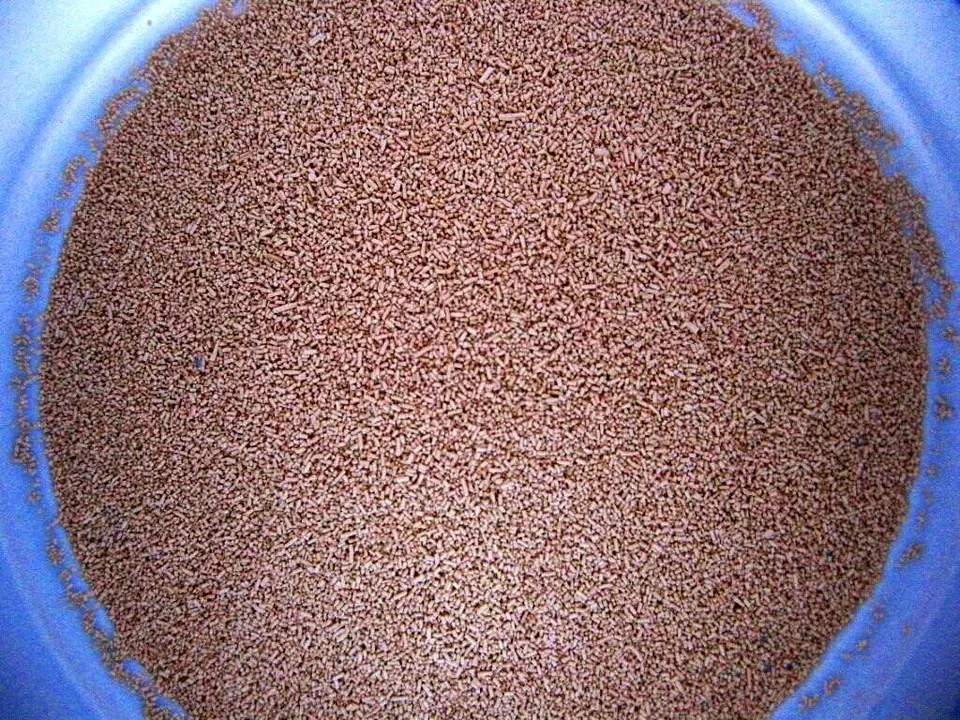
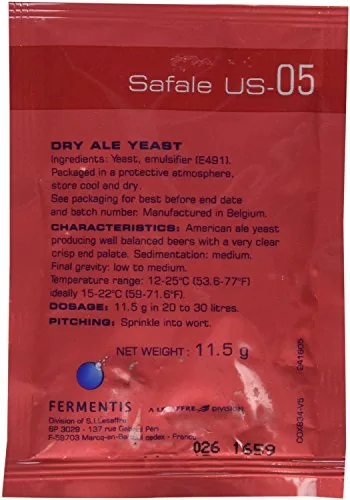
Fermentis SafAle US-05 Dry Ale Yeast, 11.5 g
- Type
- Dry ale yeast, American
- Dose
- 50–80 g/hL (11.5 g ≈ 3.8–6 gal)
- Temp
- 59–75°F (15–24°C)
Best for American pale ales and IPAs
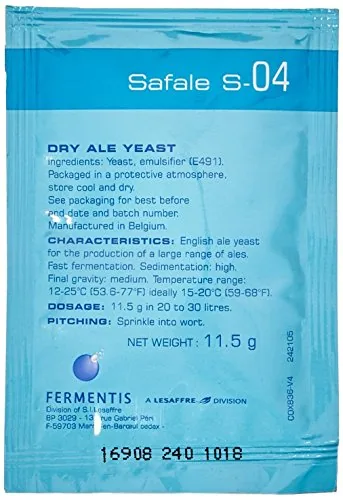
Fermentis SafAle S-04 Dry Ale Yeast, 11.5 g
- Type
- Dry ale yeast, English
Best for English ales and stouts
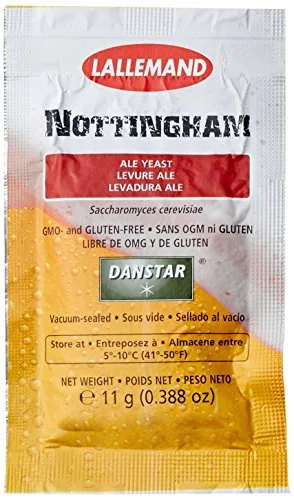
Lallemand LalBrew Nottingham Ale Yeast, 11 g
- Type
- Dry ale yeast, English
- Dose
- 50–100 g/hL
- Temp
- 59–68°F (listing); 10–25°C on TDS
Best for Clean ales and a reliable backup yeast
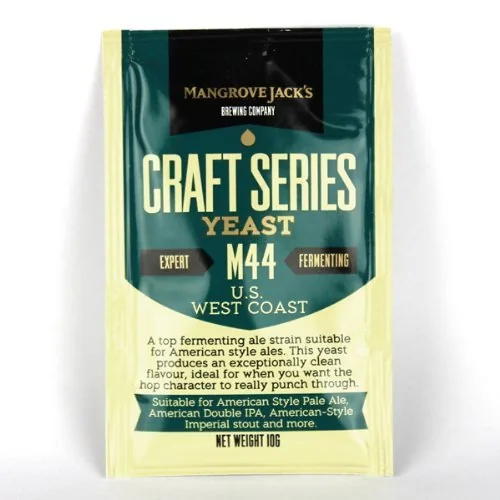
Mangrove Jack's M44 US West Coast Dry Yeast
- Type
- Dry ale yeast, American
Best for IPAs and pale ales
How to rehydrate dry yeast (beer)
- Boil and cool water
Boil about 100–200 mL of water (at least 10× the yeast weight; an 11.5 g sachet needs at least 115 mL), cover and cool it to the sheet temperature, for example 77–84°F (25–29°C) for US-05.
- Sprinkle, don’t stir yet
Pour the yeast onto the water surface in a sanitized cup and let it sit 15–30 minutes as the sheet says.
- Stir gently
Swirl or stir into a smooth cream.
- Temper if needed
If the wort is much cooler than the slurry, add a little wort to the cup to bring the temperatures closer, so the cells don’t take a sudden cold shock.
- Pitch promptly
Don’t let rehydrated yeast sit for hours; pitch within the time the sheet allows.
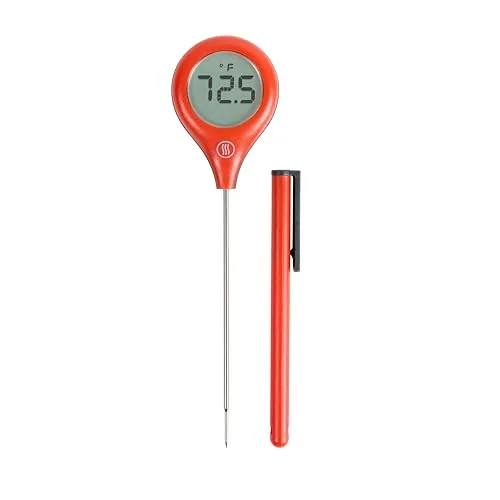
ThermoWorks ThermoPop 2 Instant-Read Thermometer
- Accuracy
- ±1°F (±0.5°C)
Best for An affordable first brewing thermometer
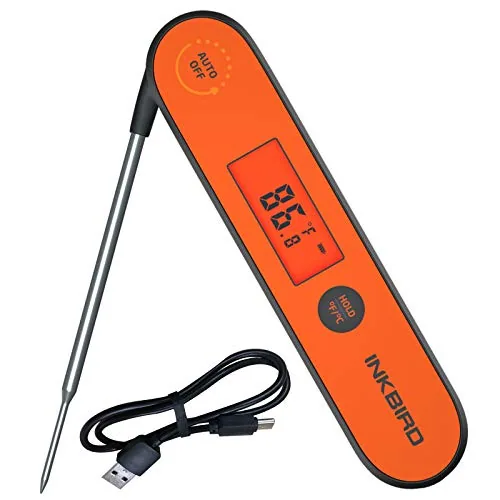
Inkbird IHT-1P Rechargeable Instant-Read Thermometer
- Battery
- Rechargeable
Best for Brewers who prefer rechargeable gear
Use an instant-read thermometer: rehydrating in water that is too hot kills cells, and water that is too cold lets them leak contents as they rehydrate.
Wine, cider and mead yeast are different
Wine yeasts face harsher conditions than beer yeast: high sugar, low nutrients and, in mead, very little nitrogen. Lallemand’s EC-1118 sheet specifies rehydration with a rehydration nutrient, Go-Ferm Protect Evolution, at 30 g/hL, in 95–104°F (35–40°C) water for 20 minutes, then tempering to within 5–10°C of the must before pitching. The whole process should take no more than about 30 minutes.
Dry yeast by the maker’s numbers
| Yeast | Use | Fermentation temp | Dose | Attenuation / tolerance | Rehydration |
|---|---|---|---|---|---|
| SafAle US-05 Fermentis | Ale (American) | 18–26°C (64.4–78.8°F) | 50–80 g/hL | 78–82%; not listed on the product page | Optional: ≥10× its weight of sterile water or boiled, hopped wort at 25–29°C (77–84°F), 15–30 min; or direct pitch at or above fermentation temperature |
| SafAle S-04 Fermentis | Ale (English) | 18–26°C (64.4–78.8°F) | 50–80 g/hL | 74–82%; 9–11% ABV | Optional: ≥10× its weight of sterile water or boiled, hopped wort at 25–29°C (77–84°F), 15–30 min; or direct pitch at or above fermentation temperature |
| SafLager W-34/70 Fermentis | Lager | 12–18°C (53.6–64.4°F) | 80–120 g/hL | 80–84%; 9–11% ABV | Optional: ≥10× its weight of sterile water or boiled, hopped wort at 15–25°C (59–77°F), 15–30 min; or direct pitch at or above fermentation temperature |
| LalBrew Nottingham Lallemand | Ale (English) | 10–25°C (50–77°F) | 50–100 g/hL | 78–84%; 14% ABV | Dry pitching is the maker's preferred method (no significant difference vs rehydration, per Lallemand) |
| LalBrew Voss (kveik) Lallemand | Ale (kveik) | 25–40°C (77–104°F) Optimum 35–40°C (95–104°F) per Lallemand | 50–100 g/hL | 76–82%; 12% ABV | Per the sachet |
| Lalvin EC-1118 Lallemand | Wine, cider, mead | 10–30°C (50–86°F) | 25 g/hL | Ferments dry; 18% v/v (subject to conditions) | 35–40°C (95–104°F) water for 20 min with Go-Ferm Protect Evolution (30 g/hL), then temper to within 5–10°C of the must |
Sources: Fermentis: SafAle US-05 product page; Fermentis: SafAle S-04 product page; Fermentis: SafLager W-34/70 product page; Lallemand: LalBrew Nottingham technical data sheet; Lallemand Brewing: LalBrew Voss Kveik Ale Yeast product page; Lallemand: Lalvin EC-1118 technical data sheet. 1 hL = 26.4 US gal, so 50 g/hL ≈ 1.9 g per gallon. Follow the sachet you buy; makers update their sheets.
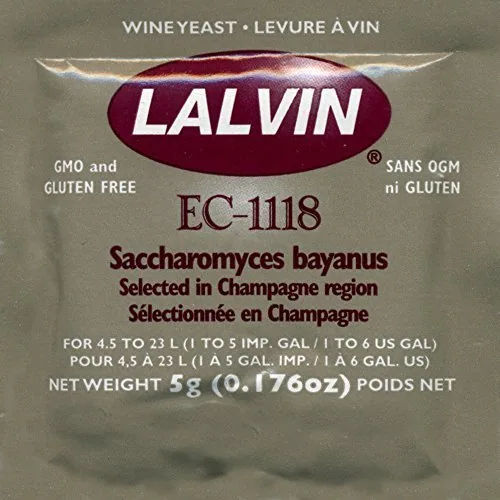
Lalvin EC-1118 Wine Yeast, 5 g
- Type
- Dry wine yeast (S. cerevisiae var. bayanus)
- Dose
- 25 g/hL (about 1 g/gal)
- Temp
- 50–86°F (10–30°C)
Best for Dry wines, ciders and meads
Lallemand Go-Ferm Protect Evolution, 100 g
- Type
- Yeast rehydration nutrient
- Dose
- 30 g/hL with Lalvin yeast (per Lallemand)
- Size
- 100 g
Best for High-gravity meads and wines
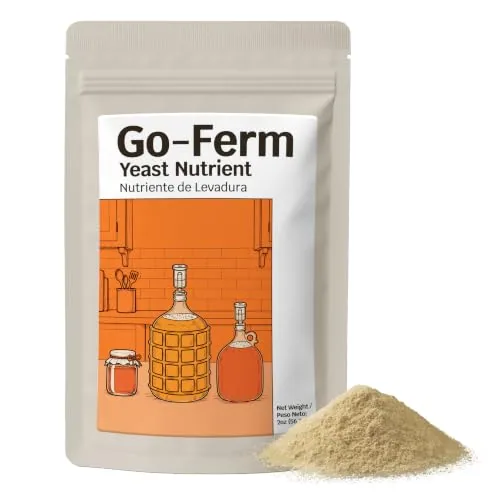
Lallemand Go-Ferm Rehydration Nutrient, 2 oz
- Type
- Yeast rehydration nutrient
- Size
- 2 oz (56.7 g)
Best for Rehydrating wine and mead yeast
Go-Ferm goes in the rehydration water; nutrients such as Fermaid O or DAP go into the must later, not into the rehydration cup. Follow each label.
When rehydration still makes sense
- Wine, mead and cider yeasts: when the maker’s sheet calls for it, as with EC-1118.
- High-gravity beers: some brewers prefer to rehydrate when pitching into very strong wort, where osmotic stress is higher.
- Cold wort for lagers: rehydrating warm and tempering avoids pitching dry cells into very cold wort; Fermentis allows either for W-34/70.
- Older sachets: rehydrating in a cup lets you see signs of activity before committing the batch, though dry yeast doesn’t foam much without sugar.
- Any strain whose sheet says so: the sheet wins over any rule of thumb.
Storing dry yeast
Fermentis lists storage for US-05 below 75°F (24°C) for less than six months and below 59°F (15°C) for longer, with a 36-month shelf life from production. Opened sachets should be resealed, kept at about 39°F (4°C) and used within 7 days. The fridge is the easy answer for unopened sachets, too. Check the best-before date before brew day.
Slow start after pitching? Check these first
Dry yeast often shows no airlock activity for 12–24 hours, sometimes longer in cool wort. That lag is normal: the cells are rehydrating, taking up oxygen and multiplying before visible fermentation begins.
- Temperature: is the wort inside the yeast’s range? Cold wort slows everything.
- Seal: a bucket lid that leaks lets CO2 escape without bubbling the airlock. Look for foam (krausen) through a carboy, or take a gravity reading.
- Dose: one sachet for a 1.080 beer is under the maker’s g/hL range; add a second.
- Storage: sachets left in a hot car or shipped in summer lose viability; check the date and how they were kept.
- Oxygen: dry yeast needs less than liquid at the start, but re-pitched or harvested yeast needs aerated wort.
If nothing has happened after about 48–72 hours and the gravity hasn’t moved, pitch a fresh sachet of the same or a similar neutral strain.
Mistakes to avoid
- Rehydrating in wort-strength sugar water or straight tap water at the wrong temperature. Use sterile water (or the maker’s allowed boiled, hopped wort) at the sheet temperature.
- Rehydrating in water that is too hot. Measure; don’t guess.
- Adding DAP or yeast nutrient to the rehydration water. Only rehydration nutrients like Go-Ferm belong there.
- Letting rehydrated yeast sit for hours. Pitch within the sheet’s window.
- Direct pitching into near-freezing wort. Pitch at or above fermentation temperature.
- Treating dry yeast like liquid yeast. Dose by weight; no starter needed.
- Storing sachets warm. Heat shortens shelf life.
Which method should you use?
- Everyday ales with US-05, S-04, Nottingham or similar: direct pitch, as the makers allow.
- Lagers: either; follow the sheet and avoid very cold wort for a direct pitch.
- Wine, mead and cider: rehydrate with Go-Ferm when the sheet says so.
- You enjoy the ritual: rehydrate exactly as the sheet describes; it won’t hurt.
Pick a clean ale yeast for your first beer in beginner beer styles, and set temperatures with the fermentation temperature guide. Log which method you used in the brew-day log, so you can compare batches.
Gear picks for this guide: best dry yeast for IPA and pale ale and best wine yeast.